The Bayberry Scandal: Why Can I Still Eat Bayberries Worry-Free? | Grandma Kouzi

This year the Chinese bayberry scandal has thrust this highly seasonal, delicate fruit into the spotlight. Whether the bayberries have been soaked in chemicals, which chemicals are legal, whether they are harmful, what dosage marks the safety line—I don’t care about any of it.
Not because I don’t eat bayberries, but because I only eat the ones I’ve grown with my own hands.
The Surprises Bayberries Gave Me
…And the Frights
At the gate of Villain’s Valley there are two trees. One is a bayberry tree. The other is also a bayberry tree.
The plan was set even back when I first broke the ground: two trees with broad, dense canopies at the gate. A little farm set between heaven and earth can go without walls or gates, but it must have two great trees. My dream is that one day their crowns will stretch across the road and clasp hands in the sky, becoming the gateway of Villain’s Valley.
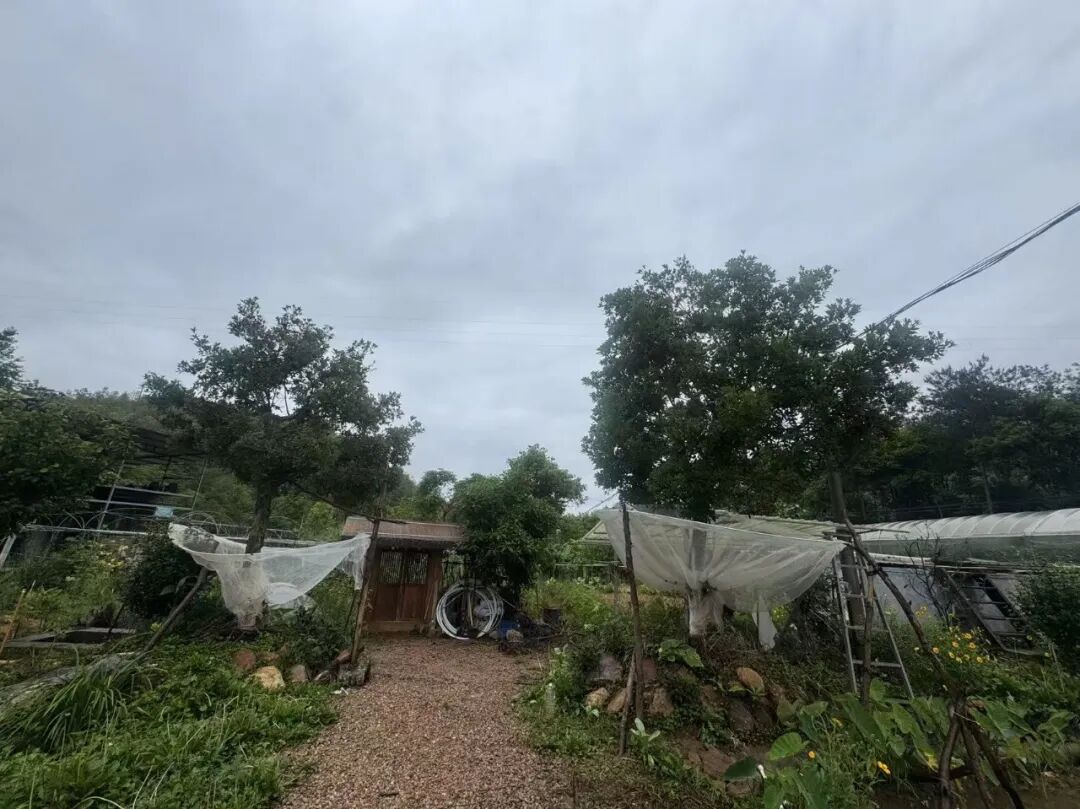
◉ The two bayberry trees at the gate.
I’ve always known that fruit has a long growing season and an even longer journey from field to shelf, making it a hotspot for chemical fertilisers and pesticides. But my mouth wouldn’t let me resist how good fruit tastes. Eating means being poisoned; not eating means suffering. Before I could make Villain’s Valley self-sufficient in fruit, as a die-hard food lover I racked my brains to eat safely. I avoided imported fruit, avoided berries and other delicate fruits, and tried to stick to varieties you must peel with thick skins—bananas and citrus, for instance…
So the dream of Villain’s Valley was to neither be poisoned nor suffer. The reason a northerner like me chose to farm in the south is largely that you can grow your own fruit in every season.
A friend of mine who works in horticulture here suggested bayberry trees for my needs and even helped source some large, mature specimens. Having grown up in the north, I had almost no concept of bayberries—I certainly hadn’t expected fruit to grow on what might as well have been door planks.
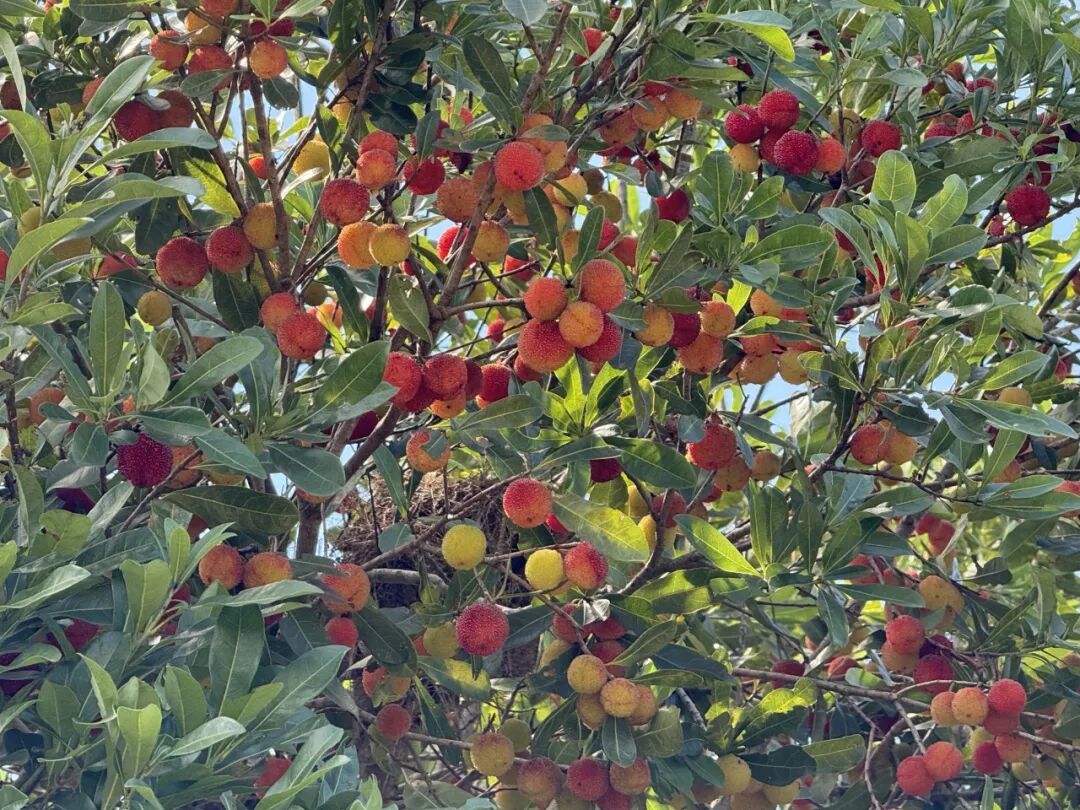
◉ A bumper crop of bayberries in 2025.
Transplanting large trees is no easy task. When I was first developing Villain’s Valley, I bought quite a few big trees: besides the two bayberries, there were three loquats, a handful of crispy-skinned kumquats, a batch of honey snow pears, and a whole lot of figs. As it turned out, all twenty-plus figs died. Five honey snow pears remain, barely clinging to life. One loquat was lost, and every single crispy-skinned kumquat was killed off. The two bayberry trees, however, were stubborn survivors—it took them over a year to settle into this entirely new place. Seeing fruit in 2024 was a purely unexpected delight.
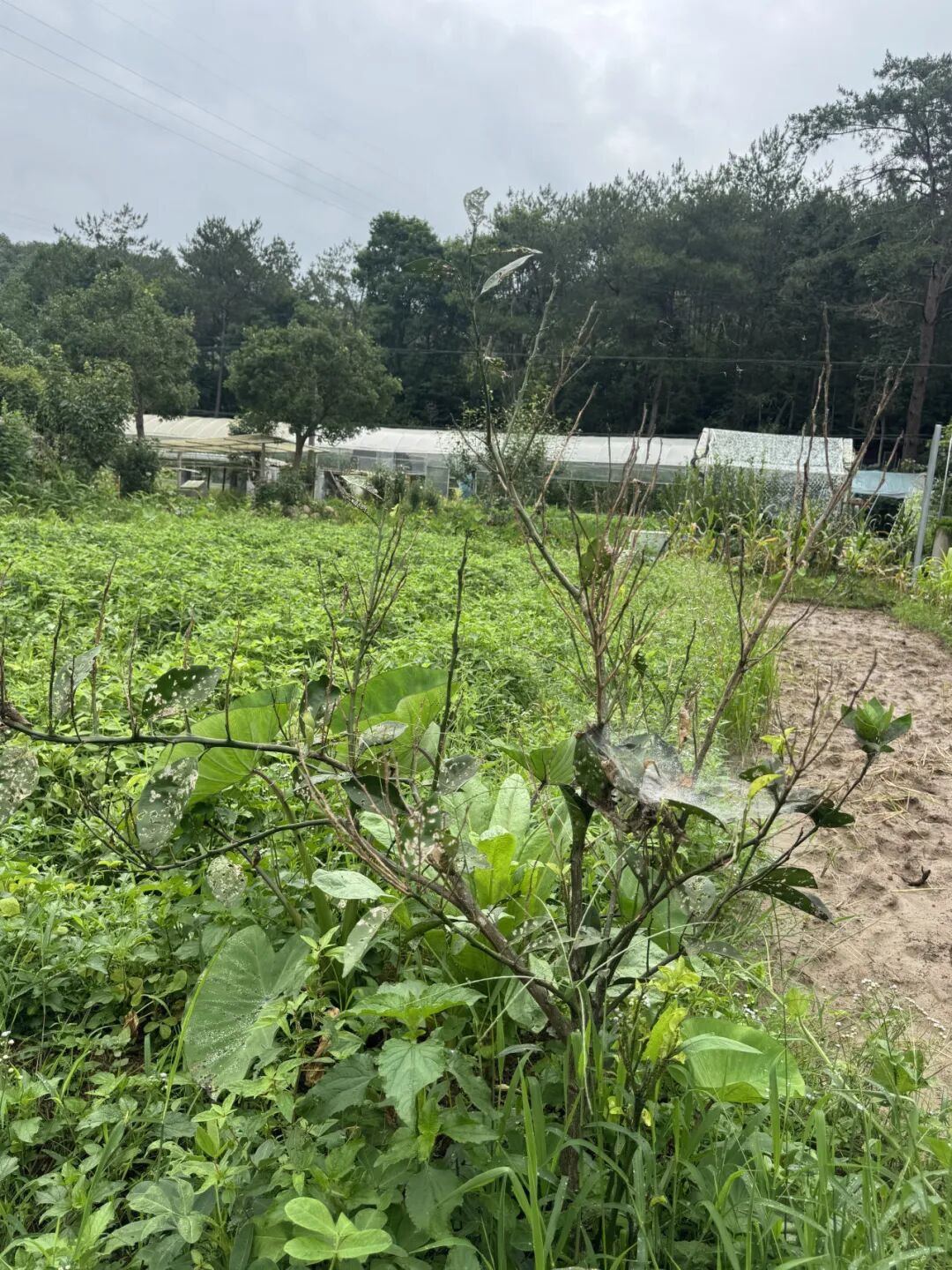
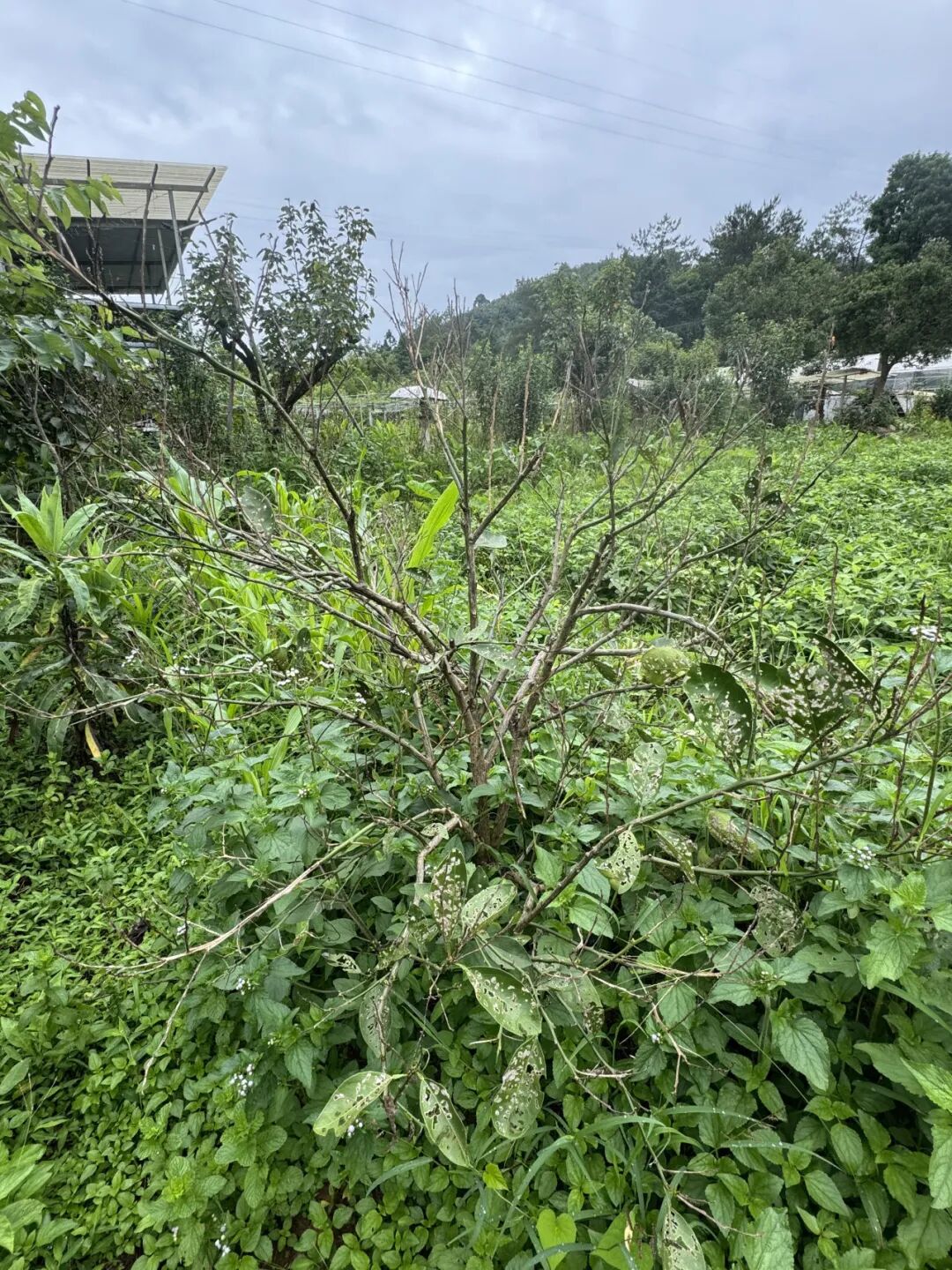
◉ I planted twenty-odd citrus trees—Honey mandarins, Jelly oranges, navel oranges… many varieties. In spring the garden is fragrant with blossoms. But then the pests arrive, chewing every citrus tree bare. I refuse to use chemicals, so I just have to grit my teeth and wait until the pests have eaten their fill, mated, laid their eggs in the soil, and pupated—only then do the stripped branches push out new shoots. The trees won’t die, but forget about fruit. It was this that made me quit buying citrus from outside.
By 2025, the bayberry trees, now settled into Villain’s Valley, came into their own in spectacular fashion, the branches sagging with fruit. Little red lanterns hung all over the trees, ripening in batches that demanded attention whether you were ready or not—”The night brings sounds of wind and rain; who knows how many have fallen?” As a northerner, I’d never seen anything like it. Facing the suicidal ripening of the bayberries, I survived a season of “rivers of blood.”
But the fright that year wasn’t from the gory scenes on the ground—it was my son’s response. He said the bayberries I’d sent him were sour and small, no match for the big, sweet ones from the fruit shop downstairs. My daughter-in-law added that by the time the parcel arrived, the bayberries were nearly off. If they wanted to eat them, they might as well just buy their own.
My bayberry trees are the genuine Dongkui variety—the largest, sweetest of them all. The spacing between them is generous and open, they get a steady supply of farmyard manure—every premium treatment a top-grade Dongkui could ask for. And what I send my son is the very best of the best. Bayberries are so delicate that every nick and scrape is fatal. When posting them, I use specially designed boxes, each fruit with its own little compartment. From the branches at Villain’s Valley to my son’s table, less than a day passes: posted from Fujian at six in the evening, arriving in Shenzhen the next afternoon. Usually the supply chain for bayberries in urban fruit shops is longer and takes more time. To keep them looking presentable—well, if anyone claims no special measures are involved, they’re welcome to believe it.
If it’s like this for bayberries, it’s like this for all fruit.
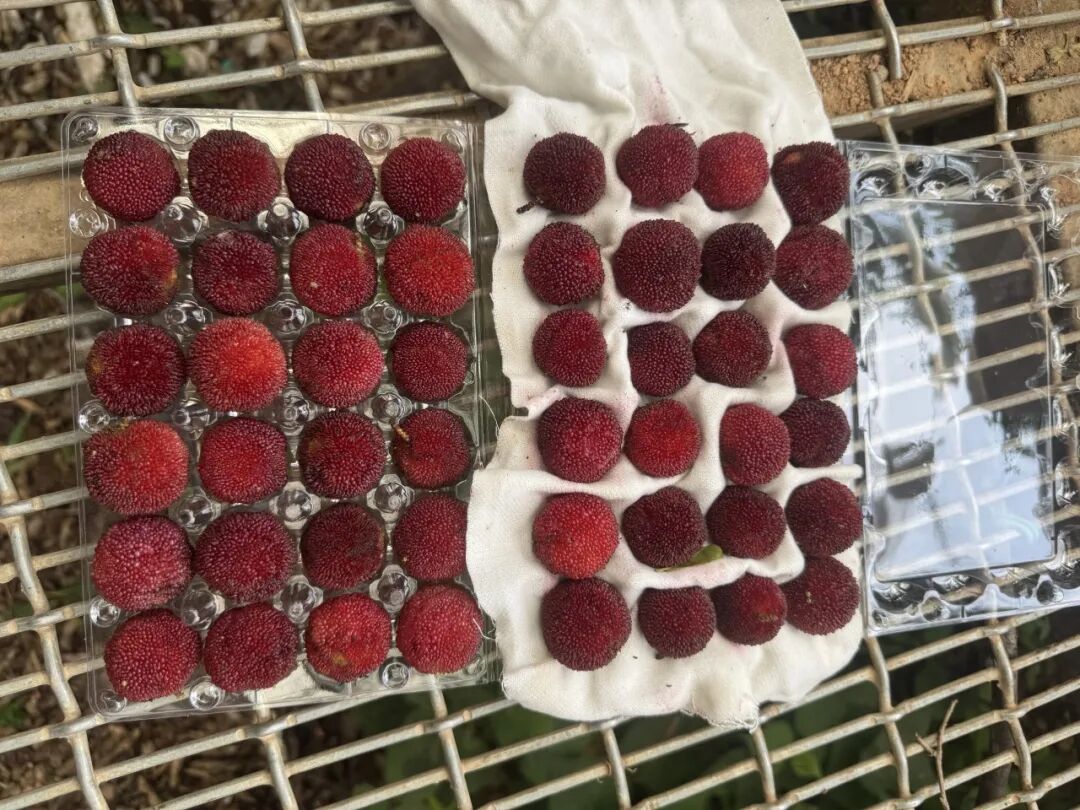
◉ The packaging I use to post bayberries. And even so, they’re nearly rotten by the time they reach Beijing. Folks in the Imperial Capital—do think about what your bayberries have been through.
Trials and Tribulations
Since I started growing fruit myself, I understand all the more clearly the sheer number of pests and diseases fruit faces and how difficult storage and transport truly are. Woody citrus trees flower in spring and ripen in autumn and winter; herbaceous bananas take at least five months from bloom to harvest. Because I insist on not spraying chemicals, my citrus trees are chewed bare by insects—and of course, bearing fruit is entirely out of the question. Given the no-spray rule, plantains simply cannot be close-planted: only five clumps across several dozen square metres. I expect to harvest three bunches of plantains this year.
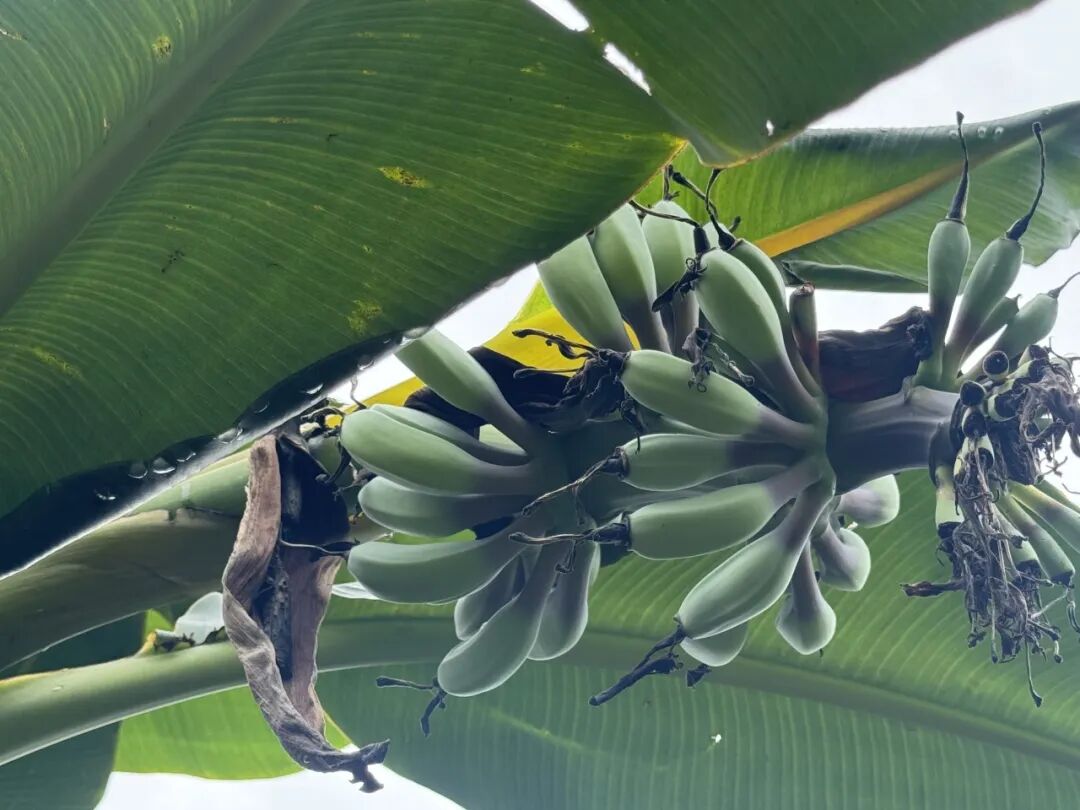
◉ Naturally grown plantains—one plant yielded only this much.
Because I refuse to spray antibacterial fruit-preserving chemicals, dozens of kiwifruit vines along sixty metres of riverbank produced a mere 26 fruits. I’ve tried growing dozens of blueberry bushes of various varieties in both the dry small courtyard at Mount Tai in the north and the humid Villain’s Valley, and every single one died of disease. If all growers behaved as I do, we’d be driven into bankruptcy.
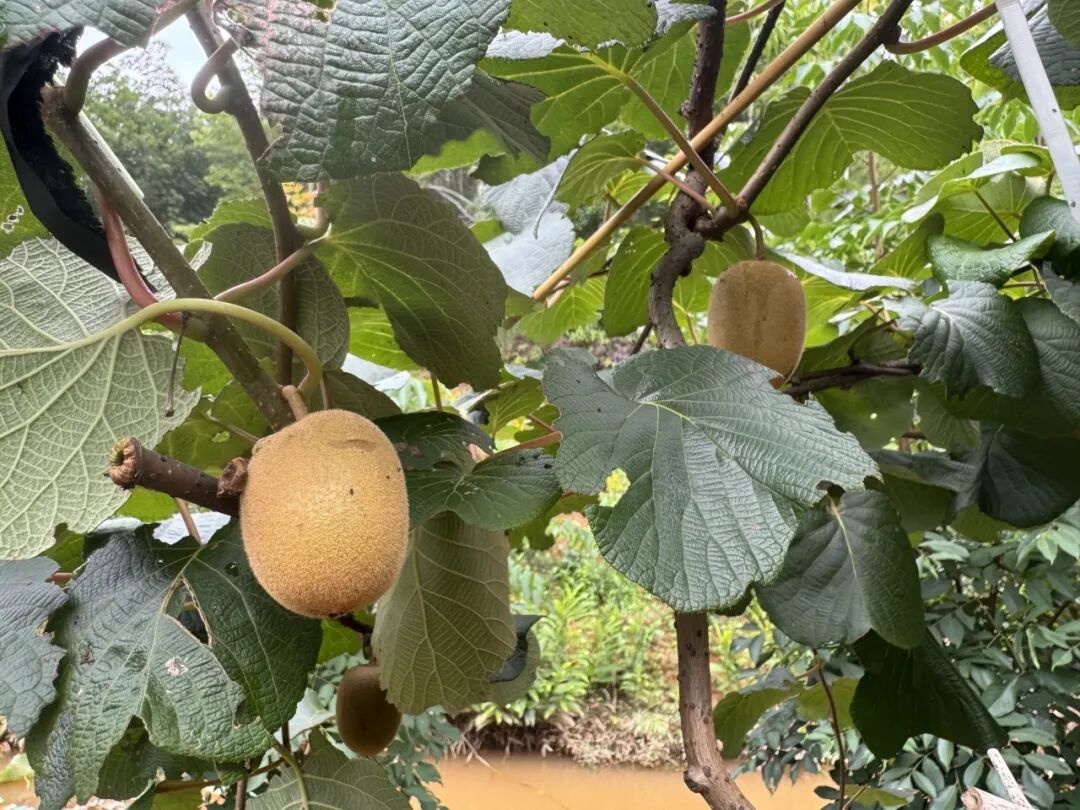
◉ Kiwifruit. In spring, the number of female flowers is tens of thousands of times the twenty-six fruits you see here now.
Having weathered trials beyond number, once the fruit ripens, an entirely new ordeal awaits. Fruit is living plant matter. There is no fundamental difference between fruit hanging on the branch and fruit sitting on the table—it is still breathing, still metabolising, still moving through the process of ripening, ageing, and decay. Moreover, once detached from the tree, a fruit’s life instinct is to accelerate ripening and complete its full life cycle.
To ensure fruit arrives at the point of sale intact, its ripening process must be artificially halted. The methods available are refrigerated cooling, inert-gas sealing, and chemical blocking—often several measures are used in combination. The cost of refrigeration plus gas sealing is self-evident; the cheapest option is soaking in chemicals. For the consumer this is a last resort; for those in the distribution chain, it is the first resort—until the scandal breaks and threatens the entire industry. The masterminds vanish perfectly; a few scapegoats are caught, the rest scatter to other fruits, leaving the farmers at origin with tears to cry but no way to weep.
Unless they are as indifferent to yield and cost as I am, every single person along the chain from growing to shipping and selling must face trials and dilemmas. I have no right to choose for others, so I simply chose to reject buying fruit from outside. I once loved fruit so deeply that it was beyond self-control, and I withdrew from it as if stepping off a cliff.
After quitting buying fruit from outside, the way I eat fruit has changed.
In the 2026 bayberry season, determined to avoid another river of blood, I planned ahead and dressed both bayberry trees in white mesh bags. Last year, ninety per cent of the bayberries fell to the ground. This year, the bags catch them safely.
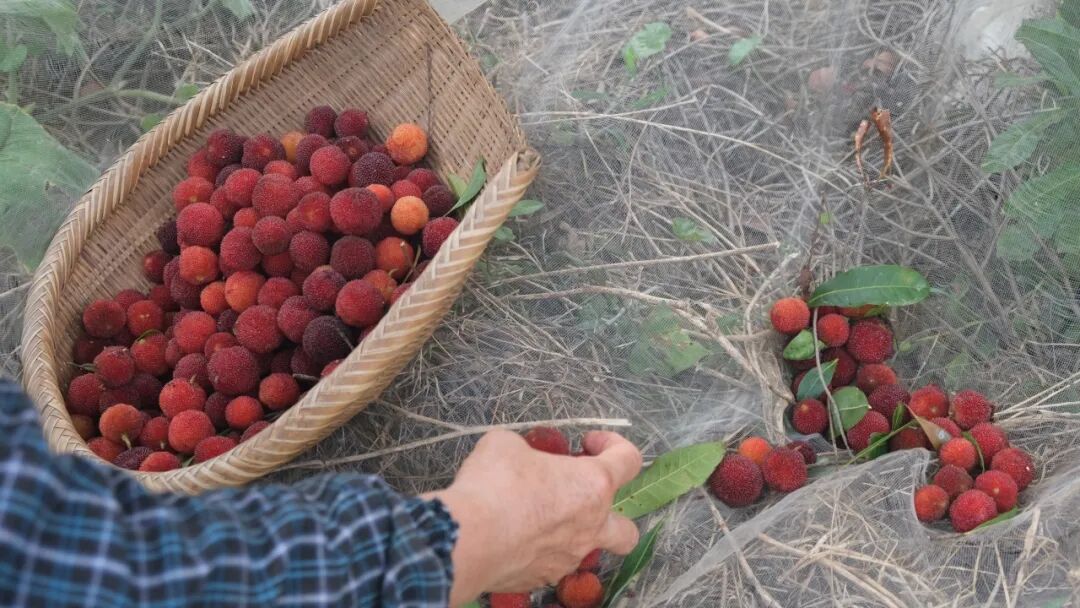
◉ Bayberries inside their white mesh bags, perfectly preserved.
When the bayberries ripen, the largest and best are sent to my son. The “benefit” of this year’s bayberry scandal is that my son now knows shop-bought bayberries aren’t safe and has finally accepted mine. I deal with the rest myself. I set aside the ones so ripe they’ve begun to darken for eating fresh—tree-ripened fruit is lower in acidity and won’t set your teeth on edge. Of the remainder, top-grade ones go with perilla leaves into the blender for juice, middle-grade ones are brewed with a 25 per cent sugar-water solution, and bottom-grade ones go to the compost bin. Every fruit I’ve grown with my own hands is precious; not a single one goes to waste.
There are many ways humans preserve fruit. Beyond the refrigeration and fear-inspiring chemicals commonplace in the globalised fruit distribution system, there are drying, fermenting, sugaring, salting, and preserving in wine. In season, fruit should be eaten as fresh as possible. A single glass of perilla-bayberry juice—no water added—can easily get through two kilograms of bayberries. The perilla-bayberry pulp left after juicing can also be turned into a cold-infused jam by the brewing method and kept in the fridge to eat slowly. That way, the tens of jin from my two bayberry trees can last me nearly half a year.
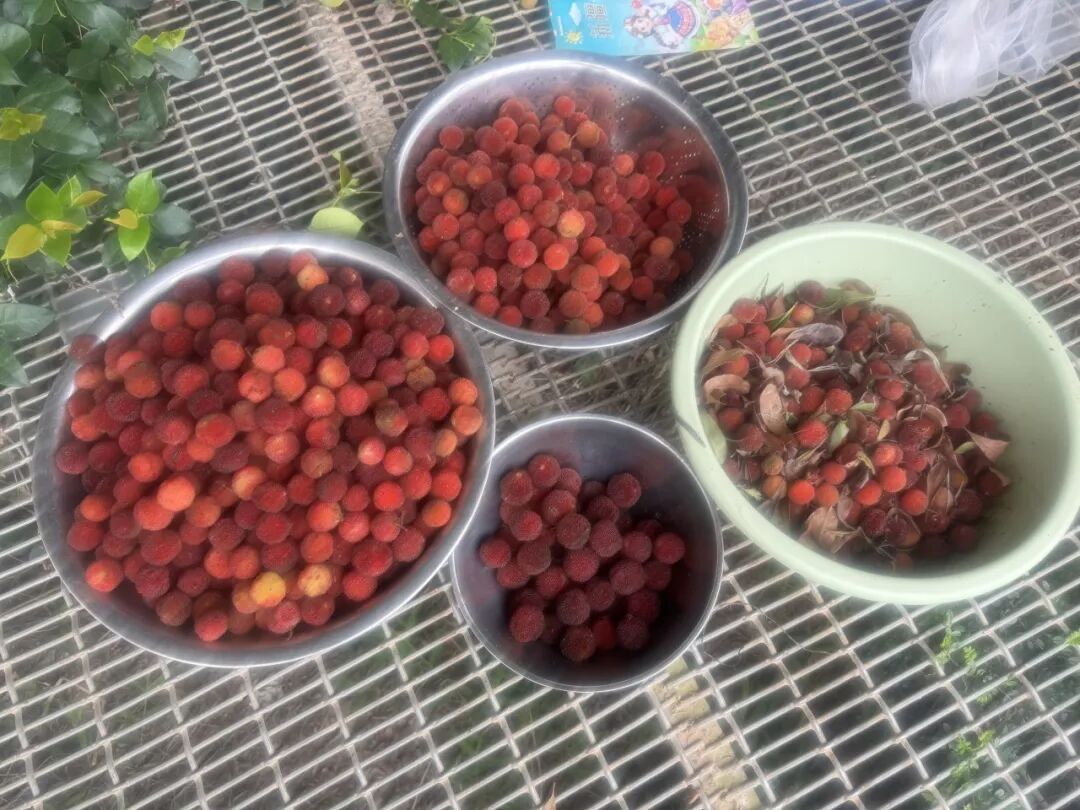
◉ Villain’s Valley’s bayberry grading system.
The Frights of Modern Fruit
The real reason I, a food lover who clings to life, quit buying fruit from outside was not the bayberry scandal. This year’s scandal exposed problems on the transport end of the modern fruit production and distribution system, but that was merely the tip of the iceberg. What I truly cannot accept is that, for many more varieties, what we call “fruit” has ceased to bear any resemblance to fruit in the traditional sense.
Much of the fruit sold in shops today is essentially an industrial product. Consider the varieties that have taken off in recent years—whether New Zealand kiwifruit, Chilean cherries, or Shine Muscat, or Sapphire—every stage, from variety breeding to planting, storage, transport, and marketing, is a link in the industrialised food production chain. Multinational capital controls premium-variety patents through the grow-and-sell club model, forming exclusive, closed-loop management of the entire chain to sustain scarcity premiums. Such “fruit” operates not only on the distribution logic of an industrial good but also on an industrialised breeding logic and set of techniques.
As technology advances, fruit breeding grows ever more precise, making gene-level suppression of unwanted traits almost effortless. A fruit with ultra-high vitamin C content hits the palate with a sharp, acidic sting—some describe it as ‘half your face numbing with sourness.’ The top antioxidants—anthocyanin, proanthocyanidin, and plant polyphenols—all come with high tannin content, producing an intensely bitter, astringent taste, ‘like chewing wood.’ Modern breeding technology can use targeted gene knockout to strip out these undesirable “junk code” traits, while selectively boosting sweetness and extending shelf life to accommodate months-long cross-border cold chain container shipping. The fruit that results is no longer fruit at all but an artificially manufactured industrial product—a microchip wearing the skin of a fruit.
Capital’s choice has never been “most nutritious”—it is ‘most profitable.’ Spotted, misshapen, unevenly sized fruit is culled; fruit that won’t store well is deleted from the dealer’s list. Farmers can only fell their trees, replacing millennia-old varieties with seedlings that meet capital’s standards. Retail capital needs only its purchasing power to carry out an extinction of varieties. When we buy such fruit, we are casting our ballot for capital and voting for this chain of choices.
The fruit that comes out of this process grows ever larger, ever sweeter, with uniform size and dimensions, yet the content of many beneficial nutrients declines rather than rises. This problem—where commercialised breeding causes a widespread drop in the micronutrient content of crops—is called the ‘nutrient dilution effect.’ It aligns with the findings of a study by Professor Donald Davis and his research team in the United States, who monitored forty-three varieties of fruit and vegetables over fifty years, from 1950 to 1999.
Our generation has lived through this process. In the 1960s and 70s, the fruit I ate as a child was extremely scarce, but the flavours were distinct. Among apples, there was the Xiao Guoguang, sour enough to set your teeth on edge, and the Red Five-Star, so mealy it could choke you. The big, sweet Yantai apples left memories that lingered ever since. Now the ultra-sweet Red Fuji dominates every fruit stall—larger and sweeter than any apple of the past—yet the fragrance of childhood seems gone for good. The nutrients in those small, slightly tart apples that our parents and grandparents once picked from hillside groves fifty years ago might now require three or four of today’s giant Red Fujis to match. But the price we pay is swallowing far more fructose along with them—fructose, that well-known threat to modern health…
Fruit as a Luxury Good
Thanks to this year’s bayberry scandal, public concern has spread beyond bayberries to other fruits. Some have even raised the question: must we eat fruit at all?
Not necessarily. Fruit does not contain any nutrient that the human body requires and that is found only in fruit.
One can obtain ample nutrition from vegetables and other foods without eating fruit at all. Modern fruit consumption is driven partly by appetite and partly by being swept along by trends.
Everyone knows kiwifruit as the “VC king” and blueberries as the “king of anti-ageing anthocyanins”. In truth, both vitamin C and anthocyanins are widely present across many fruits and vegetables in nature. The real vitamin-C king among fruits is cili—a Chinese native fruit that is somewhat close to a wild berry—whose content reaches tens of times that of kiwifruit. Cili genuinely does not taste good, but the winter jujube, which does, packs five times the vitamin C of an ordinary green-fleshed kiwifruit. If the sole aim is vitamin C intake, kiwifruit is entirely unnecessary.
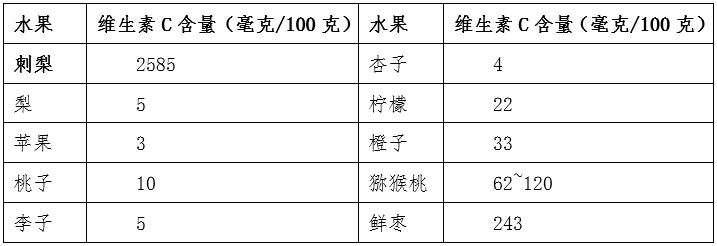
◉ Data from the Food Composition Table of China (6th edition)
The reason the “VC king” label stuck with kiwifruit is largely that the fruit is backed by New Zealand and Zespri, which wield formidable agricultural-production and marketing power. Under the force of that marketing offensive, kiwifruit was crowned VC king, Chilean cherries were tagged with the social currency of financial freedom, and blueberries were branded a symbol of refined self-discipline.
Much of the “stupidity tax” levied in the fruit world is really a fashion tax, pointed squarely at “high-end consumers”. Chilean cherries are simply big sweet cherries; the premium of over a hundred yuan per jin actually stems from an extraordinarily long logistics chain and more than forty days of cold chain storage. This ultra-sweet privilege of the middle class is, in the end, a sugar ball dressed up as fashion and fed to us by South American fresh-produce giants. So many people are in fact paying a premium for the class signalling that matches the long supply chain—paying for the brainwashing of fashion culture.
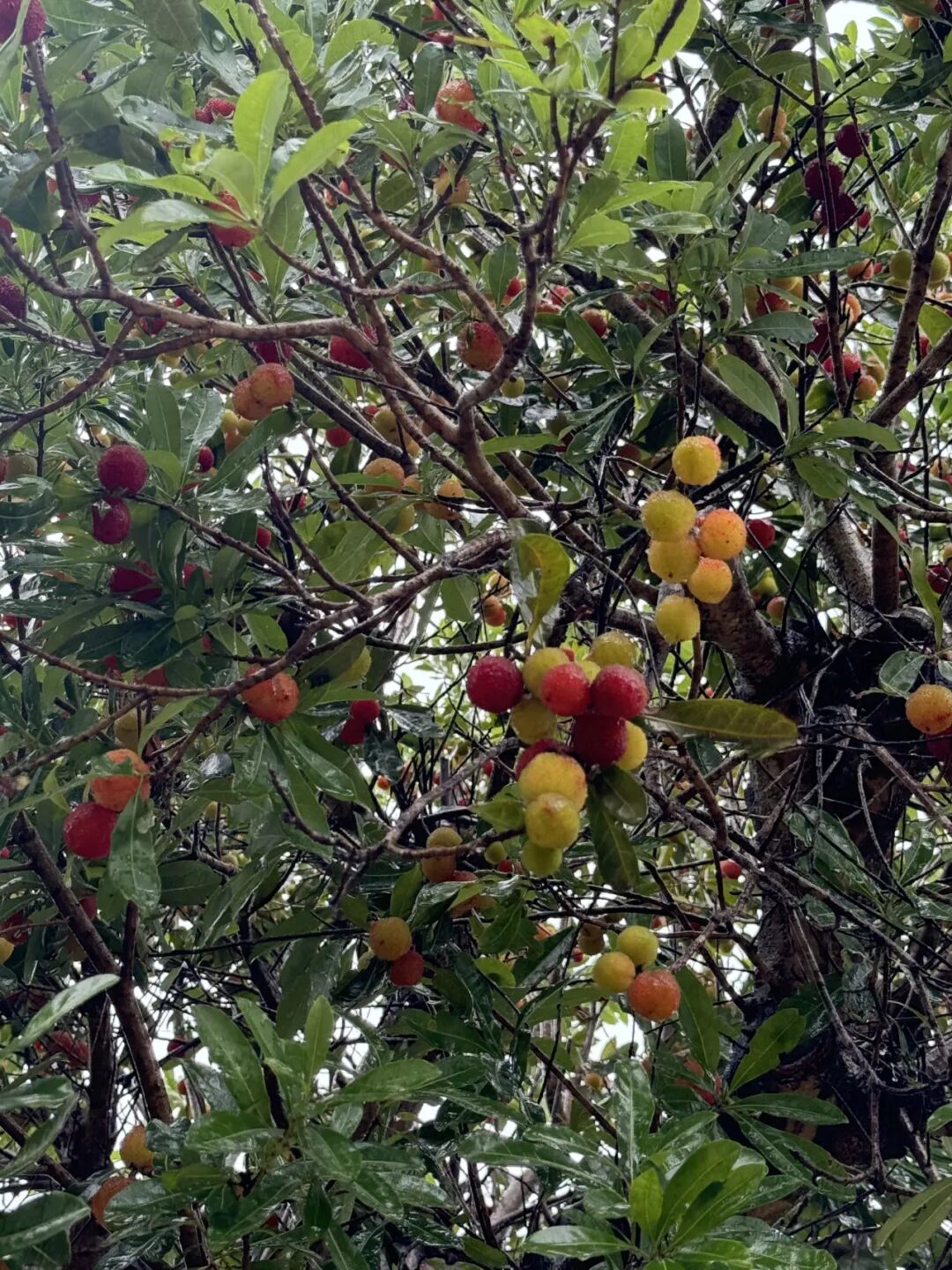
◉ Bayberries of 2025.
As for the chemical-soaked bayberries that made headlines this year: as a food lover, I remain calm not because I have my own bayberries and need no outside purchases, but because I still hold a faint memory. The bayberry scandal is no novelty—it erupted over a decade ago. In 2011, bayberries were soaked in chemicals and pesticide residues exceeded the legal limits. Before long, authorities were debunking it as “malicious hype, malicious boycott”, and peace was restored—skies remained clear, breezes stayed light. The world churns with fresh scandals one after another; like the big-headed baby formula scandal, tainted milk powder, gutter oil, and the oil tanker trucks affair, each one passes after a while. Surely, long before the next bayberry season, the ripples in public sentiment over bayberries will settle back to stillness.
I write these words because of the bayberries, yet not only because of them. Are bayberries still safe to eat? By my own method, I eat plenty of them. Is fruit still safe to eat? From the standpoint of essential nutrients, it is not strictly necessary; but given the pleasure that good flavour brings, there is no harm in eating it—provided we choose fruit rather than be chosen by it.
– This is Foodthink’s 814th original piece 814 –

Foodthink
Author
Kouzi
Steadfast farmer, village winemaker. Full-time food lover, part-time farmer, amateur writer.
Editor: Xiaodan
Layout: Minglin
▼
Click the image to read related articles