For Northern Shaanxi People, Eating “Bitterness” Was Never a Choice

Sow-thistle, known by its scientific name common sow-thistle and its medicinal name Patrinia. Decades ago, I could never have imagined that the sow-thistle once dug up by northern Shaanxi people merely to fill their bellies would come to be favoured by the market for its nutritional value, and that foraging for wild greens would become a new social and leisure pursuit in urban life.
For me as a child, in that tiny mountain village called Langhao Gou in Yanchuan County, Shaanxi Province, eating sow-thistle was never a choice – it was a survival mode born of material scarcity. Digging up sow-thistle was once a regular chore for our family throughout spring and summer.
Sow-Thistle for People and Pigs Alike
A single song, The Loess Highlands, speaks of all the barren desolation of the plateau in northern Shaanxi. Langhao Gou was a small, out-of-the-way place, tucked deep among the mountains, home to barely twenty or thirty households – so cramped that if someone were to call out from their courtyard gate, the whole village could probably hear.
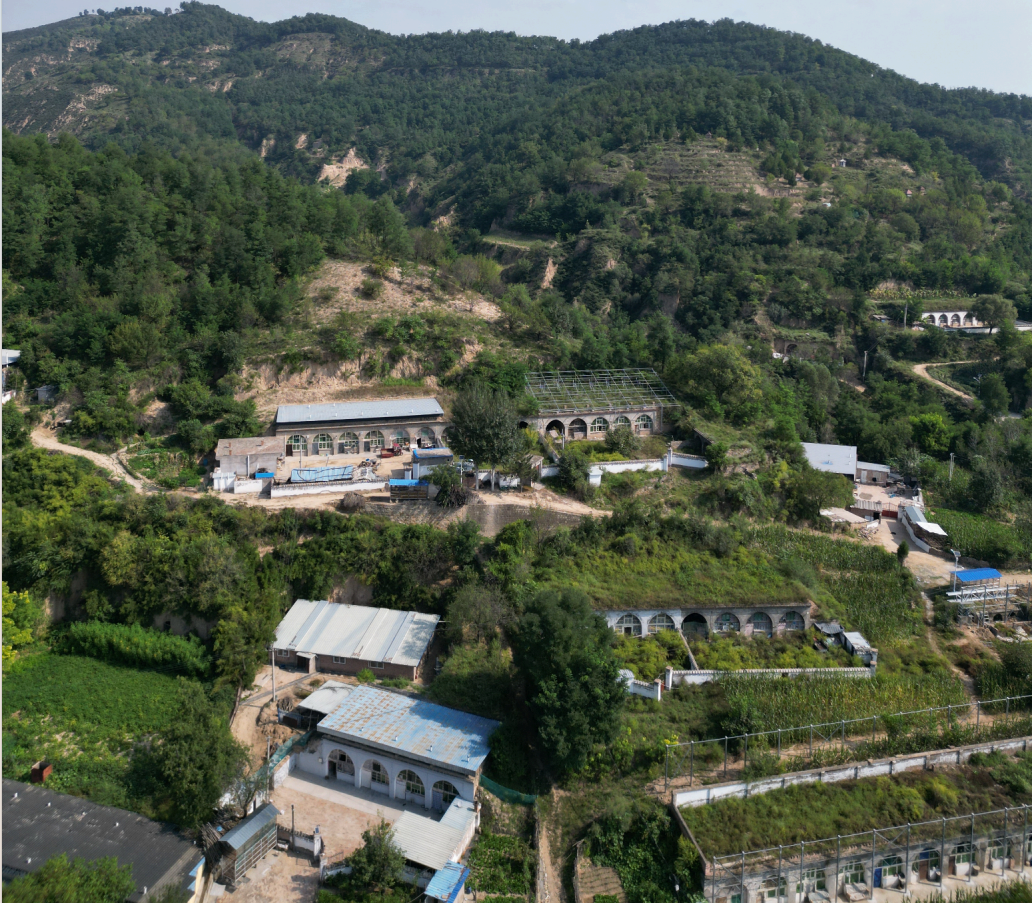
◉ The tiny mountain village of Langhao Gou, a microcosm of the Loess Plateau in northern Shaanxi with its thousands of gullies and ravines. Image credit: Liu Xu
That was the 1970s, and everything we ate came from our own fields and the wild land around us. Yet the soil on the Loess Plateau was thin and poor, the rains were scant, and crops struggled to take hold – harvests were meagre. But the land never lacked the stubborn vitality of wild greens, and sow-thistle was the most common of all, its roots sunk deep into the yellow earth. People spent most of a day trudging into the hills to dig sow-thistle and lay it out to dry, all so that during the lean spell between old grain and new harvest, there would not come a day without food.
Every year, as soon as the warm breezes of early summer stirred, the child I was would take my little sister by the hand, sling a bamboo basket over my arm, and run off to the wilds. Along the clifftops, through the gullies, by the riverbanks – wherever you looked, great expanses of glossy green wild greens lay spread across the land, a sight unique to the Loess Plateau: sow-thistle unfurling its serrated leaves, purslane creeping low against the earth in sheets of jade green, fat-hen fluffing up in soft tufts along the field edges.
The riverbank, rich with moisture, grew the best sow-thistle – thick, plump leaves and sturdy roots – making it our favourite spot for gathering. We would squat down, push aside the tangle of weeds, grip the base of a sow-thistle plant and give it a gentle upward tug, and the whole plant, white root and all, would drop into the basket. Of all the sow-thistle we collected, only a small portion was kept for our own table; the vast majority was carried home to feed the pigs. Even coarse grain barely stretched to fill our bellies, and pig feed was scarcer still. The handful of pigs went hungry day after day, grunting all long in their pen.
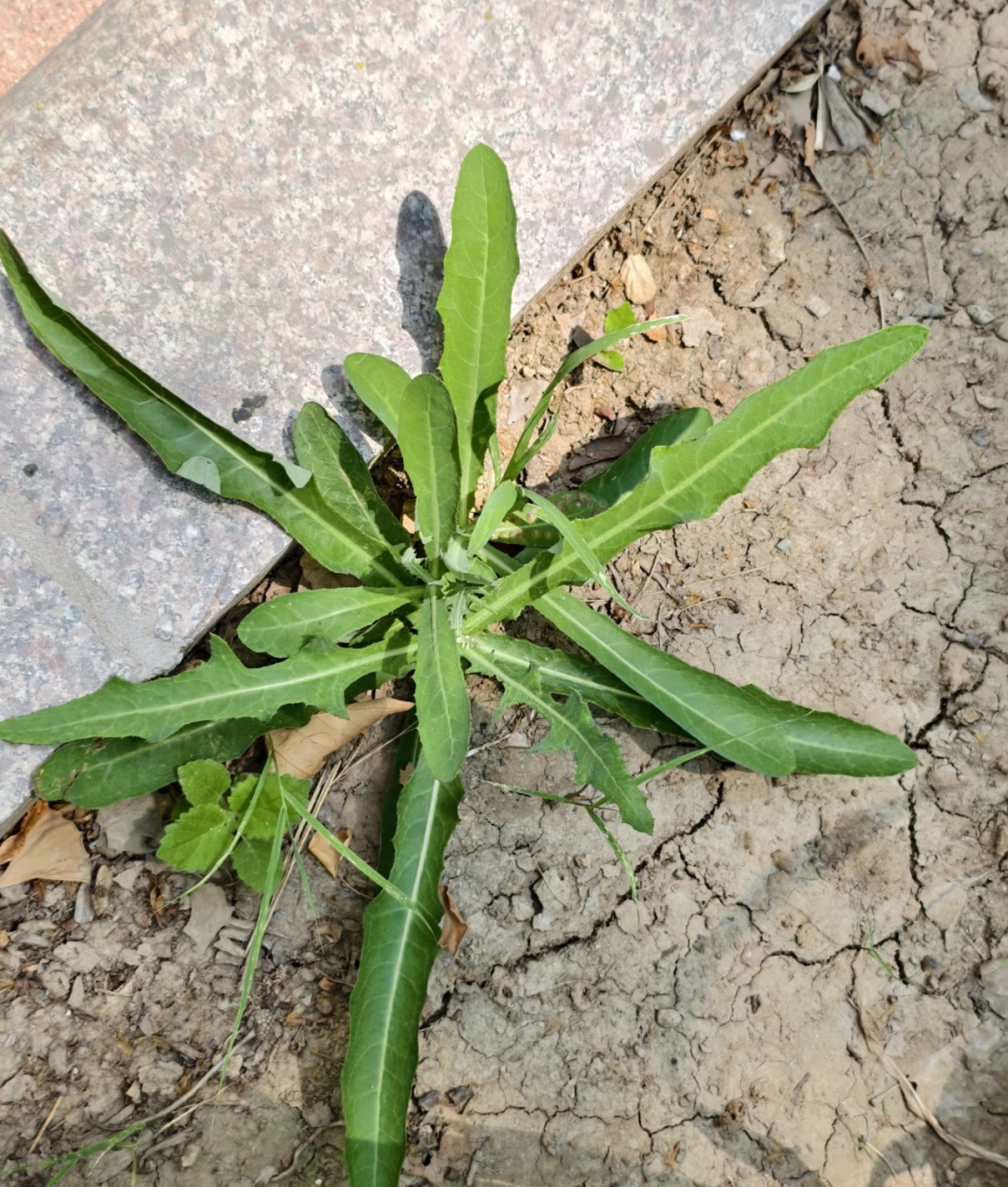
◉ Sow-thistle, known by its scientific name common sow-thistle, goes by other regional names in some areas – jumai cai, quma cai, kuma cai and kumai cai. Image credit: Xiaohongshu @有容本草
My little sister was born a playful, pretty-minded thing – her thoughts were never on gathering greens. A butterfly would drift past and she would abandon her basket and chase after it, darting far down the slope, plucking a few small wildflowers to tuck behind her ear, then standing on the hillside, swaying this way and that, quietly delighted with herself. To coax her into gathering more, I always suggested we race to see who could fill their basket first. But the instant a plump earthworm wriggled up from the soil, all the colour would drain from her face; she would drop the greens she had been holding, scramble backwards, and not dare reach into the earth again for ages. By the time we trudged home at dusk, she would stare at the pitiful few wild greens in her basket, hang her head and sulk. My heart ached for her – she was so young, so easily swept up in her own games – and every time I gave her the lion’s share of the sow-thistle I had dug, tipping it into her basket to coax the smile back.
Once home, Mother would take the basket brimming with sow-thistle and tend it, with quiet care, into a table of homely, fireside flavours. She would pick out the most tender young shoots, rinse them clean and chop them fine, then let them simmer gently alongside silken tofu. The clear broth would bubble slowly, the clean, fresh taste of sow-thistle marrying the soft, yielding tofu – a light soup with a lingering sweetness on the palate. One spoonful and the whole of the summer countryside was there, distilled. Not a trace of spare seasoning, and yet enough to wash away the weariness of an entire day’s toil.
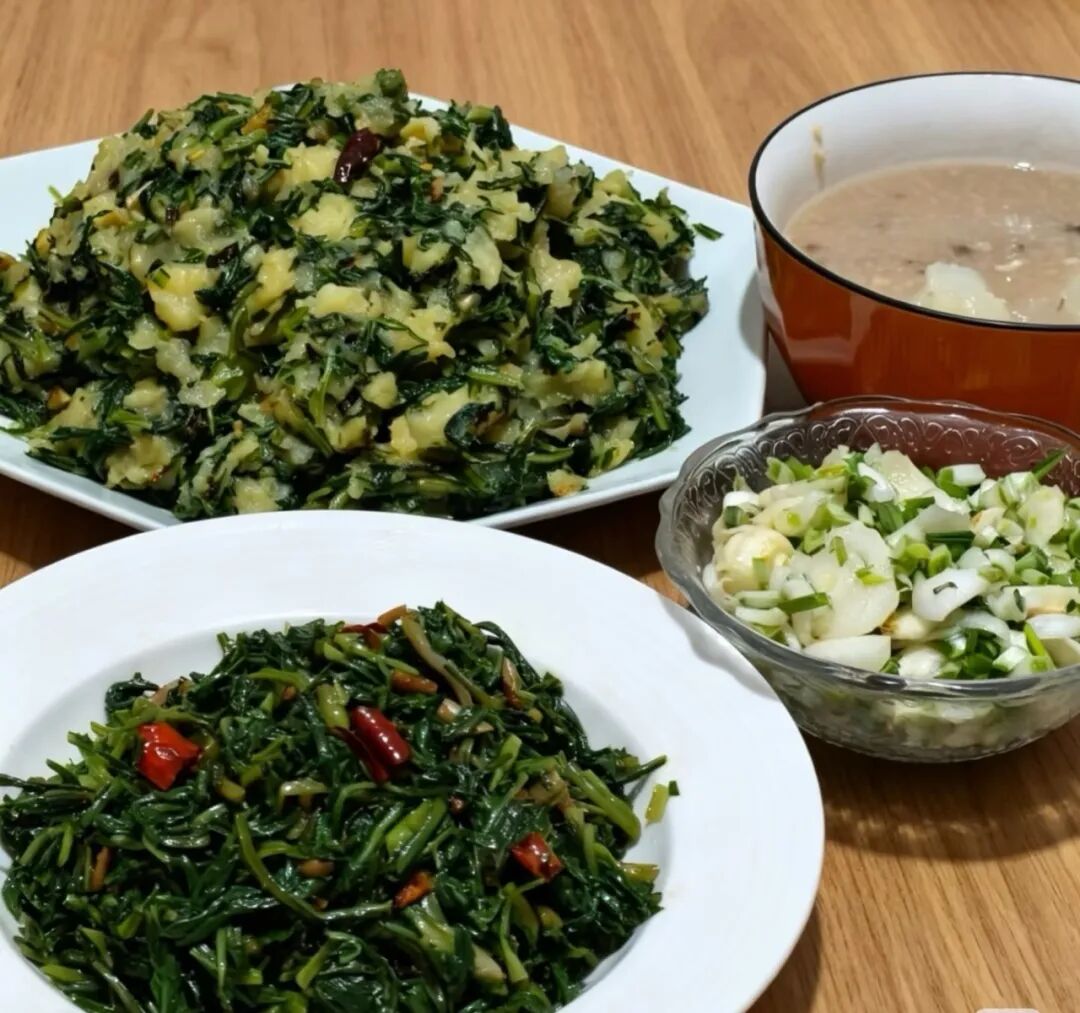
◉ A selection of sow-thistle dishes beloved by children in northern Shaanxi. Top left: sow-thistle stir-fried with diced potatoes; bottom left: cold-tossed sow-thistle. Image credit: Juanjuan bu juan zenme juan
What little sow-thistle went uneaten would be chopped fine, mixed with chaff and given to the pigs, who plunged their heads into the trough and gobbled it down, grunting ceaselessly. People eating contentedly, pigs eating their fill – in those lean, humble years, this was the simplest, fullest happiness there was.
The Repackaged Sow-Thistle
This past summer, when my mother – now in her eighties – came to stay a while in Yan’an, she brought a large bag of freshly picked sow-thistle, still warm from the edges of the loess slopes in northern Shaanxi. Its roots were caked in damp earth; its leaves were vivid, dewy green. The moment I breathed in that crisp, clean scent unique to the open hills, and the first bite sent that familiar bitter sweetness flooding over my tongue, scenes from childhood – digging greens along the field ridges, Mother cooking wild vegetables at the stove – flickered through my mind one after another, like reels of an old film.
The attachment of northern Shaanxi people to sow-thistle runs deep, rooted in both history and the present. For us, this humble green always has endless stories to tell. In ancient times, famine followed famine year after year and crops failed entirely; the Jiuhuang Bencao listed sow-thistle among the most vital wild greens for surviving famine, and countless ordinary people clung to life on the sow-thistle that grew everywhere in the hills.

◉ The Jiuhuang Bencao is a botanical record compiled in 1406 by Zhu Su, Prince Ding of Zhou, during the Ming dynasty. Focused on famine relief, it primarily documents the edible wild plants common to the era.
During the struggle on Jinggangshan, Nationalist troops sealed off the base area ring by ring, and the Red Army soldiers could fill their bellies only with soup made from sow-thistle, which grew thick across every hillside. The bitter broth made many a soldier’s heart falter. Mao Zedong walked over to the rice bucket, ladled out a great bowlful of sow-thistle soup, drank it down in one go, smiled and declared the flavour quite acceptable – then asked for another bowl. That a leader should eat the same bitter greens as the common soldier silenced every grumble. This episode later became the beloved revolutionary song Chairman Mao Is with Us.
Yet once the wellness-consumption craze took hold, the stories about sow-thistle began to turn in a different direction. One day I was visiting a friend, and he mysteriously brewed a pot of tea for me to sample, then launched into an endless lecture on what made his tea so special – from health benefits to medicinal properties, culminating in the claim that this tea could actually extend one’s lifespan. I sat there, dumbstruck. One tentative sip, and the words tumbled out before I could stop them: “Isn’t this just plain old sow-thistle, steeped in hot water?” My friend bristled at my nonchalance, insisting I simply didn’t appreciate the wonders of sow-thistle tea.
Profit-hungry merchants keep rebranding sow-thistle with ever more outlandish gimmicks, trumpeting its food-as-medicine benefits and channelling it into canned goods, beverages, wellness teas and all manner of derivative products. What was once a common, freely gathered wild green in the hills – cheap as dirt – saw its price skyrocket after a coat of sleek packaging and a gloss of marketing copy. Dried sow-thistle tea alone can fetch several hundred yuan for a single jin (500 g).
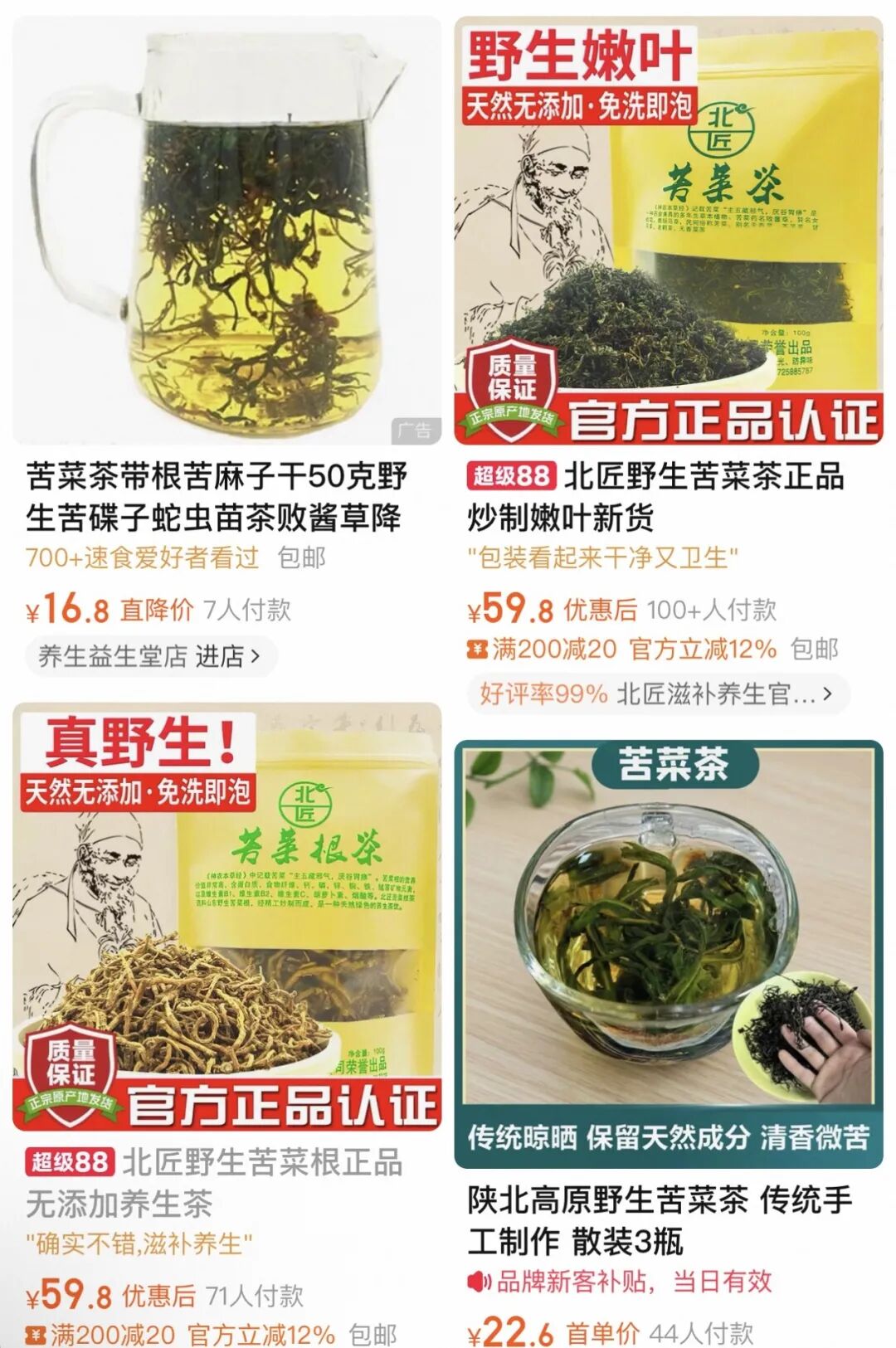
◉ Sow-thistle tea sold on e-commerce platforms.
Of course I know the nutritional and medicinal value of sow-thistle. Li Shizhen called it Tianxiang Cao in his writings – a plant where medicine and food share one origin, revered for over a thousand years. Cold in nature and bitter in flavour, it enters the Heart, Spleen, Stomach, and Large Intestine meridians, and is credited with clearing heat and detoxifying, cooling blood and stopping bleeding, and clearing the liver and brightening the eyes. Rich in vitamins, iron, potassium and dietary fibre, it carries both nutritional and wellness value.
But food is not merely a list of nutrients – it is woven into our culture and way of life. The unwavering devotion of the older generation in northern Shaanxi to sow-thistle springs from those weighty stories in which famine, revolution and homesickness are braided together. I suspect that consumers who buy in purely on the back of wellness claims made by sellers will, once they find that sow-thistle is not quite the miracle cure advertised, soon enough think no more of it.
Do Young People Still Eat Sow-thistle?
Sow-thistle has long served as a bond of feeling among the people of northern Shaanxi. Picture it: one winter you return to your family home, and your mother, with studied calmness, sets a plate of wild greens before you. You start – where on earth did you find wild greens in this season? – and she beams, bursting with pride, telling you they were gathered in summer and stored in the freezer. You would feel, I am sure, an overwhelming happiness.
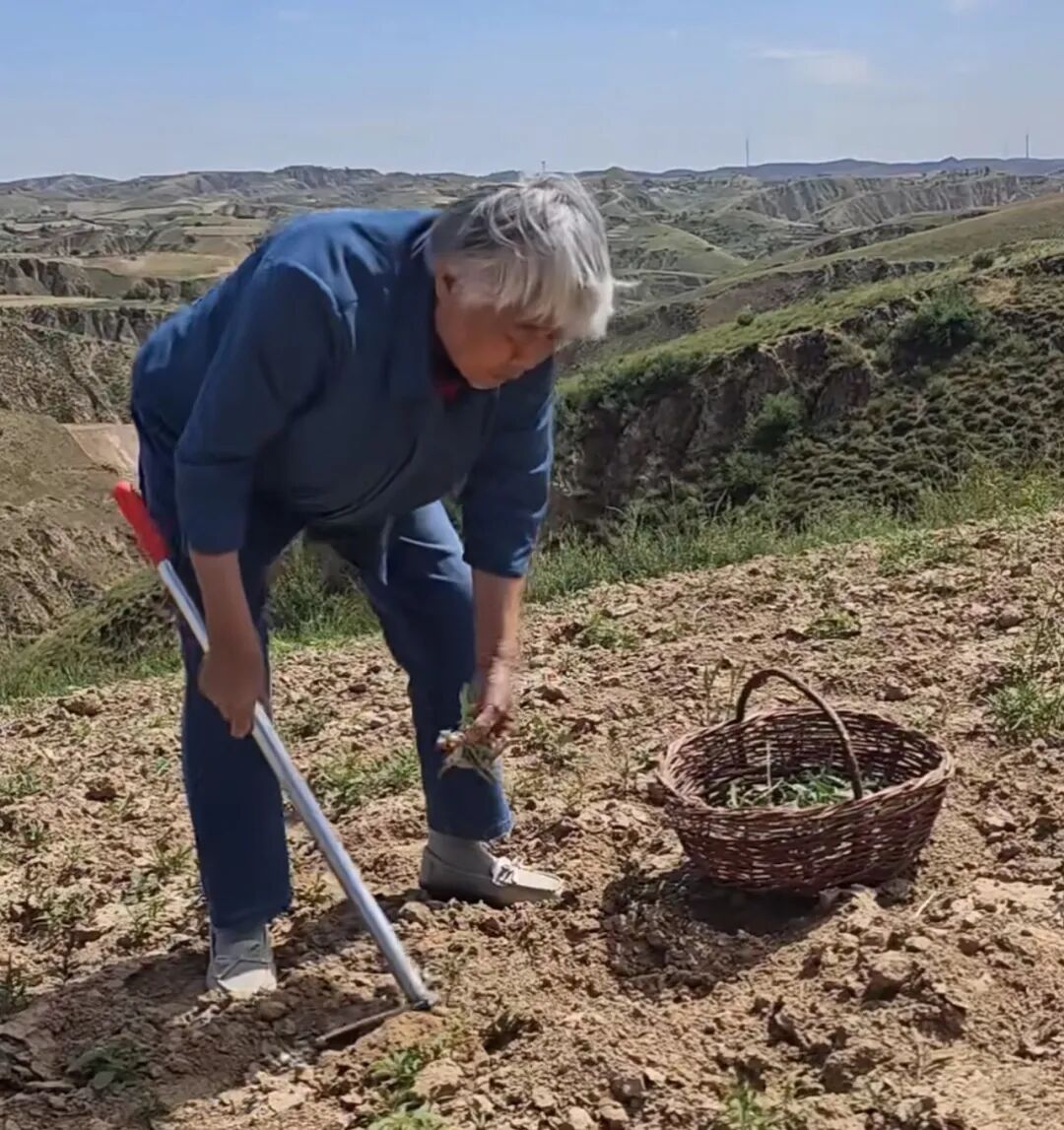
◉ The older generation in northern Shaanxi mostly came through lean, bitter years; they know well how wild greens saw people through hunger and cold, and treasure the clean, simple taste of sow-thistle – bitter at first, sweet at the end. Their sense of food is coloured by contentment and the habit of savouring sweetness by remembering hardship. Image credit: Liangyuan zhang de tuixiu shenghuo @ Xiaohongshu
My youngest daughter, however, flatly declared that sow-thistle is too bitter to swallow and joked, “We aren’t rabbits – why on earth should we eat this unappetising grass?”
For the younger generation, who grew up in an age of plenty, with chicken, duck, fish and meat, and fruit and vegetables from every season available year-round, there is simply no need to fill gaps in the larder with wild greens. They are used to seeking bold, punchy flavours in takeaways, fast food and rich, heavily spiced meals – why would they take the time to savour the quiet delicacy of sow-thistle?
Besides, under the relentless pace of modern work, speed and convenience are the core demands of an urban office worker’s meal. It is not as in the countryside of the past, where people had hours of idle time and were happy to trudge into the hills for half a day to gather wild greens, then wash, soak and slow-cook them.
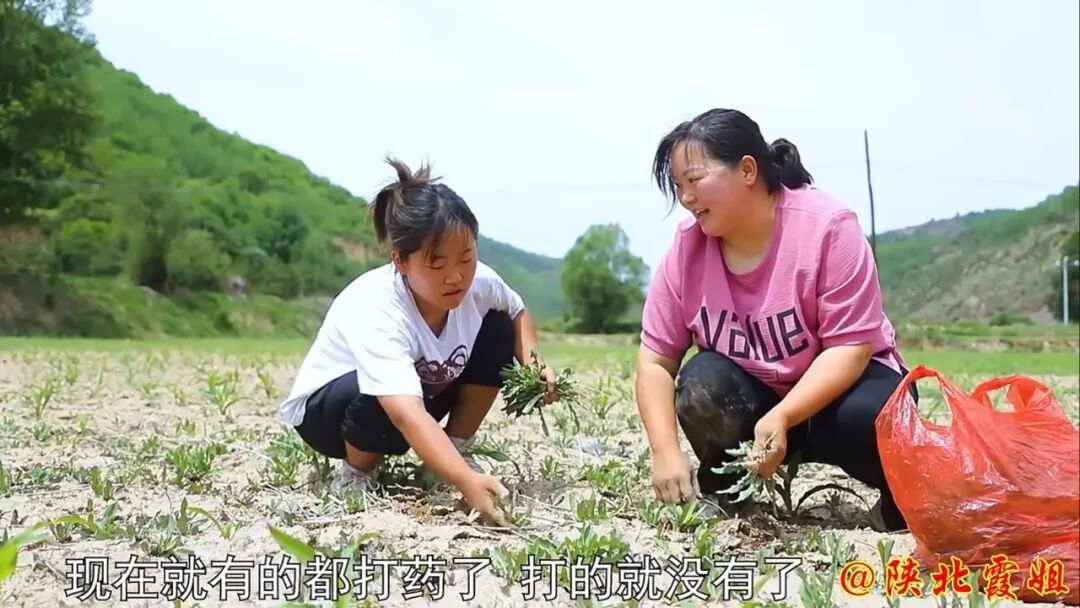
◉ A short-video blogger laments that, because of pesticide spraying, sow-thistle has all but vanished from some cornfields in rural areas. Image credit: screenshot from a Xiaohongshu short video by @陕北霞姐
Some shrewd traders have adapted to the trend, reworking how wild greens reach the table: they wash and blanch sow-thistle repeatedly beforehand to draw out the bitterness and strip away soil grit and astringency, then pair it with a pre-mixed seasoning sauce and seal it under vacuum. The consumer takes it home needing do nothing more than open the packet, toss and serve – much like the ready meals that sell in volumes on the high street.
Such processing does spare the diner an entire set of fussy steps, but it strips away the singular joy of the wild. Simplify everything at a single tap, sever the tactile link to soil and nature, and for young people who are far more used to identifying food by its label, the tenderness and delight of picking wild greens in the hills and preparing them by hand are beyond reach.
Sometimes I wonder: if that closeness to the land and to rural life is lost for good, will young people of the future eat sow-thistle at all? Then again, I have heard that a foraging boom has swept the internet lately, and many a takeaway-fed young person has even declared themselves afflicted with “green-vegetable anxiety syndrome”, so I allow myself a little more optimism.
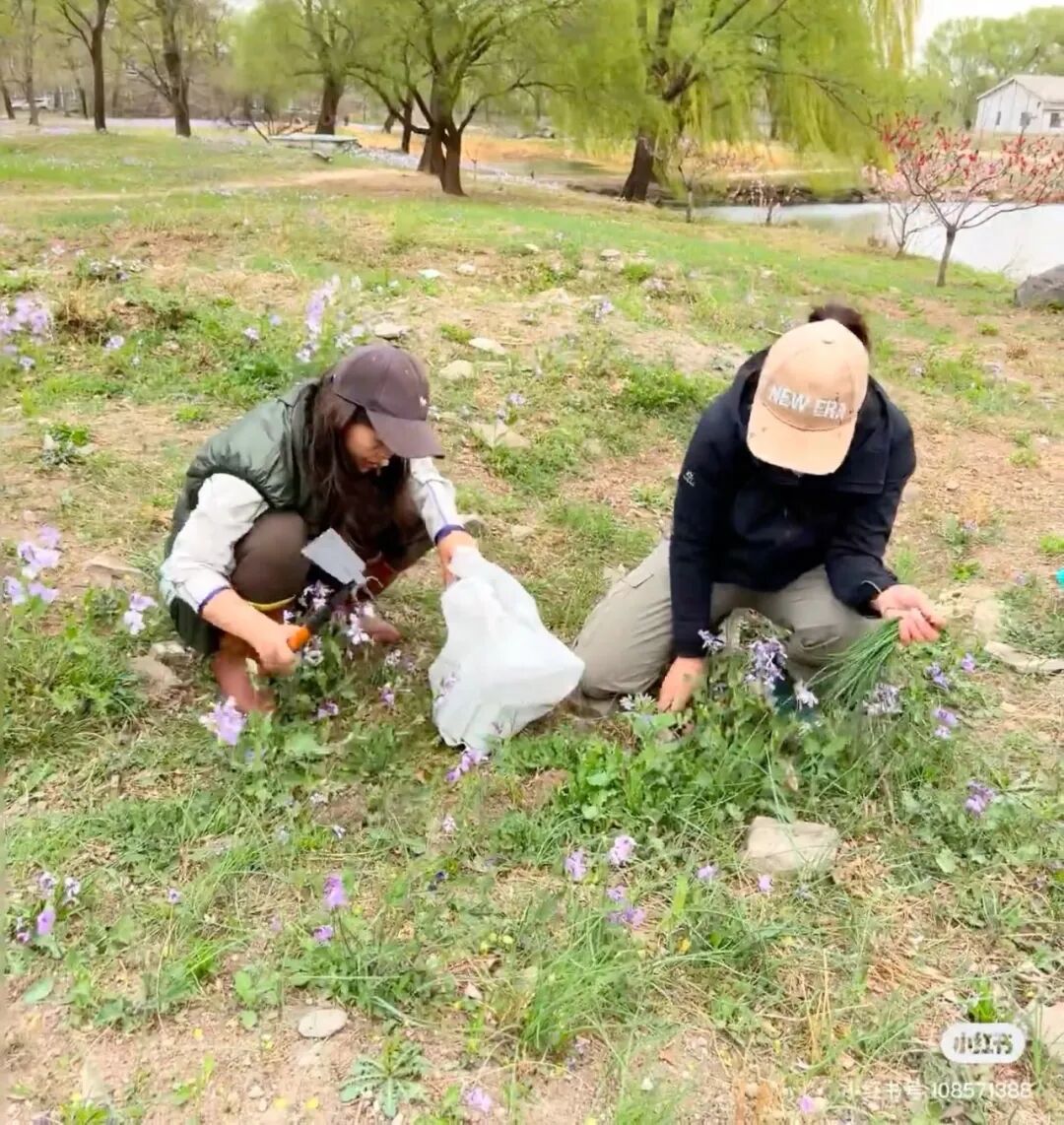
◉ Many young people in the cities have taken to foraging for wild greens as a way to step briefly out of the workplace, relieve stress and reconnect with nature. Image credit: Vodka999 @ Xiaohongshu
The world turns like a white cloud into a grey dog; industrialisation and urbanisation have rewritten, root and branch, how people live and what they eat. Sow-thistle is no longer a survival necessity, yet the desire to eat it has not been wholly drowned beneath waves of feasts, takeaways and ready meals. This summer is nearly over, and next summer the sow-thistle on the hillsides will still be vivid, green and waiting. I am glad to see that so many people are still searching for it, by so many means – the same green, the same ancient, unchanging flavour.
– This is Foodthink’s 840th original article –

Foodthink
Author
Liu Xu
A farmer who wants to fly higher. I love doodling and writing straight from the heart, pressing on over mountain and stream, leaving behind a song in praise of life.
Editor: Tianle
Layout: Xiaoshu
Scan to make a donation and support original food writing
▼

▼
Click the image to read related articles



▼
Click a keyword to browse more article collections
Seeds | Farming Techniques | Policy | Fermentation | Nutrition | Fruit | Fisheries | Events | Recruitment | Takeaway | Wet Market | Livestock Farming | Food Talk | Sharing Sessions | Reading Groups | Harvest Festival | Smallholder Stories | Climate Change | Rural Development | Cooperative Economy | Urban Farmers | Food Safety | Digital Technology | Biodiversity | Pandemic & Food | False Solutions | Agroecology Internship Programme
Beijing | Hebei | Shanghai | Guangdong | Guangxi | Henan | Sichuan | Jiangxi | Xinjiang | Shaanxi | Hong Kong | Chongqing | Zhejiang | Jiangsu | Guizhou | Taiwan | Inner Mongolia | Philippines | Canada | Russia | Mexico | Italy | United States | United Kingdom | Germany | Netherlands | Thailand | Sweden | Japan