
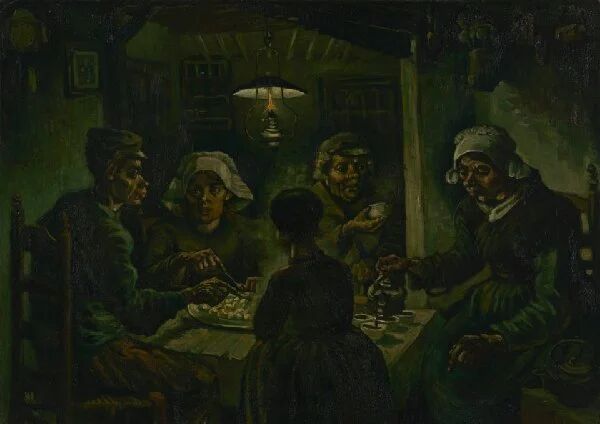
Mercosur and the EU formally signed their free trade agreement after nearly ten thousand farmers hurled potatoes at EU headquarters in Brussels. Grain-price trauma, double environmental standards and transition costs stack up—fairly, who bears the cost of green transition? China’s low-carbon agriculture faces the same question.
A small strip of clay by the courtyard wall of our Hangzhou studio: after seven batches of hot compost made from saved kitchen scraps and coffee grounds, the ground, hard as rammed earth, has loosened into black soil that opens with a single spade.
Yu Jiangang and his wife Mei Yuhui made silk duvets in Zhenghebang for over a decade. An osmanthus silkworm poisoning in autumn 2024 led him to lease 14 mu of rice paddies – from seedling to Lidong harvest, four rounds of hand-weeding, a nearly 180-day life cycle complete.
The last dish in Foodthink’s New Year recipe collection: Ujimqin sheep from Dulan’s family of Harigobi herders in East Ujimqin Banner, Inner Mongolia, raised through four-season transhumance—clear-simmered with salt alone until the meat is fall-apart tender.
The large-scale monoculture of the Plantationocene has dismantled ecosystems and rural communities, yet the traditions of care in the Qimin Yaoshu and Xu Guangqi’s Nongzheng Quanshu suggest that “non-plantation” farming can still become imaginable once more.
Shandong native Kouzi’s sixth winter in rural Fujian: from rocket stove kang to old granary turned warm room, from radish soup to dried pumpkin, the south’s damp cold at last gives way to ease.
Saturday 7 February: eight Foodthink members take over Jishi, the community veg shop at Sanyuanqiao, swapping writing for veg selling. Join us in person or online for a year-end report, food and agriculture sharing session, Chinese New Year live shopping, and a film screening with lamb soup dinner.
Farmer Kou Yanding of Villain Valley, Fujian, has sued Baidu at the Beijing Internet Court, alleging its AI fabricated an extortion charge against her — the first documented AI defamation case in China.
Chen Jingjing, a 20-year researcher of rural construction, worked a paddy for the first time this year in Qingshan Village, Hangzhou—no herbicide, sun-drying. Rice cost over 30 yuan a jin, and he also hit a hard wall woven from land rent, hired labour and the division of labour.
In a sixteenth-century manor in western France, a 1970s hippie couple sustains self-sufficiency through work-exchange volunteers. A month with a Colombian brother and sister—undocumented workers—picking strawberries, smashing walls, making cheese: the “return to the countryside” romantic imaginings shattered by day after day of unpaid manual labour.


