
The last dish in Foodthink’s New Year recipe collection: Ujimqin sheep from Dulan’s family of Harigobi herders in East Ujimqin Banner, Inner Mongolia, raised through four-season transhumance—clear-simmered with salt alone until the meat is fall-apart tender.
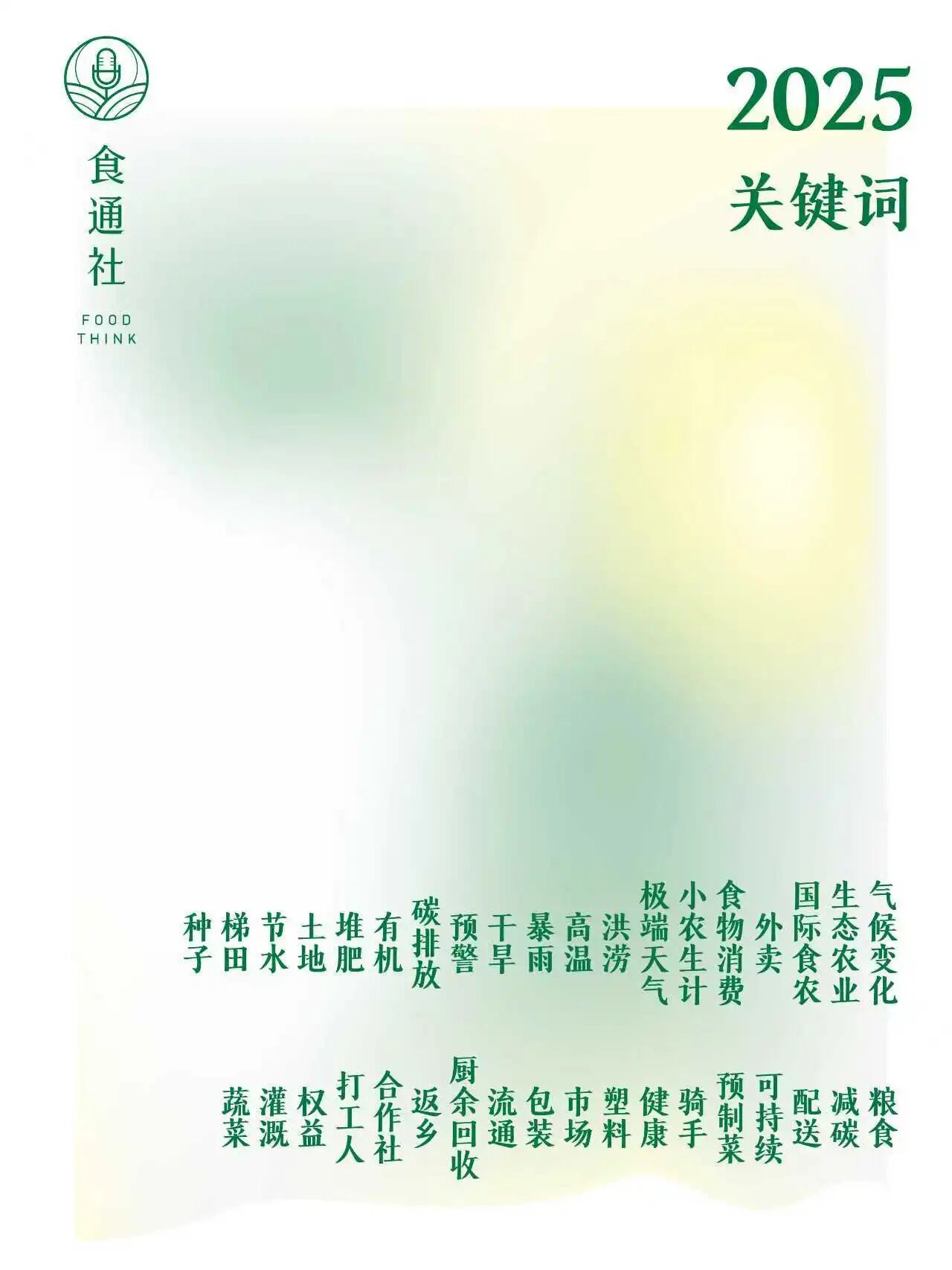
Extreme weather upends farmers’ planting rhythms, the food-delivery wars compress a meal into a 30-minute order, and imported meat reaches the highland pastoral areas directly – Foodthink’s 2025 field records hold on to the traces of the land and its labourers.
The large-scale monoculture of the Plantationocene has dismantled ecosystems and rural communities, yet the traditions of care in the Qimin Yaoshu and Xu Guangqi’s Nongzheng Quanshu suggest that “non-plantation” farming can still become imaginable once more.
Shandong native Kouzi’s sixth winter in rural Fujian: from rocket stove kang to old granary turned warm room, from radish soup to dried pumpkin, the south’s damp cold at last gives way to ease.
Forty years after dual contracting of grassland and livestock, J village in Qinghe County still has only 92 grassland certificates while pastoral households exceed 200. They sow lucerne on their hay meadows, pay irrigation charges, and buy fodder from farming areas at twice their own harvest before winter.
Saturday 7 February: eight Foodthink members take over Jishi, the community veg shop at Sanyuanqiao, swapping writing for veg selling. Join us in person or online for a year-end report, food and agriculture sharing session, Chinese New Year live shopping, and a film screening with lamb soup dinner.
Farmer Kou Yanding of Villain Valley, Fujian, has sued Baidu at the Beijing Internet Court, alleging its AI fabricated an extortion charge against her — the first documented AI defamation case in China.
Chen Jingjing, a 20-year researcher of rural construction, worked a paddy for the first time this year in Qingshan Village, Hangzhou—no herbicide, sun-drying. Rice cost over 30 yuan a jin, and he also hit a hard wall woven from land rent, hired labour and the division of labour.
Anonymous readers from southwest, northwest, and central China described farmland abandonment due to water shortage after high-standard farmland conversion, raw subsoil exposed by construction destroying soil fertility, and outsider large-scale operators suspected of leasing land to extract subsidies. Contractors also reported plunging profits and overly stringent oversight.
Meishan farmer Zhao Lishun watched rice paddies transferred to outside large-scale lessees go mouldy and be left unharvested. Across villages in Sichuan, Guizhou and Henan, high-standard conversion has stripped away topsoil, water-conservancy facilities are empty shells, and the “large-field” model is pulling villagers further from their land.


