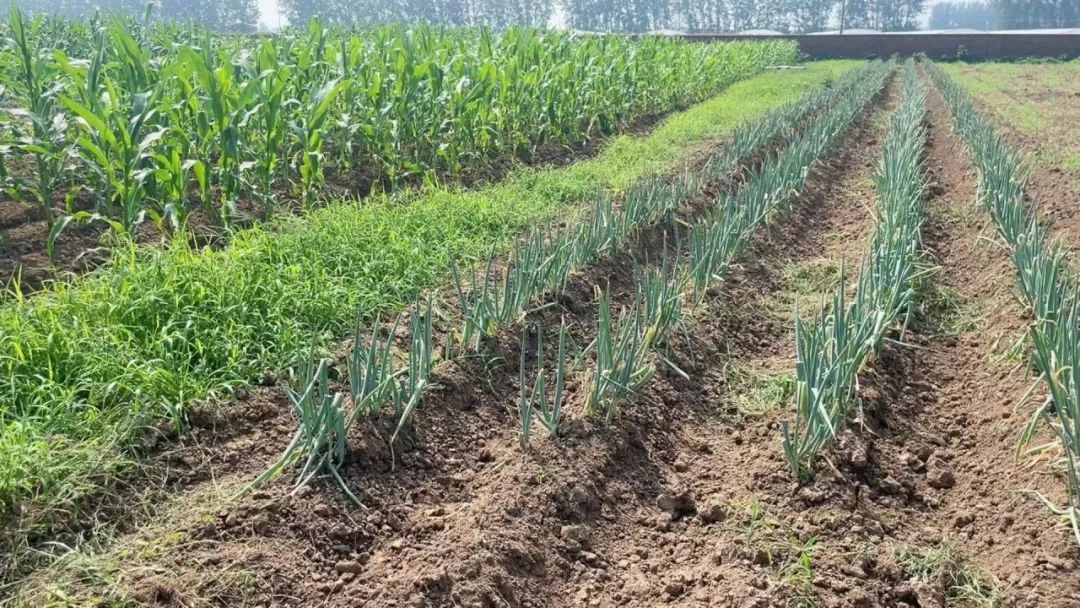
In 2015, a couple born in the 1990s – Yingying and Zhiqiang – returned to their hometown of Pingquan, Chengde, Hebei, and set up Lianxiang Farm. Over eight years, they have grappled time and again with pests, weeds, extreme heat and hiring difficulties – yet they persevere.
More than a month after the floods receded, the Longjiazhuang market reopened, yet nearly half the farmers’ east-side stalls remain empty. Aunt Li’s two mu of farmland lies buried under silt and debris. ‘People are fine, the land is done,’ she says. Compensation has yet to materialise.
Northwest China is warming at roughly twice the global rate, and rising extreme precipitation means wine grapes in areas such as Zhangye and Yinchuan are repeatedly hit by late frosts and rain damage during the harvest period. Greenpeace’s report warns that warming and wetting are threatening their quality.
Chen Ziyu of Wo Cui Yuan farm, Baoding, and Liu Gang of Xiao Liushu Farm, Shunyi, face total crop failure in maize, drowned vegetables, compacted soil. All they can do: turn the land, sun the soil, rush to plant cabbages. Who bears the cost of climate adaptation? Unanswered.
Foodthink is now recruiting for Editor, Communications and Media Operations, and two Programme Officer positions for the Lianhe Programme and Climate Change, seeking new partners in sustainable food and agriculture at its Zhichun Road office in Beijing.
More than half a year since the November 2022 blizzard unseen in over a decade, Jiangbutas Village’s Kazakh pastoralists are still repaying fodder debts and tending frail herds, while slow-melting snow keeps pastures overdue for transhumance still withered and yellow.
From late May to early June, Lüwo Farm in Jingyang endured nearly two weeks of continuous rain. Abro wheat and spelt wheat suffered lodging, sprouting and mould, forcing farm owner Dahei to rush an early harvest, with yield dropping by roughly 20%.
The SCA flavour wheel’s reference foods skew towards Europe and North America, and woody and earthy flavours are labelled as negative, placing producing regions in Indonesia and India under pressure. Developing local flavour wheels and trusting your own tongue is a freer way to enjoy coffee.
Brother Ma in Damao Banner watches his sheep and cattle trapped in livestock sheds on fodder, while Dulan’s grassland in East Ujimqin Banner degrades to bare ground. Sedentary pastoralism and dried-up water sources have planted the roots of dust beneath their feet.
At the Jokkmokk market, John and some thirty cousins hawk reindeer meat and silver jewellery, the four-hundred-year-old fair as bustling as ever; yet boarding schools, racial research and Kiruna’s newly discovered rare-earth deposit have never exited Sámi life.