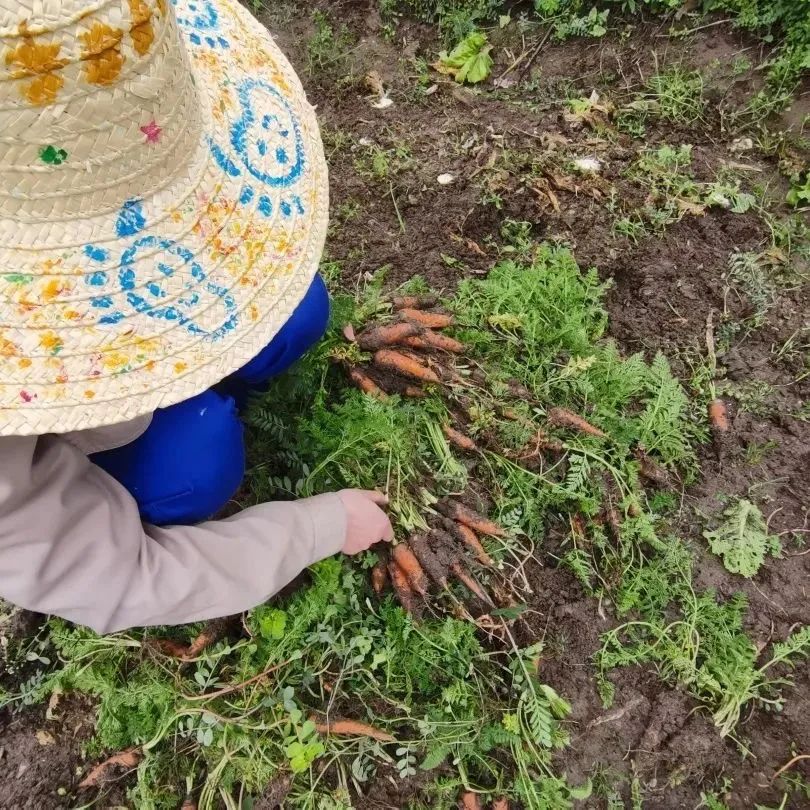
Sun Shan runs an ecological farm and fermentation kitchen in Ottawa. Eight years of daily vegetable-growing and sauerkraut-making embody Sandor Katz’s vision in The Art of Fermentation: fermentation is not just food preservation, but a way to rebuild connections with microorganisms, the land and the community.
From making pre-made cat food for three cats during the pandemic to always having fifteen finished meals in the freezer, Doudou turned the batch-cooking mindset into practical methods: portioning and freezing, keeping meat and vegetables separate, and sealing at low temperature.
Fermentation is migrating from home kitchens to factory production lines; millennia-old techniques are on the brink of disappearing. Sandor Katz, author of The Art of Fermentation, advocates bringing fermentation back to homes and communities, rebuilding local food economies and communities. Foodthink hosts four Shared Reading discussions in November.
Sun Shan, farming in Canada, turned kale earning rave reviews but selling poorly at the Farmers’ market into Korean-style kimchi, building a fermentation kitchen at Chi Garden Eco Farm. Fermentation touches gut microbiota and memories of home; she shares beginner insights from chilli sauce to fermented pickled vegetables.
At Letian Bay Farm, consumers rent plots in the countryside not for organic certification or environmental ideals, but for a sense of ease so scarce in the city: seeing how vegetables grow, recognising one’s neighbours, eating cucumbers without peeling.
From 300 mu in Bashang to 9 in Huailai, Baxia: Huang Lifeng and Li Yuxia let Eurasian magpies peck their tomatoes, save 60 per cent of water with drip irrigation, and sell home-grown veg at the Beijing Organic Farmers’ Market at weekends — enough for a family of four.
More than a month after the floods receded, the Longjiazhuang market reopened, yet nearly half the farmers’ east-side stalls remain empty. Aunt Li’s two mu of farmland lies buried under silt and debris. ‘People are fine, the land is done,’ she says. Compensation has yet to materialise.
Barcelona’s Mercat de la Terra replaces organic certification with Participatory Guarantee Systems (PGS), enabling small-scale producers to bypass cumbersome paperwork and fees, sell local seasonal produce through direct trust with consumers, and sustain a community network from farm to table.
The cooperative’s home-brewed green plum wine was targeted by professional counterfeit hunters and its partner fined; building a processing factory far exceeds smallholders’ means. Lawyer Zhang Xueming, anthropologist Zhong Shuru and rural entrepreneur Li Jie each share their views on small-scale operators’ plight under food safety regulations.
Anthropologist Zhong Shuru, lawyer Zhang Xueming and rural entrepreneur Li Jie noted at a Foodthink and Tencent News roundtable that food safety risks arise at every stage, from cultivation to distribution. Both traceability and testing remain constrained by a lack of information; consumers must actively discern to protect their plates.