
People Gone, Water Scarce—Who Still Grows Rice?
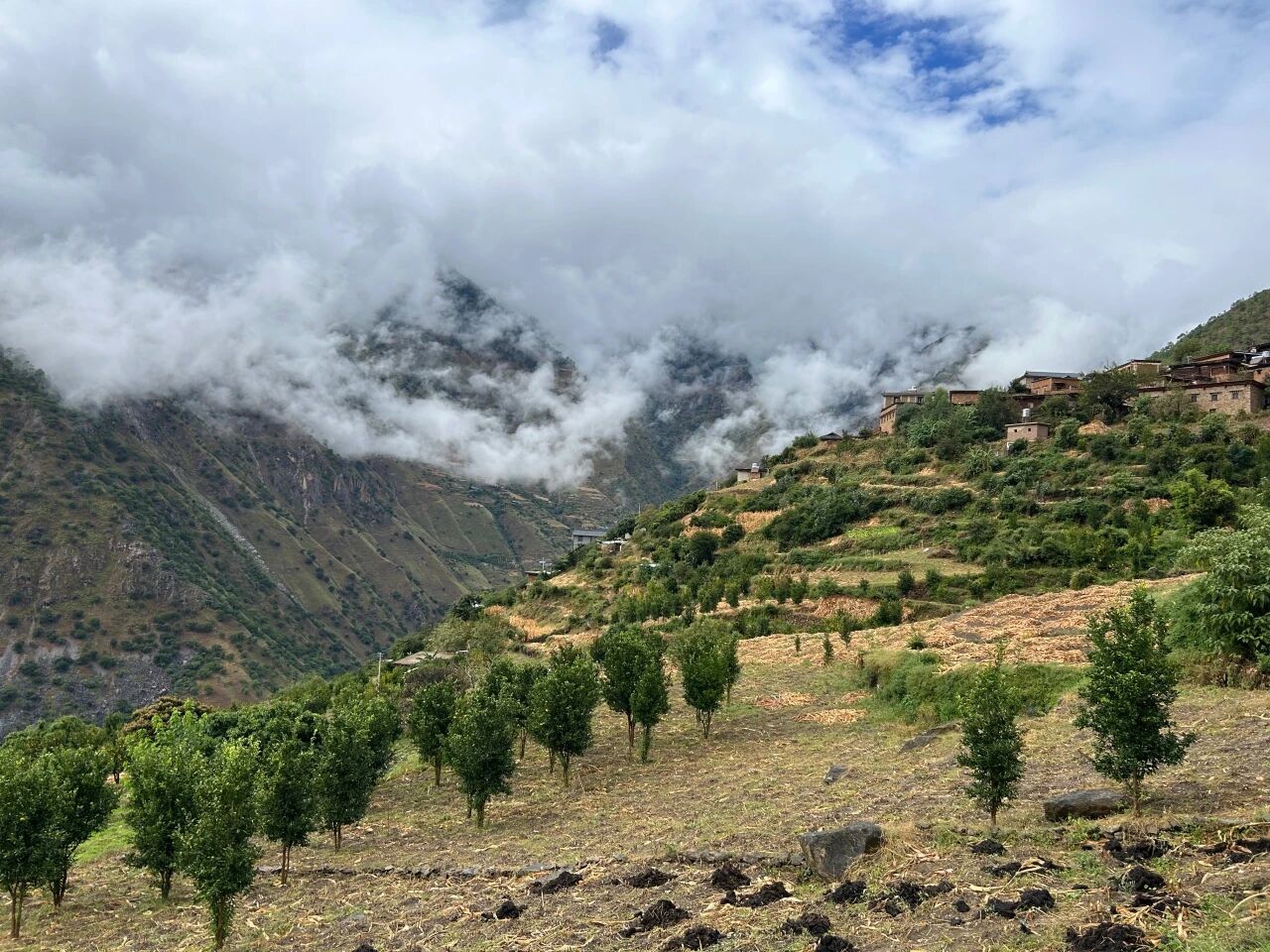
Last year, beside a field bund in the hills of Yunnan, I saw rice growing for the first time without flooded, furrowed paddies—sprouting straight from level, dry soil.
For many, rice is forever bound to the paddy field. Yet it can also be grown on dry hillside slopes, with no flooding and only minimal farming. This way of growing rice has already begun to take root in villages with long paddy traditions.
Last spring, an uncle I met in a village in eastern Sichuan had started experimenting with upland rice in a small plot behind his house, driven by years of spring drought.
Three months later, deep in the mountains of northwestern Yunnan, at Youmi Village, I spotted the very same variety. The first to try this method were the women who had stayed behind. Their husbands were mostly away working; they cared for the elderly and the children at home and kept the land going. Last year, they were testing more than one variety in their plots.
For this Mosuo people settlement, nestled deep in the mountains, rice is far more than a vital staple. It is used in ceremonies, brewed into their everyday drink, and each year at harvest time there is the New Rice Festival.
Moreover, upland farming is an even older slash-and-burn tradition among some ethnic minorities in southern Yunnan: on hillside slopes, rice grows on rainfall alone, whether the harvest is abundant or lean left to heaven. One of the old upland rice seed varieties Youmi Village trialled last year came from their Jino neighbours in Xishuangbanna.
I. Rice Stalks Rise Again in the Village
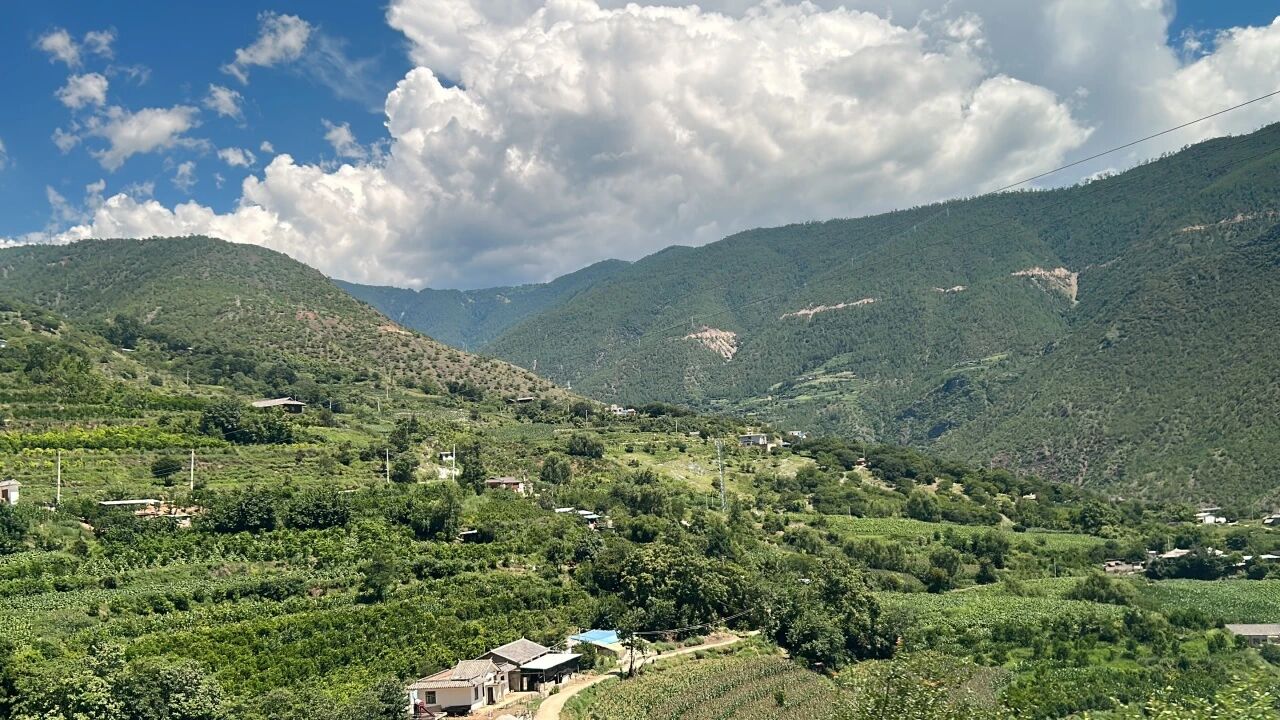
Youmi Village sits at the border between Sichuan and Yunnan, under the jurisdiction of Lijiang, and looks across the river at Eya Village in Liangshan Prefecture. The villagers often describe Youmi as a village tucked inside the belly of a mountain—one side facing the river, three sides hemmed in by steep, towering slopes.
Paddy rice had once been the most important food crop in this Mosuo village. But since 1990, because of its labour-intensive demands and dwindling water, the area under paddy cultivation shrank year by year, until by 2019 no one grew paddy rice at all.
Most of the young people had left to work away from home—Sister Yuting’s husband was among them. The paddy plots were converted to maize, a hardier and far less labour-intensive crop.
Climate was another reason people no longer wanted to grow paddy. Youmi already lies in a dry-hot valley, and in recent years rainfall during the wet season has been falling lower, making water ever scarcer. Sister Yuting remembers that quarrels over paddy water were once a constant. Every irrigation season, some families would sit up all night beside their plots, guarding against anyone stealing their water.
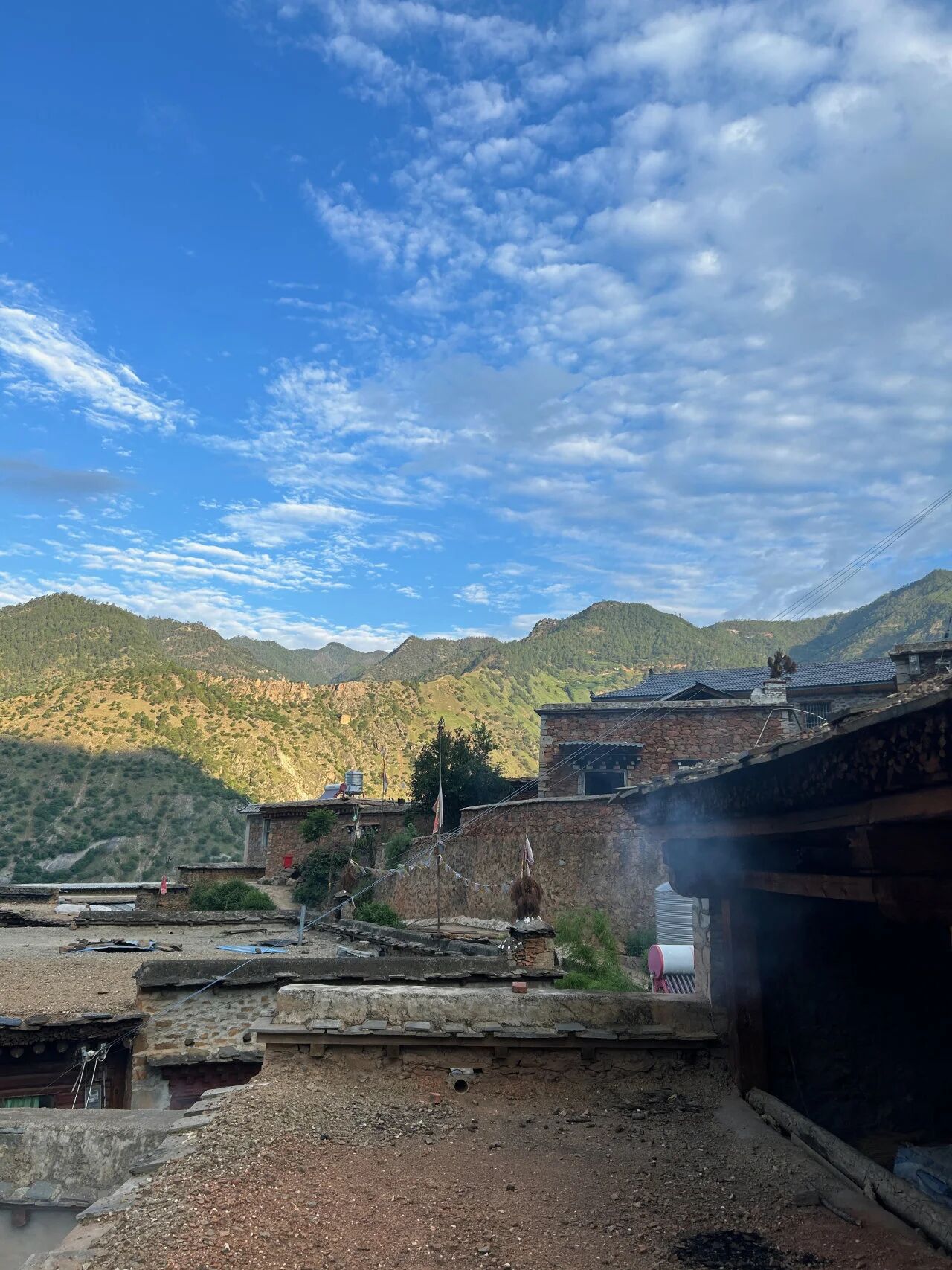
Once the paddy rice was gone, the quarrels eased, and the grain in the rice jars was replaced with rice from Northeast China.
In Watching Over the Dongba, the old Dongba recalls the village’s paddy rice slowly vanishing: “When we grew our own paddy, we had to hand grain over to the local chieftain or as the state’s grain quota, and we could only eat rice four times a year: once to taste the new harvest, once when slaughtering the pig, once for the New Year, and once at the Spring Festival… Now we don’t grow paddy at all, and yet we eat shop-bought rice every single day.”
In recent years, through her contact with the Seeders Network, a public-interest organisation, Sister Yuting felt the pull of growing rice again. After all, it was once a food this village held in the highest regard. Customs centred on rice still survive to this day. Every year, when the first day of the tenth lunar month marks the rice harvest, the people of Youmi still eat new rice in keeping with tradition.
When Sister Yuting heard that rice could be grown as upland rice, she asked the Seeders Network to help find some upland rice seed. Of the six varieties they trialled last year, two were old seed-saving varieties from southern Yunnan—Mojiang purple rice and Sickle-grain rice from Xishuangbanna—and the other four came from the Luchu series bred by a research institute and supplied by the Yunnan Sili Ecological Alternative Technology Centre.
At the end of July, I first saw the upland rice plot in Youmi.
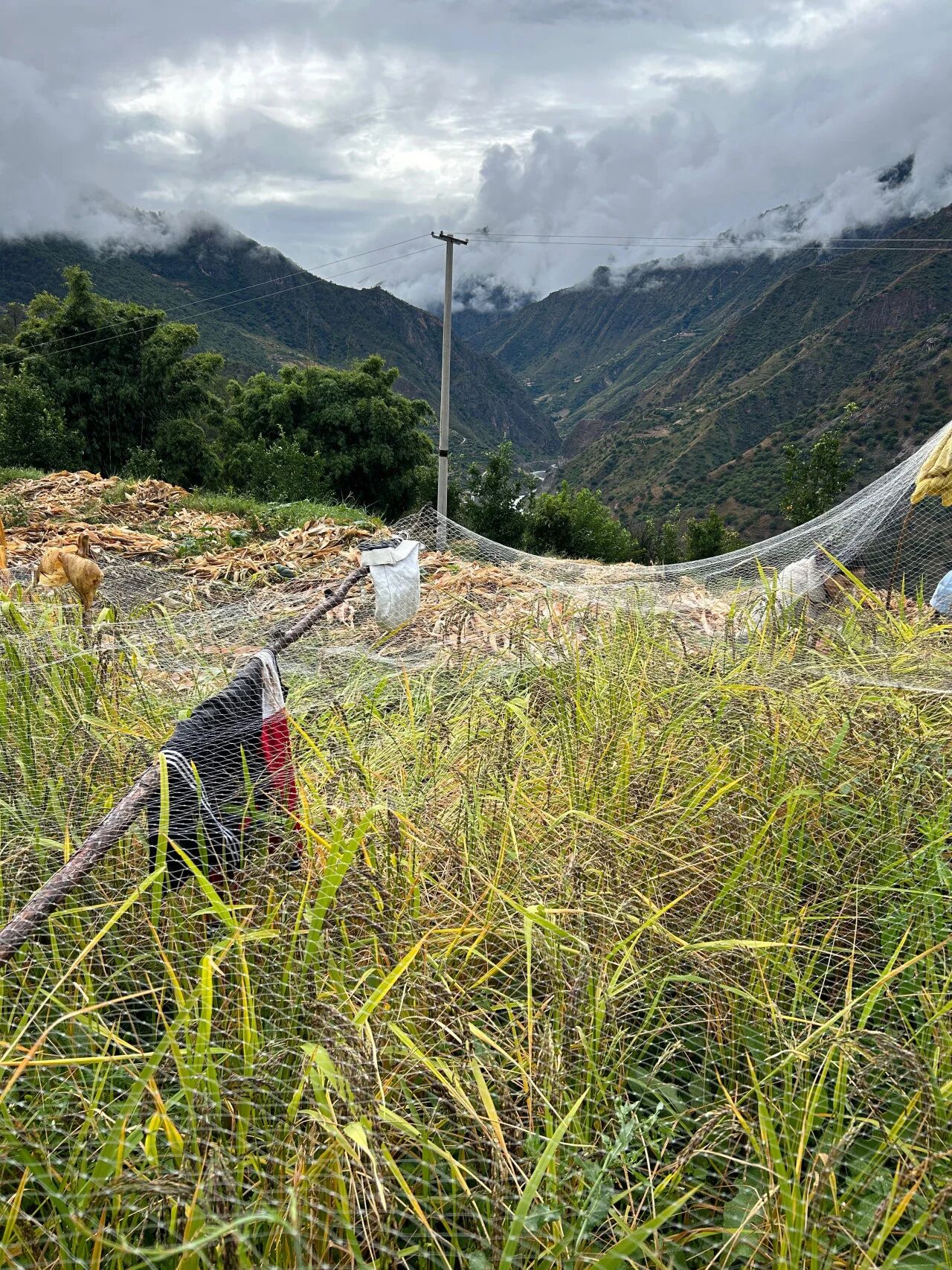
By then, the upland rice had been in the ground for just three months. In a terraced field of less than ten square metres, rice and weeds grew intertwined, rising nearly to knee height. Looking down from Sister Yuting’s house, this tiny patch of rice was entirely swallowed by the dense, towering maize all around it.
By the time we reached the field, the sky had cleared. The rice had grown to chest height, the grains plump and ripe. That day we harvested over ten jin of paddy; we cracked open the husks, and deep-purple kernels emerged. This was a glutinous upland rice—Mojiang purple rice.
The other old variety, a red rice—Sickle-grain rice—had been planted in a terraced field higher up.
That was Sister Gatu’s trial, on a small patch beside the edge of her family’s orange grove. Compared with the plump, hard-to-thresh Mojiang purple rice, the Sickle-grain rice suffered more from lodging and shed its grain more readily.
Lijiang lies in northwestern Yunnan, where light and warmth are limited, so historically the area grew mostly traditional paddy rice. But when asked whether she would plant again this year, Sister Gatu answered with a firm yes.
Upland rice is so much easier to manage. Over the five-odd months of growing, Sister Gatu had watered only twice—once after the direct seeding and once before harvest. She had spread only a little pig manure, and after weeding two or three times, the plot had been left essentially on its own.
For these women who have taken up rice farming again, upland rice lets them grow grain on their own land with less labour, even as the climate grows ever drier. Freshly threshed paddy means, at the very least, a lighter burden when it comes to buying food—Youmi Village is remote, and it was not until 2020 that a road linking it to the outside world was completed. Even with the road, most supplies still require a trip to the neighbouring Jiaze Village Committee. From the village, the fastest drive to Jiaze Village Committee takes a little over forty minutes.
In the new year, Sister Gatu, Sister Yuting and the others plan to trial more varieties, screening for the best adaptability. “The good ones—we can save the seed straight away,” Sister Yuting said.
II. Keeping an Old Variety Alive for a Childhood Memory
Southern Yunnan, to which Xishuangbanna belongs, is one of China’s main upland rice growing regions, with a long tradition of cultivating it. Today, some of the ethnic minorities living in Banna, such as the Dai and the Jino, still keep the tradition of growing upland rice. Although the number of old varieties continues to shrink, they still circulate within small circles. At the fortnightly market in Jino Township, you can still spot elderly farmers selling Sickle-grain rice from burlap sacks on the street.
This is one of the red upland rice varieties traditionally grown by the Jino. The Seeders Network obtained this variety through their network member, Sister Haimei.
Sister Haimei runs a restaurant in Jinghong centred on traditional Jino cuisine—Fengqing Jino. Since the restaurant opened, Sickle-grain rice has been the staple rice served to diners.
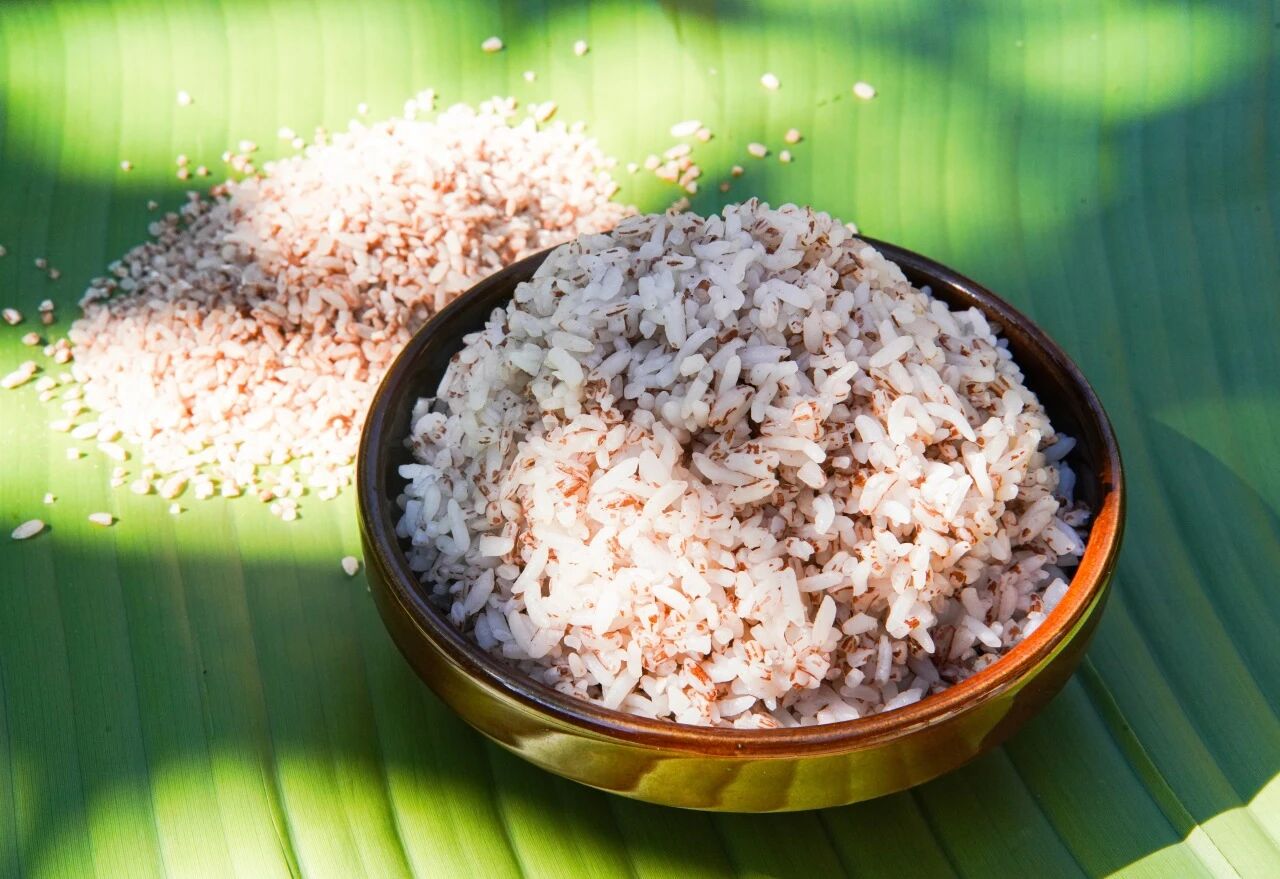
The scientific explanation is that upland rice generally has a higher amylose content than paddy rice. That brings greater satiety and a slower, steadier rise in blood sugar—but it also means this rice is harder to digest. The rice at Sister Haimei’s restaurant is not all Sickle-grain rice either; she blends in some regular white rice to soften the texture, making it easier on the palate and the stomach.
For the Jino people, Sickle-grain rice is a crop choice made over generations. Its firm texture and filling nature suit mountain peoples who labour and make their living out in the hills. Compared with paddy rice, it demands far less water and is especially well suited to the steep slopes and dry uplands where tilling is more arduous.
Sister Haimei says that fewer and fewer households in Banna grow upland rice these days. It is becoming a childhood memory for the Jino.
She insists on serving upland rice as the restaurant’s staple, and a large part of the reason is her affection for it. The memories of going up the mountain with her elders to grow upland rice as a girl remain vivid to this day. Since opening the restaurant, she has often made her way to villages all across Jino Township, seeking out the local ingredients and old varieties that have yet to disappear.
By a stroke of luck, she spotted upland rice at a market stall and became a buyer for the village. Now every grain of Sickle-grain rice served in the restaurant comes from Baya Village, an hour’s drive from Jinghong. Last year, Sister Haimei ordered 2 tonnes of Sickle-grain rice from farmers there.
Sister Haimei occasionally meets guests who come asking about the rice—some want to buy a bag of the milled red rice, while others ask her for seed. In the restaurant’s storeroom she keeps a special supply of unhusked Sickle-grain rice, just in case someone asks; then she can hand them a handful of grain as a gift to the right person.
But guests ask about more than Sickle-grain rice. They also want to know about the old Banna varieties of small winter melon and pumpkin that go into the restaurant’s signature dish—stewed winter melon with chicken. This restaurant, not far from Xishuangbanna Gasa Airport, has been shaped by Sister Haimei into a window through which diners can glimpse Jino culture, and a small-scale hub for the exchange of old seed.
In the second half of last year, at the Seeders Network’s suggestion, Sister Haimei came up with the idea of setting up a seed bank inside the restaurant, dedicated to showcasing old varieties and facilitating the exchange of old seed. The display cabinet is planned for the spot behind the tea counter outside the private dining rooms.
III. Cooking Jino Dishes Is Like Writing a Cultural Diary
After adulthood, she spent a long stretch of years living in Jino Township. It was there she met her closest friends, her elders, and the opportunities that would shape her career.
Over the past two years, having trained a seasoned chef in the kitchen to take over the wok, Sister Haimei began spending more time travelling—to learn, to exchange ideas, and to share Jino culture. Now, as the prefectural-level intangible cultural heritage inheritor for stewed winter melon with chicken, a traditional Jino dish, she frequently appears at events as a Jino representative and is invited to film food programmes for CCTV and the prefectural integrated media centre.
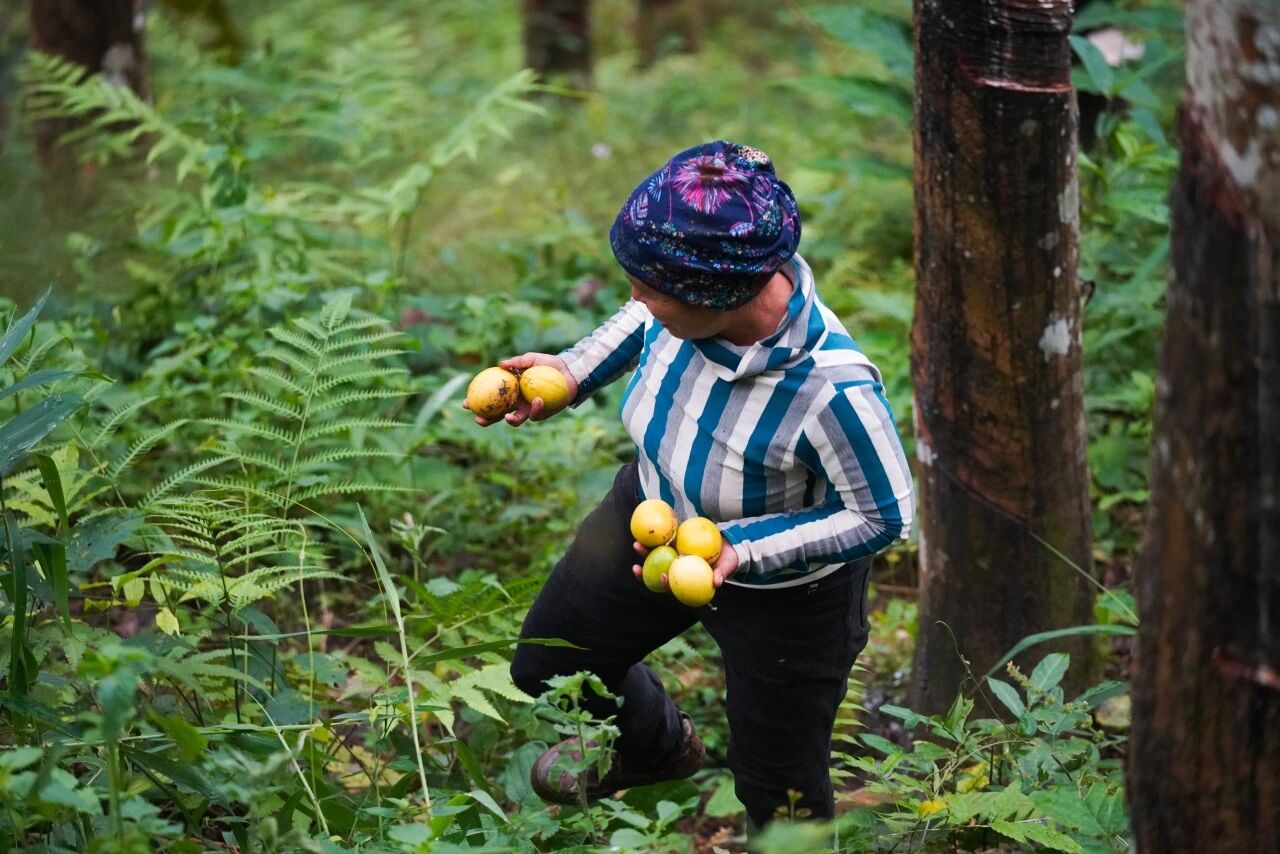
In November, she took me specially to visit her mentor, Ziqie. In Sister Haimei’s introduction, this former director of the Jino Township cultural station was “a fine eater, and an even better storyteller.” Though past seventy, the moment he started talking about Jino culture, words flowed without end—he stood at his courtyard gate and held forth for a full hour.
The most traditional form of Jino upland rice farming follows two slash-and-burn modes: fallowing and crop rotation. Because upland rice receives little human intervention in its management, it depends heavily on the soil’s own fertility, so the same plot cannot be cropped in consecutive years. Under the fallowing system, a field sown with upland rice in the first year is then left to rest for thirteen years, until the forest ecology has recovered, before it is planted again.
The crop rotation model, on the other hand, weaves upland rice in among other crops. On the first year of a plot’s peak soil fertility, for instance, the villagers would often plant glutinous upland rice varieties such as purple rice first; the second year they would sow Spear-grain rice. Ziqie said this is an old red-rice variety with the finest grain quality, though its yield is low; the third year they would plant Fine red-grain rice and other upland varieties; the fourth year they would sow nitrogen-fixing legume crops such as peanuts and soybeans to restore the land; and in the fifth year, maize or grain again.
After such a five-year cycle, the land must lie fallow for fifteen years before it can be cultivated once more.
“Once, the Jino had so very many varieties of upland rice.” The old man recalled; but today, many of those varieties have vanished. When he heard that Sister Haimei’s restaurant still served Sickle-grain rice, he seized her hand and cried out, “Sickle-grain rice is the lifeblood of the Jino!”
On learning that the restaurant still kept Rice-Soul porridge on its menu, Ziqie grew even more moved. It is a rice porridge cooked in chicken stock with pumpkin and red rice.
Ziqie recalled that in years past, once the autumn harvest was in the storehouse, the Jino would take a chicken, some food and a few belongings back to the fields where the grain had grown and hold the Rice-Soul Calling ceremony, a rite meant to ensure a good harvest in the year to come. When the ceremony was over, the villagers would simmer the year’s freshly harvested grain in the chicken stock with pumpkin. That porridge was called Rice-Soul porridge.
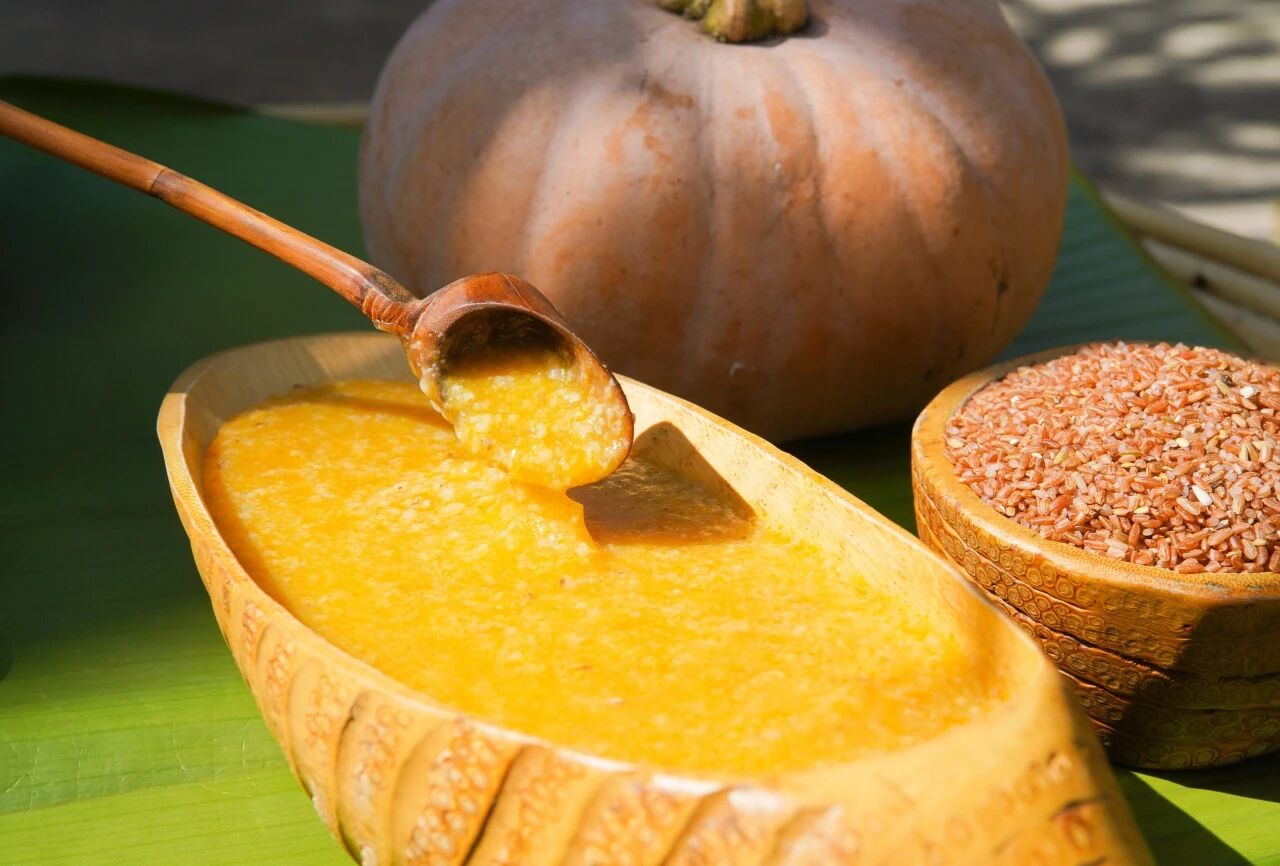
Nowadays, very few in the village still hold such ceremonies. But Rice-Soul porridge survived in the restaurant thanks to Sister Haimei’s instinct for food.
Last year, when Sister Haimei attended the Seeders Network’s annual gathering, she brought Sickle-grain rice with her to the event. A woman over seventy from Sichuan spotted it and immediately came up asking for seed. “She grabbed my hand and said, ‘Girl, could you give me some seed? We used to grow this variety more than thirty years ago, and now it’s nowhere to be seen.'”
By the end of October last year, once the new paddy was threshed, Sister Haimei posted 5 kilograms of seed to that woman. Those 5 kilograms of seed passed on like a gift, travelling to yet more villages that had given up paddy rice because of drought or the loss of labour, and finding their way into the hands of the women who had stayed behind.
For Sister Yuting in Youmi Village, upland rice does not necessarily mean a full return to the paddy.
But upland rice—needing less water and less labour—is a way of easing the household’s burden of buying staple food, meeting a climate that grows ever drier, and keeping a culture alive all at once. The 2026 new rice has yet to be hulled, and Sister Yuting and her sisters are already discussing how to cook it. Beyond plain steamed rice, they want to take some of the new purple glutinous rice and recreate the city’s recent favourite—yoghurt purple rice drink.
Behind this “city way” of making a purple rice drink lies a way of growing that once disappeared and has now been picked up again: with less water, fewer hands, and the women left in the hills, rice is being coaxed back, stalk by stalk.
Editor: Pei Dan