Why You Should Never Throw Away Some Kitchen Treasures

Foodthink Says
Is there an object tied to food that you have used for years and that still keeps you company? A little while ago, Foodthink invited readers to share their stories of “kitchen long-termism”.
When an object passes from one generation to the next, it becomes more than a tool. In its clear, worn marks of use, we see the life and memory of an entire family.
What is striking, though, is that key appliances of the modern kitchen – kettles, rice cookers – are all conspicuously absent from the long-termism rankings. Why is that?
By contrast, pots and knives emerged as the perennial champions. Pots appeared most often, cast-iron pans above all. You may move house many times, but the pan always comes with you. Judged purely on practicality and durability, the cast-iron pan is indeed the very embodiment of long-termism in the kitchen.
Of course, the most extraordinary example of “long-termism” in this collection has been saved for last – do read it!
Through this collection, we asked readers to look again at the old objects at home. In an age of “worn out, thrown away”, we hoped these items might live on through mending, repair, and the simple act of keeping them in use. Thank you to every reader who took part: you showed us the quiet dedication of everyday life and of cooking with care, and allowed us to touch the stories behind each family.
Pots
Yuyang
We have had a steamer pot in our kitchen for at least ten years. It is hard to say exactly when it first came into use – from as far back as I can remember, it has always been there. I know all the burn marks it has accumulated over the years, and I am confident that no matter where I am, I could spot our pot at a glance.
This pot was originally my mother’s cooking pot. After I graduated and got married and moved out, she gave it to me. The bottom of the pot has been blackened by years of flame and smoke – who knows how many meals it must have produced inside to have come to look like that.
I have moved house with this pot several times already, and the next move ought to be the last. Every time I use it to reheat rice, make soup, or steam corn and steamed egg custard, it works quickly and heats everything through thoroughly. And compared with a wok, this pot always gives me a sense of calm: once the prep is done, all I need to do is stand back and wait leisurely for the food to steam through.
Once, because I was in a hurry and the wok was tied up with another dish, I tried making ginger duck in the steamer pot – and everything was burnt to a crisp, haha. So it seems a steamer pot is a steamer pot and a wok is a wok; you simply cannot use one as the other.
Its base is particularly thick, and the handle is very sturdy, so I imagine it will last me many more years. As long as a well-made old object still works, I will keep using it. I see no reason to replace something simply because it is old – not unless it actually breaks. I am reminded of a recent scene in the film Good Stuff, in which a mother’s rejection of the past is dramatized by her throwing away her old belongings, ushering in a new chapter of growth. Growth is necessary, but the ability to manage one’s possessions is a truly admirable quality that should not be cast aside; it means a person is capable of taking responsibility for their belongings and their life. When progressivism sets out to imagine a more progressive way of living, it must begin with such everyday details, not with abstract notions. Keeping an old object saves resources and protects the environment – that is a genuinely progressive act, and we ought to take pride in it.
Shenlan
I have had my cast-iron pan for over a decade now, and since using it, no other pan has felt quite right. I bought one with two handles, and it is big enough to stir-fry a generous amount of ingredients with ease. The thickness of the iron means the heat is retained beautifully once the pan is hot – searing, braising, frying, deep-frying, everything works beautifully. A quick stir-fry keeps vegetables vividly green in colour and full of flavour, and a slow braise for clay-pot rice even produces that glorious golden crispy rice at the bottom.
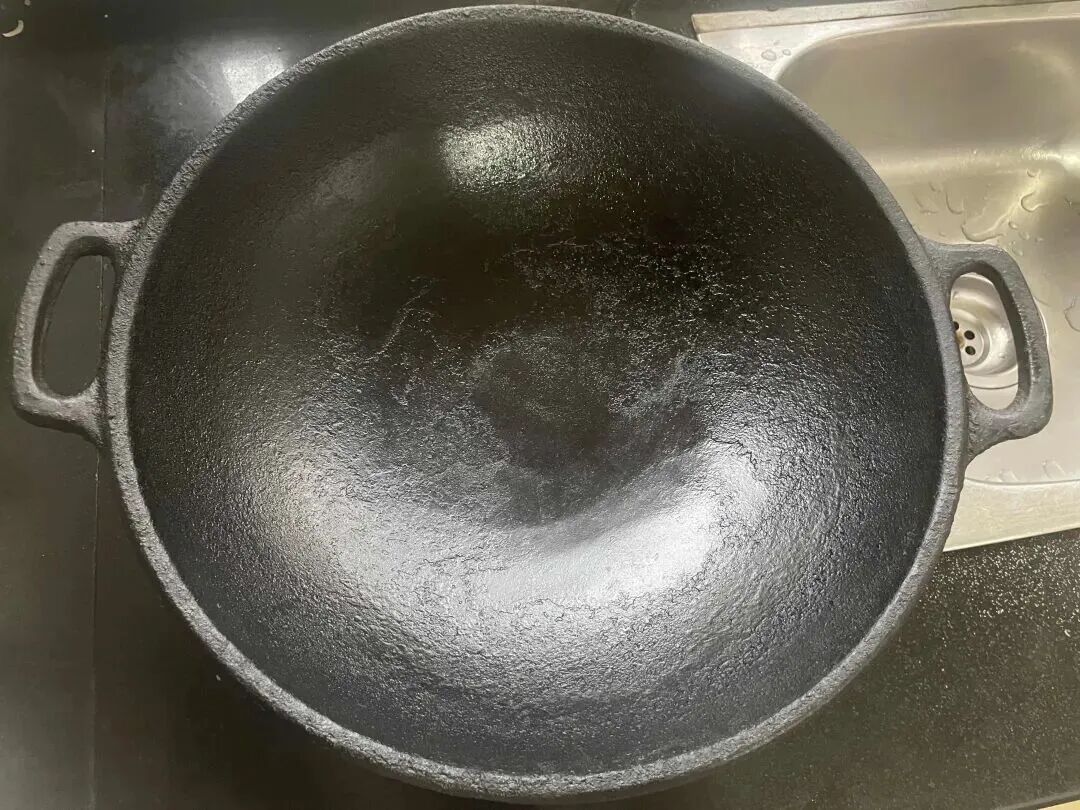
After more than ten years of use, the surface has turned deep black, glossy and rich with seasoning. My friends and I joke that if famine came, we would carry nothing but this pot and just boil up a clear soup with whatever water we could find – it would already taste wonderful. After years of every kind of ingredient simmering and searing into it, the pot has absorbed all those flavours of its own.

Yvette
I once bought a cast-iron pan because I loved steak so much – it cost about 500 yuan. I have brought it with me to every new home I moved into. I started out as a complete novice who did not even know how to season a new pan, and now I have tended this one beautifully. In many ways, the pan has been a witness to my progress in the kitchen. There was a stretch when I ordered takeaway all the time, and I locked it away in a cupboard – it sat unused for about a year. Last year I took it out again, and it felt like meeting an old friend after a long absence.
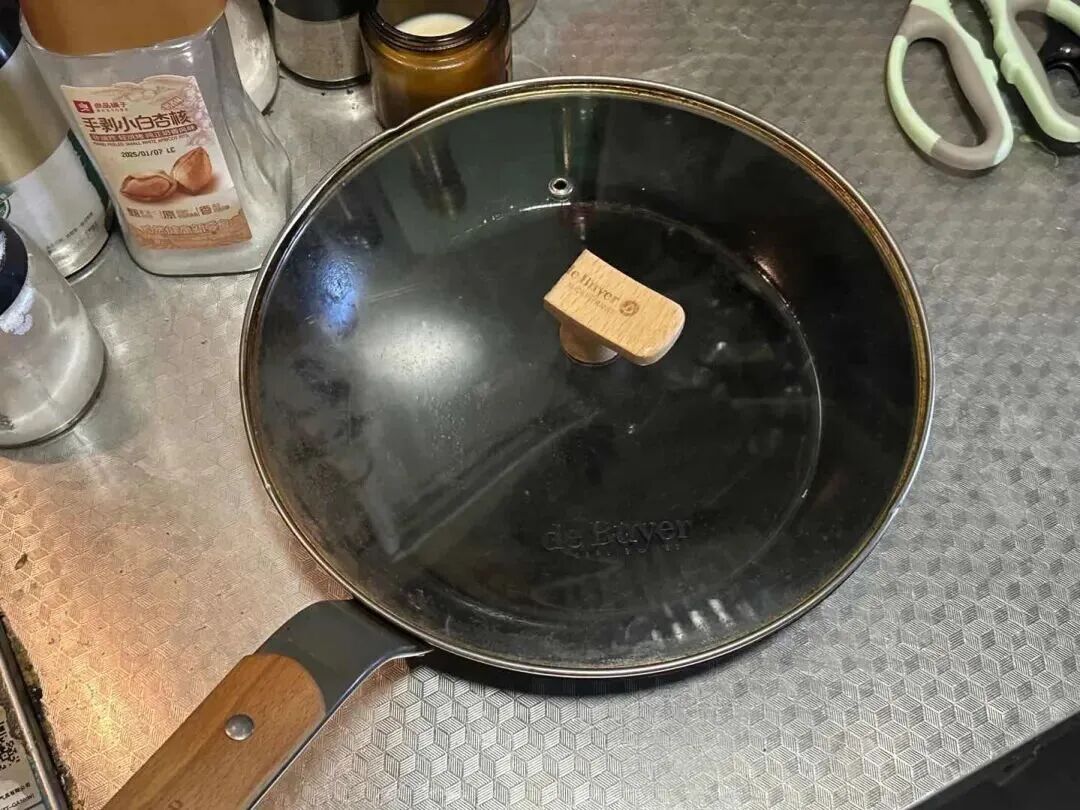
I am also curious: which items in the kitchen simply cannot sustain long-termism? I know non-stick pans are one – but what else? What should we throw away on a regular schedule?
Zhu Yijuan
I looked up Taobao and found my order was placed on 26 February 2013 – thirteen years now! This is the single kitchen item I use the most every day, through every meal and every season. I bought two identical pans at the time, while my daughter was still at secondary school. One stayed at home; the other went with her after she married and settled into her new household. Even now, whenever I visit my daughter’s place, I still cook in my cast-iron pan.
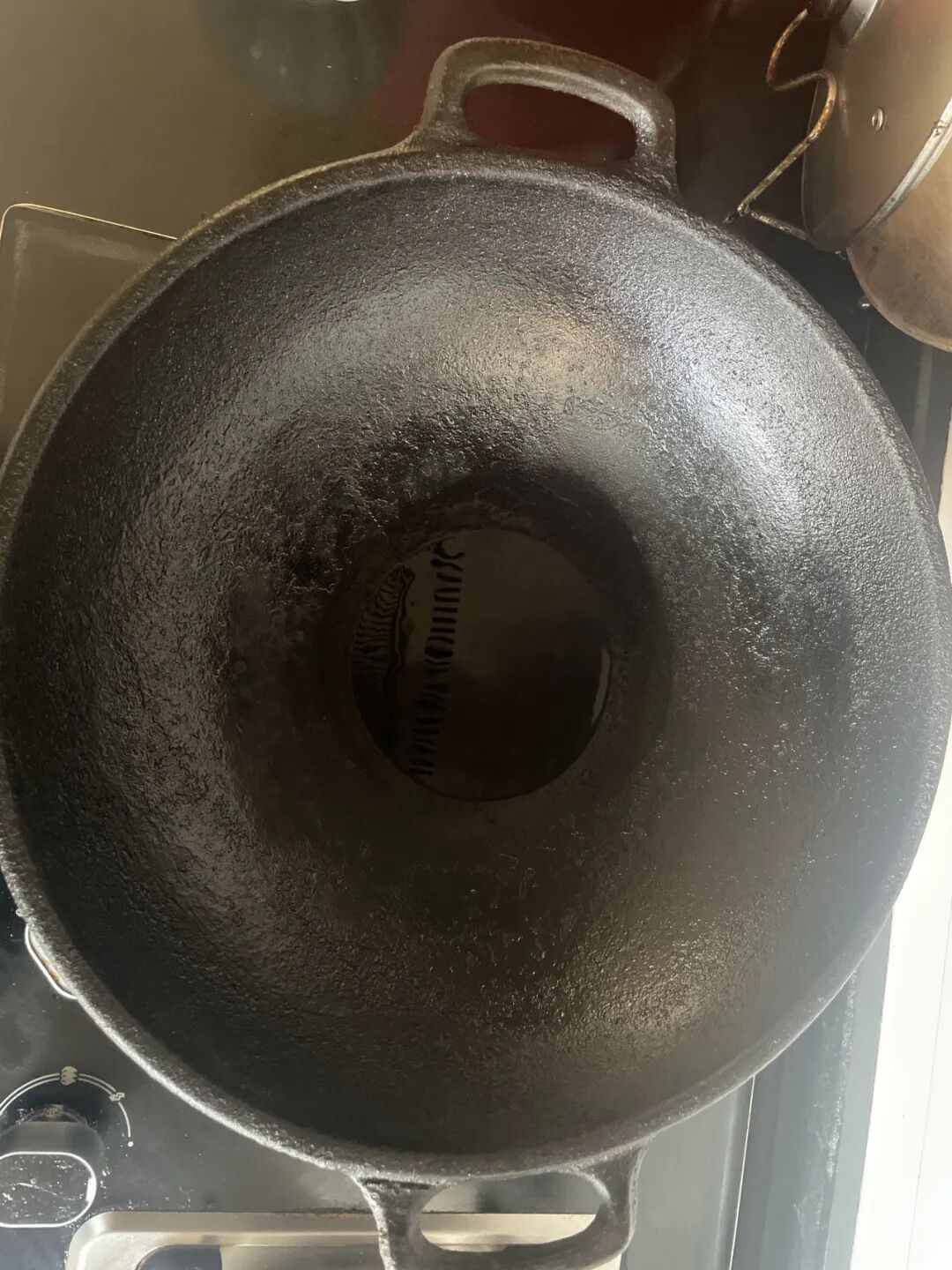
Que Yiyi
I have a Jianshui purple-clay steam pot, which my mother picked up during a trip to Jianshui. She says it must be over thirty years old. We have moved house many times over the years and this pot has come along every single time. Last year, when my mother visited me in Japan, she brought it with her for me to keep. It has never been replaced because steam-pot chicken simply cannot be made without it 😂
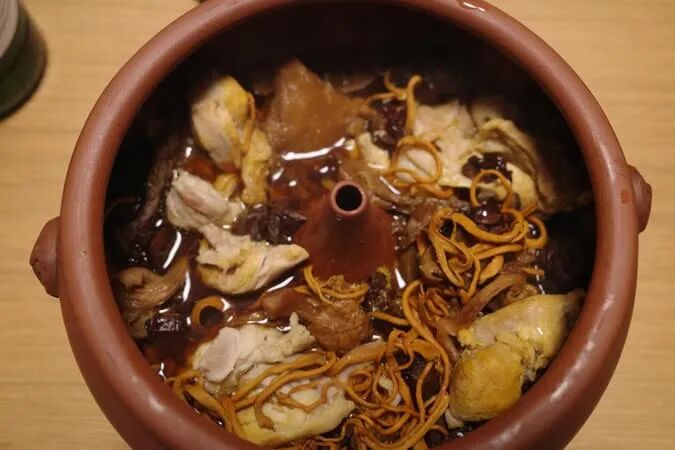
One day during the pandemic, I suddenly craved steam-pot chicken and mentioned it to my mother in passing. After the worst of it was over, when my parents came to visit again, she brought the steam pot with her – just for me. Steam-pot chicken is a celebrated dish of southern Yunnan, and the writer Wang Zengqi once described eating it as “nourishing one’s righteous qi”. It was also a dish that always appeared at every banquet I attended as a child – the tender, succulent chicken in its rich, fragrant broth. Having a steam pot in a Yunnan household is perhaps as unremarkable as having a takoyaki iron plate in an Osaka home. Last summer, when Mum unpacked the pot from her suitcase, she said to me, “This pot must be about the same age as you.” I was stunned – I had no idea it had been with us for that long.
Anonymous
I have a soup pot that I used to use for making broths. Since I have stopped eating much meat, the broth-making fell by the wayside, so I repurposed the pot for pickling: Chinese cabbage and round cabbage in winter, watermelon rind in summer. It has been doing this job for years.
As a rule, I throw away almost none of my kitchen tools. The key is to avoid buying electrical appliances in the first place – I own no rice cooker, no microwave, no juicer, no blender. Whatever I want to cook, I get by with one stockpot, one frying pan, and a mortar.
Enamelware
In an era of relative material scarcity and limited consumer choice, enamelware became one of the most common household items in China by the late 1990s. Compared with other materials, enamelware is sturdy, durable, and resistant to rust – and as the old saying goes, “mend and patch, and it will last another three years.” In this call for submissions, many readers mentioned enamelware pieces still at home. They represent not only a shared memory of that era but also a deep cherishing of possessions that stands in stark contrast to the way we treat objects today.
Heidi
When I was little, we already had this enamel basin at home – it must be around forty years old. It used to be in our kitchen in Shiyan, and now it is here in Wuhan.
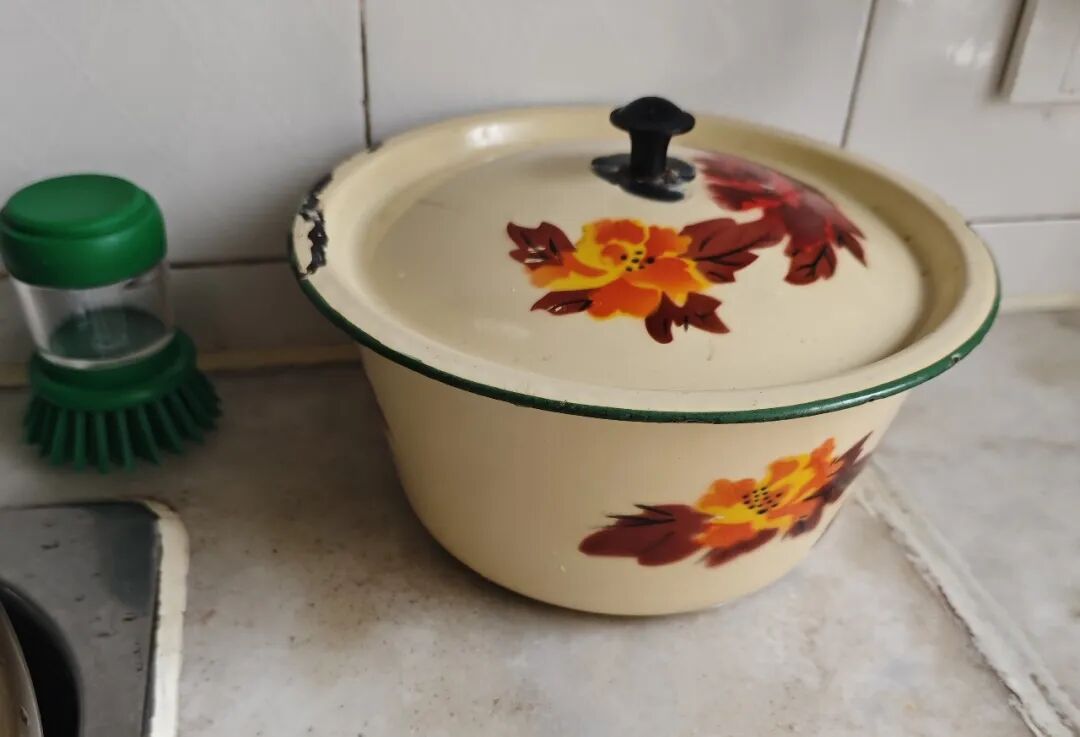
As far as I can remember, it was first used for serving soup. After we moved to Wuhan, it sat unused in a corner for a long time. Later we started using it to hold water, but the inside kept developing small spots of rust, so now it is only for collecting the murky water left over from the second rinse, which we then use to water the plants on the windowsill.
My feelings about this pot have shifted over the years. For a while I wanted to throw it away because I thought the pattern looked so tacky. But gradually I have come to find that pattern more and more beautiful the longer I look at it.
Shi Keke
I have an enamel rice bin made in 1983, which I picked up for just twelve yuan on Xianyu. I have been using it for two years now. I do not know how long it lasted with its previous owner, or how long it sat idle before that. Since I bought it, I have always used it to store rice and grain, and it keeps bugs at bay. When I moved from Tianjin to Chengdu, I brought this bin along with me.
Before I had this bin, the rice at home kept getting weevils, and the insects would spread from one batch of grain to another. It was really frustrating. After I bought this bin and put all the rice in it, the weevils simply never came back. This lightweight enamel rice bin suits me far better than a ceramic one.
My parents also have a matching enamelware crock that my grandmother had brought with her. They used to keep it out in the yard in winter to store vegetables. When they moved house, they did not take it with them. I have always missed it and hoped it would find another owner who cherishes it as much as we did.
Modern Primitive
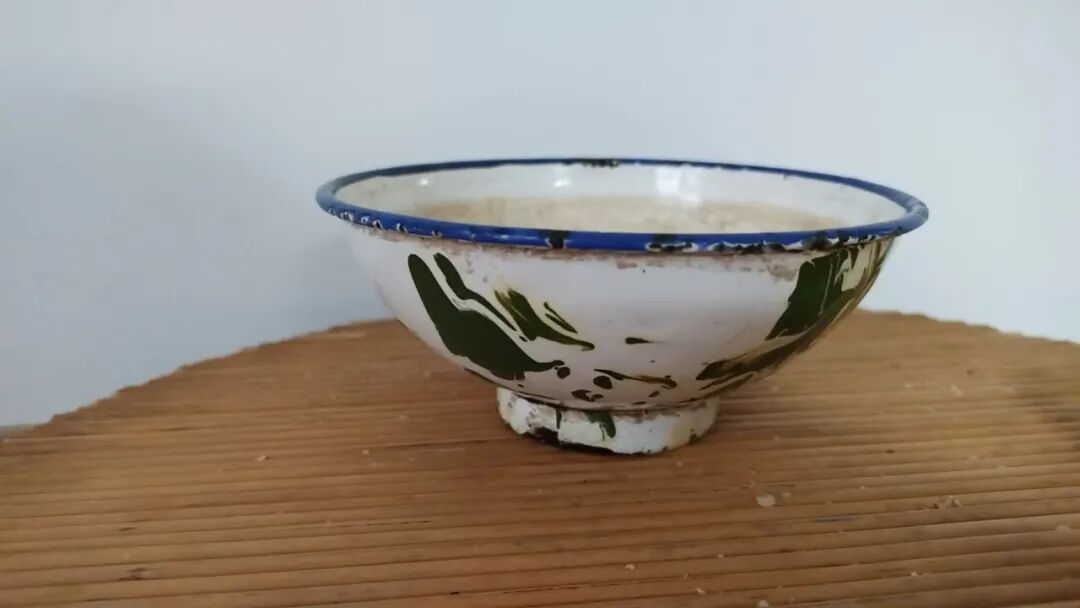
From as far back as I can remember, we had a blue-rimmed enamel bowl at home. They say that when I was small, I liked to wear bowls on my head like hats – I broke so many that this one was set aside especially for me. As a child, I used it for rice and dishes; when I grew older, I used it for porridge; and then, when the microwave came along, only freshly made hot porridge could be served in it – cold porridge went into glass bowls for reheating. Now it sits in the cupboard alongside a collection of “microwave-safe glassware”, in a kind of semi-retirement. As far as I can remember, it has always looked old, and the scratches on its surface and the chips along its rim are just as they are today. The one thing my memory is hazy about is the pattern on its side, which looks like flowing water or drifting clouds. As a child, I always imagined it was a fairy mountain or the Heavenly River from Journey to the West. I had always assumed the pattern was blue, but when I went to look at it just now, I found it is green. Looking more closely still, I discovered a blurred “… Ceramics Factory” trademark at the bottom of the bowl – who would have thought there were still new discoveries to be made about such an old thing.
Liu Tongxue
This is the enamel mug they issued to us for primary school military training. It has been with me for thirty-three years. Back then, we used it for washing up and drinking water during training. Most of my classmates simply threw theirs away once the training was over, but I have kept mine all this time. It is perfect for soaking beans, ladling soya milk, fetching water, scooping rice, and digging out flour – it fits the hand just right. You can find similar enamel mugs online these days, but neither the material nor the feel comes close.
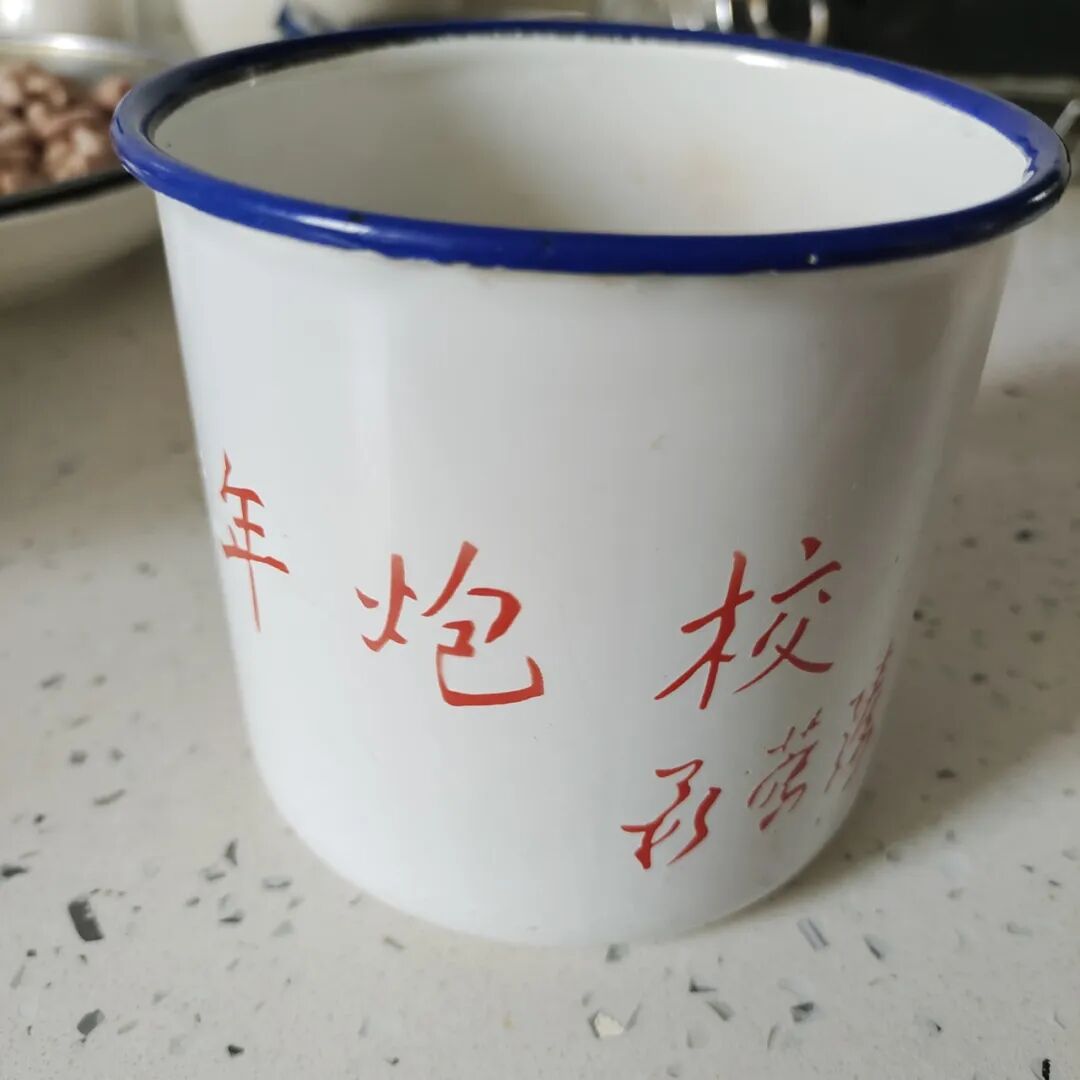
Once, on a camping trip, all my friends had such wonderful gear – it looked very expensive. I brought my mug along. The weather was cold, and I poured myself a cup of hot tea and held it in my hands. It was so warm 😍
Tanzi
When Xuanlin first left Beijing in 2016, she left me quite a few things. But there was one red enamel pot – she could see how much I loved it. She said to me, “Tanzi, I cannot give you this one. It is my favourite. It is so heavy, and I carried it all the way back from Europe. Besides, it was expensive – I really had to steel myself to buy it.”
Hearing her say that, I was not disappointed in the slightest. I just felt my taste must be quite good.
At the end of 2019, when she returned to Beijing, fate brought us together again as colleagues. And there was that red enamel pot. Every morning, a fragrance would drift from the office pantry – Xuanlin was simmering a brown sugar and ginger drink.
But even Xuanlin can be careless. That day, what drifted from the pantry was not a sweet aroma but the smell of something burnt. She had forgotten to turn off the heat, and the pot had scorched.
Brown sugar, ginger, jujubes… Now they had become a black residue clinging to the bottom of the pot. Xuanlin soaked it, scrubbed it with steel wool, but there was still a stubborn layer of black on the bottom. “Tanzi, this pot is beyond saving. It has been dry-heated several times now, and it scorches so easily. Why do I always do this?”
She felt terrible about her beloved pot, and her frustration had reached the edge of a breakdown. I spoke up. “Stop scrubbing. Give the pot to me. I will take it home and deal with it slowly. I am not particular – it should still be usable.”
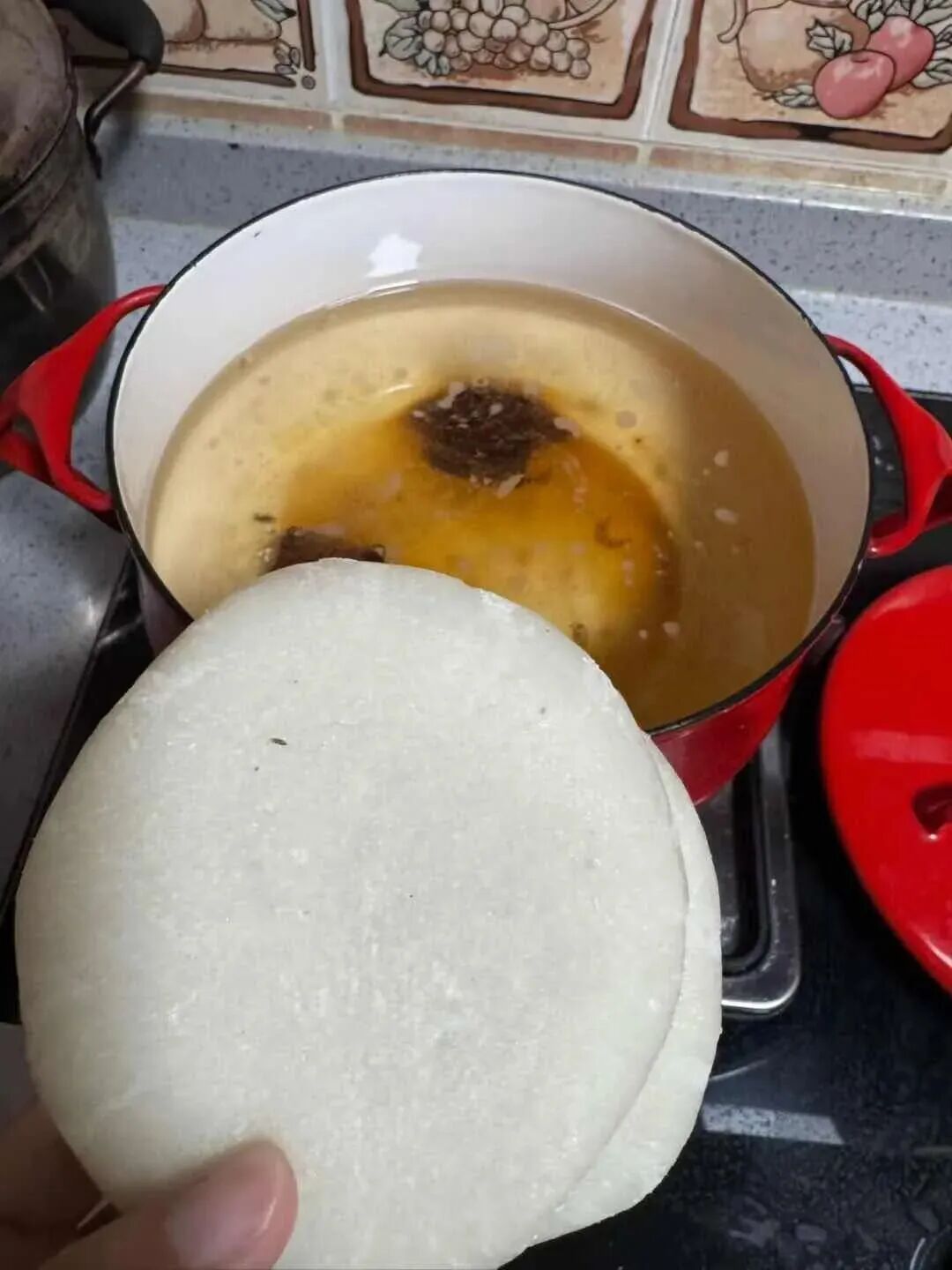
Xuanlin turned to look at me and said, “All right, Tanzi. Consider this my birthday gift to you, a little early.” I was so happy. That way, neither of us had to go on feeling bad. These days, I use the pot every day to make a brown sugar and ginger drink.
This pot really is wonderful. Thank you, Xuanlin. Thank you for giving me such a lovely gift.
Knife
Yuanqian
This kitchen knife was bought at the market, and I have been using it for nearly thirty years – I was already using it back in primary school. The blade is light yet sharp, and it is a joy for slicing and chopping meat. I started cooking in primary school with this very knife. It has accompanied me through countless dishes. It has never changed hands, but it has moved house with us many times, and I have always loved using it. It truly is remarkably durable – never once repaired. You hardly find cast-iron knives on the market anymore with the blade and handle forged as one piece, and one this light to boot. Nowadays, most knives come with a stainless-steel blade and a plastic handle, making the whole thing rather heavy. How rare, then, that our kitchen knife scarcely ever rusts.
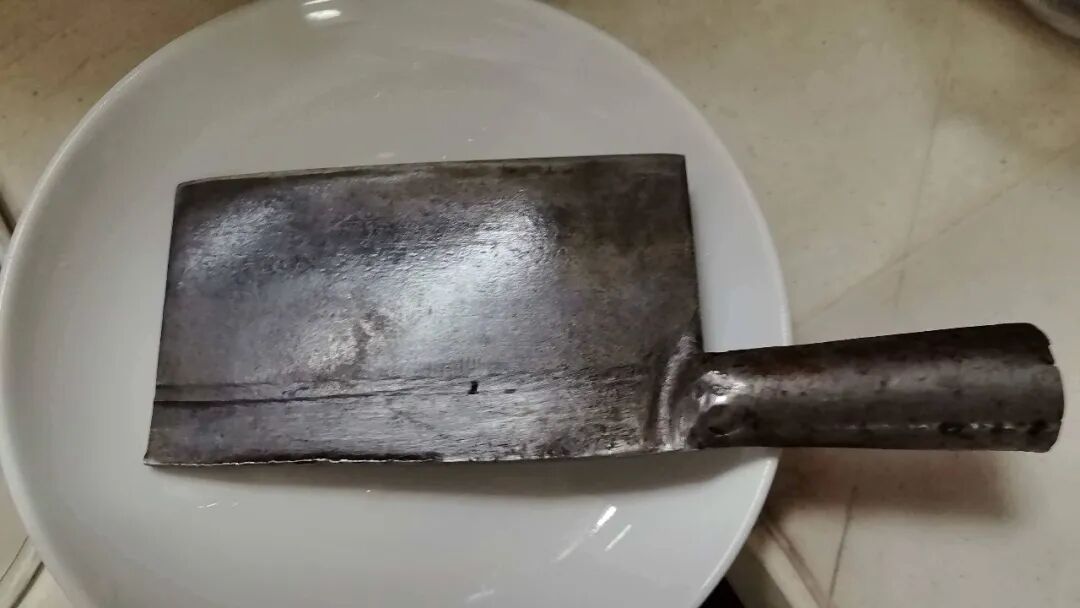
I remember when I was little, I was quite scared of using a knife. I would often stay in the kitchen to help out, and I used to watch Dad chopping vegetables with this kitchen knife – he looked so cool doing it – and I wanted to have a go myself. Before long, I got used to it.
Small Things, Big Purpose
Yelüsu
The oil container at home has been in use for seven or eight years now – I bought it at the market. In our household, the oil container fills an essential role; it is about the function, not any particular vessel.
The oil container is not for fresh oil – it holds the oil we have already used. Where we live, every household keeps the custom of frying a New Year batch through the hot oil: usually crispy fritters, battered chunks of carp, and strips of hairtail. The clean oil left over from all that frying is more than a family can use up in one or two sittings, and the New Year holiday itself brings the rule of no cooking over fire. Over the years, I have lost count of how many oil containers we have broken, but this one always manages to get half-full around New Year, and then slowly empties out again.
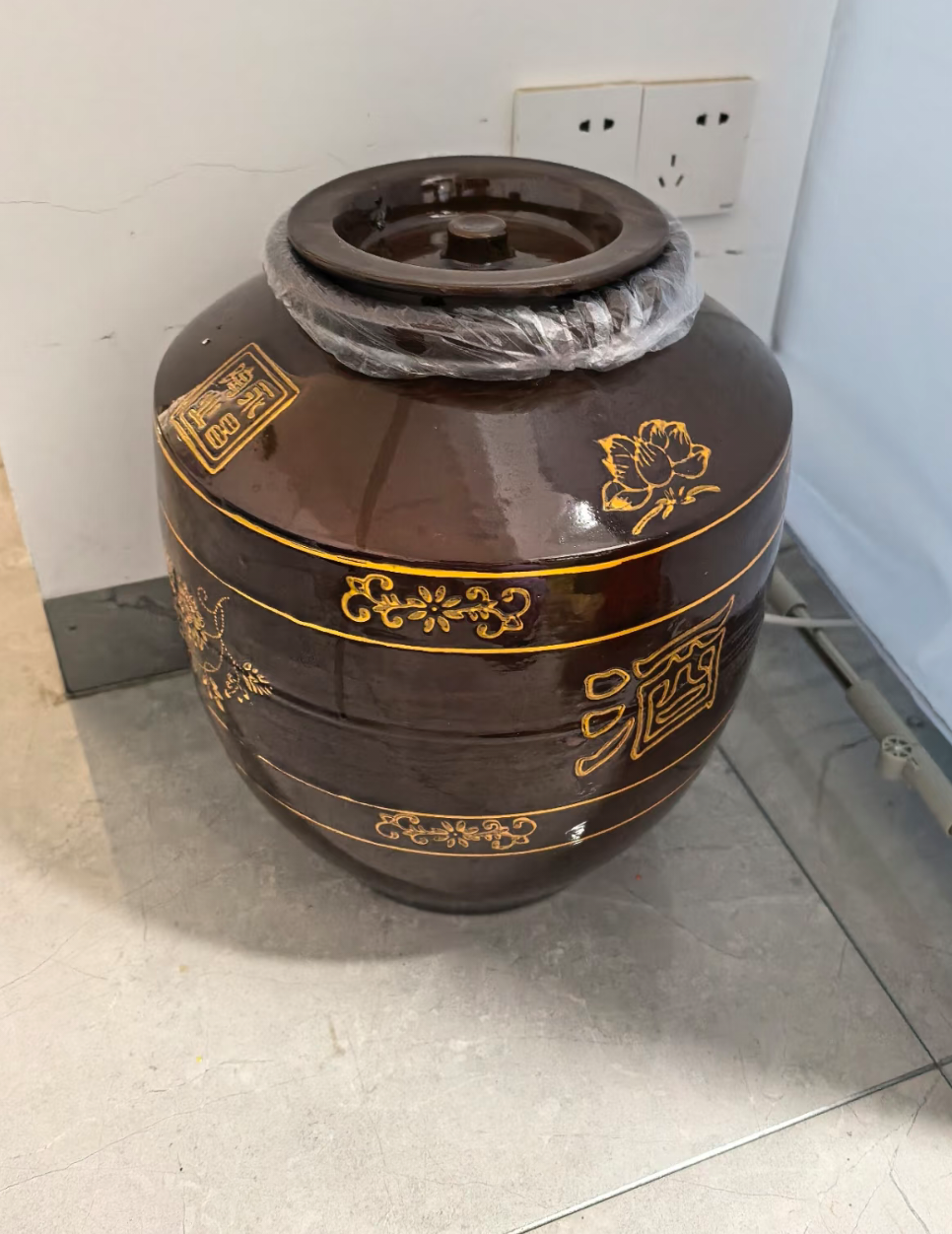
The garlic mortar is also, in its own way, tied to the New Year. Southerners like to dip their dumplings in soy sauce, but a Northerner’s vinegar bowl simply must have minced garlic and a dash of sesame oil. Dumplings line up and roll through the mortar, and before I know it, I have eaten thirty of them. The garlic pestle gets lost often enough, but the garlic mortar is sturdy as they come.
Zhezeng
This soup spoon has been in use since I was a child – thirty-five years at least. It came to our family when my father and my uncle divided the household. Seeing this object brings back fragments of meals shared with my family. Most of the time it is dipped into lettuce soup, noodle soup, and all sorts of soups. It links us to the taste of home, to each other, and to the food itself. I hope I can keep using it for years to come.
Chengzi
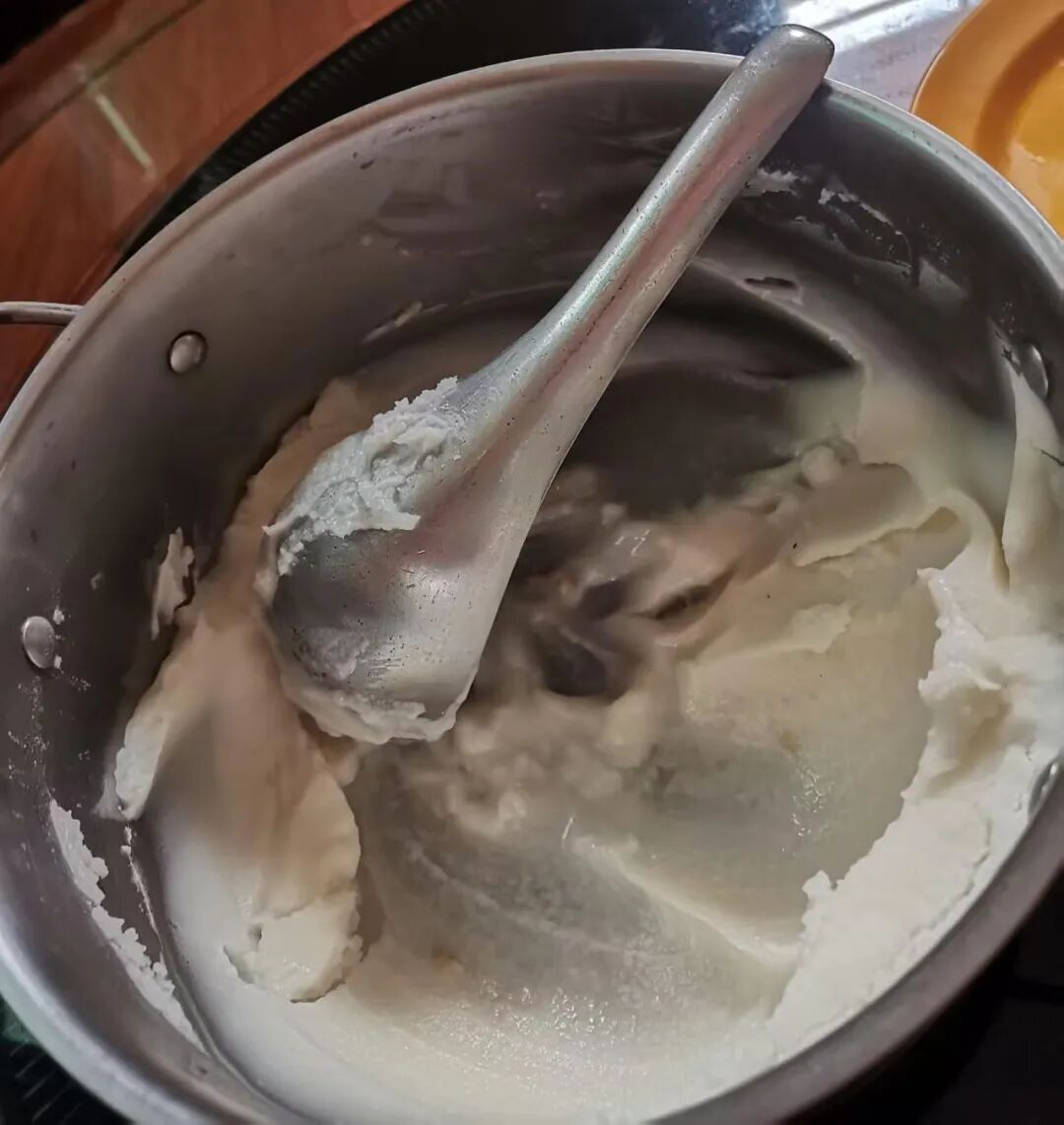
At home we have a little flat implement for scooping dumpling filling, made from bone. I looked it up just now and it is called an ox-bone dumpling-filling spoon. Whenever it is time to wrap dumplings, it is bound to appear on the table. It is flat, wider at one end and narrower at the other. As a child, I was always curious what it was. When I was told it was made of ox bone, I assumed it was a natural shape, just like sheep’s knuckle bones – the sort of homemade toys children used to play with – so for a while I believed one of a cow’s bones simply grew into that shape. Only later did I learn it had been ground and polished by hand.
My grandmother used it first, then it passed to my mother, who used it when she was learning to wrap dumplings. When it was my turn to learn, I used it too. It must be around thirty years old by now.
I never got used to it myself, so I only use it occasionally, but it is always there when we make dumplings. I find it so much more practical than a spoon – compared to a regular spoon, this “spoon” is flat, and the filling clings far less to it. I suppose every shape exists for a reason.
It “migrates” to wherever the dumplings are being wrapped, making it one of the household’s important members. We have grown used to it over the years, and it carries so many lovely memories. It has never needed mending. I hope it will stay with us for a long time yet.
Chen Ziyu
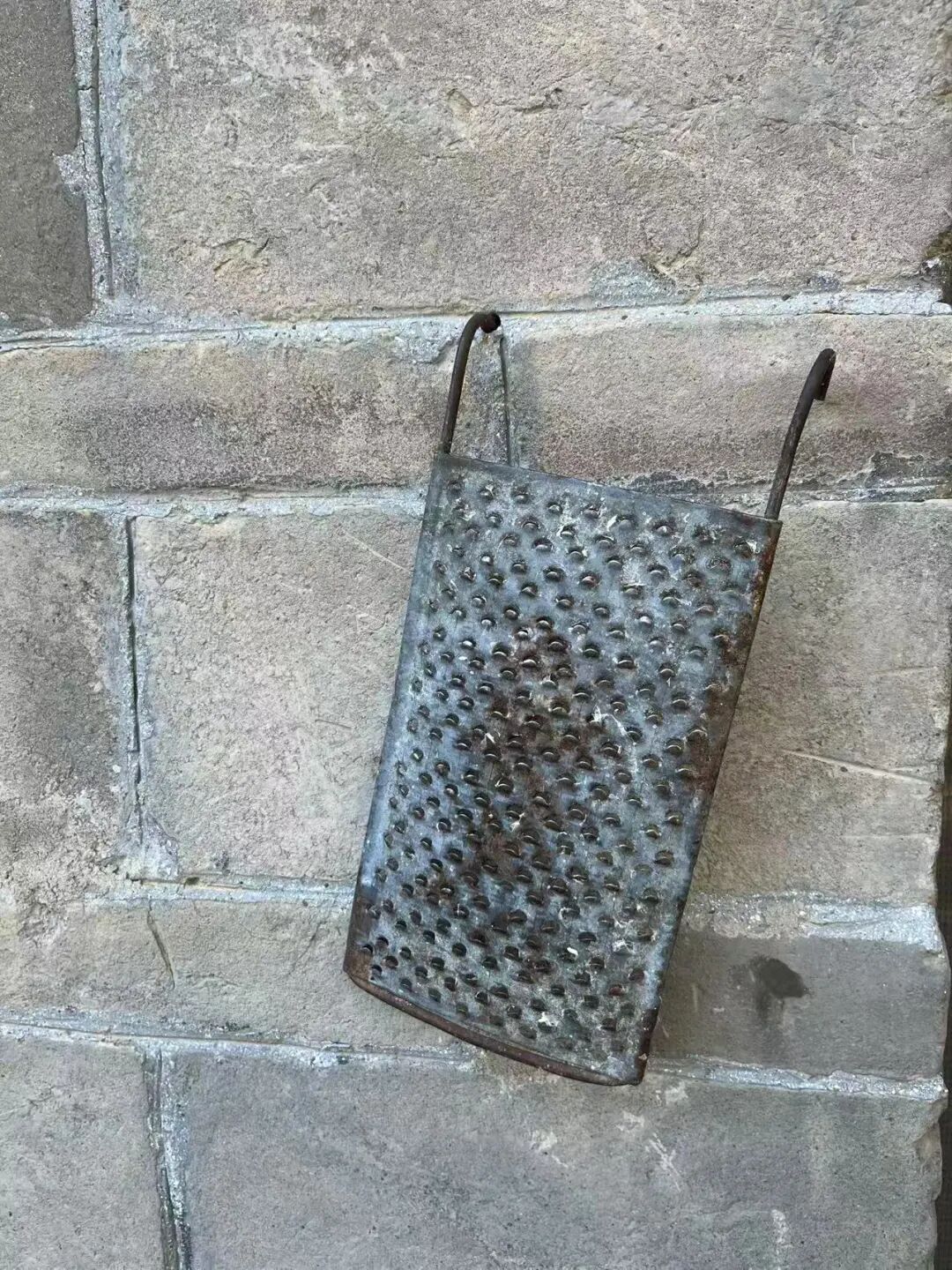
Does anyone still know what this is? We call it a cāzi – a grater that cuts blocky vegetables such as potatoes, radishes and cucumbers into smooth strips or fine shreds. This one is at least thirty years old; my grandmother used it before me. Funny thing is, every time I use it I end up cutting my hand and drawing blood, but the older generation never seems to make that mistake. Nowadays you can buy graters made of plastic board or 304-grade stainless steel, but our family still uses this old one. It is like how, even though we have cleaning cloths now, we still wash dishes with a natural loofah sponge.
There are still plenty of old household items in the countryside – mixing basins, for instance, and the dumpling boards we use every winter when wrapping dumplings. Those boards are made from sorghum stalk and look rather like bamboo rafts; the finished dumplings are lined up neatly in rows on top. When a lot of people gather to wrap dumplings together, it is such a lively scene. We are still using ours to this day.
Saoqie
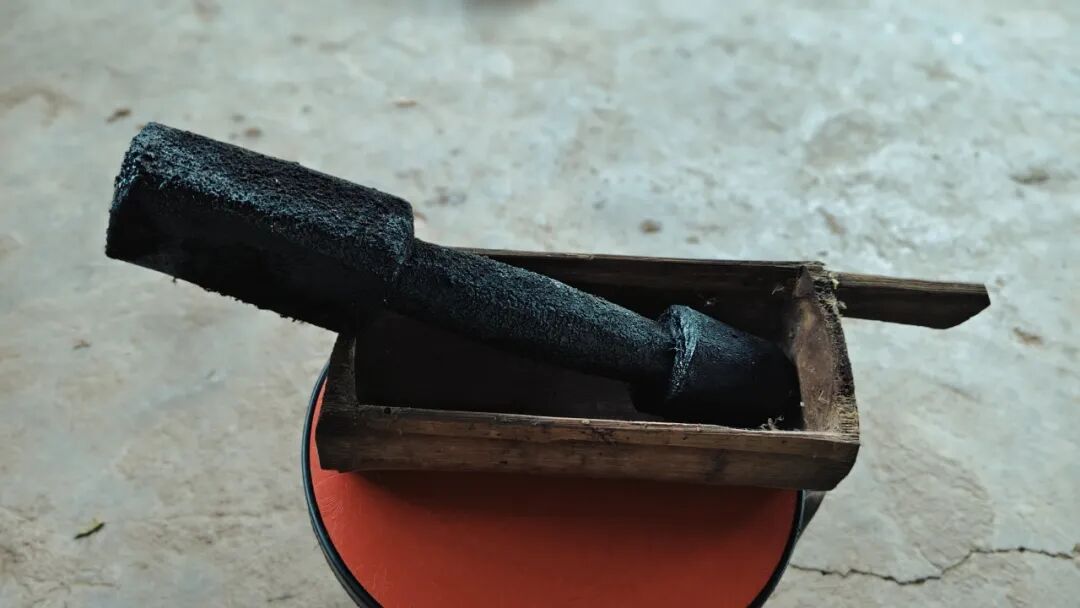
The first old item is our pounding mortar and pestle, at least thirty years old. Among the Jinuo people, everything can be pounded – you can pound nami, pound eggplant, and you can pound cooked food too: things like meat and dried-meat jerky are roasted first and then pounded, while cold dishes are pounded raw.
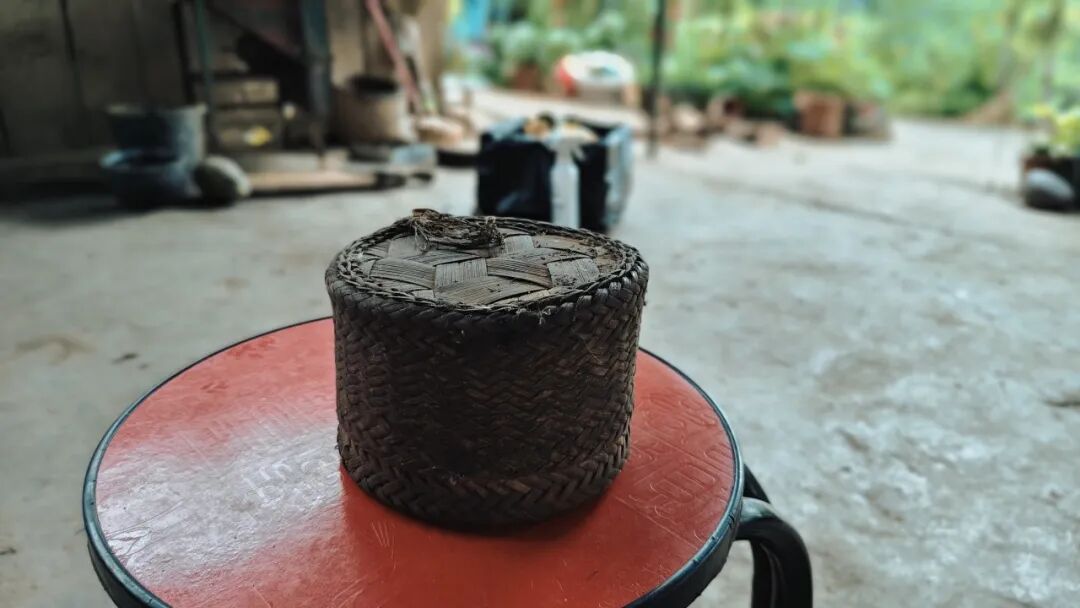
The second item is a rice bowl. When we head up the mountain to work, we pack rice in it. Because it is woven from bamboo, it is light and breathable, so the rice does not go off easily.
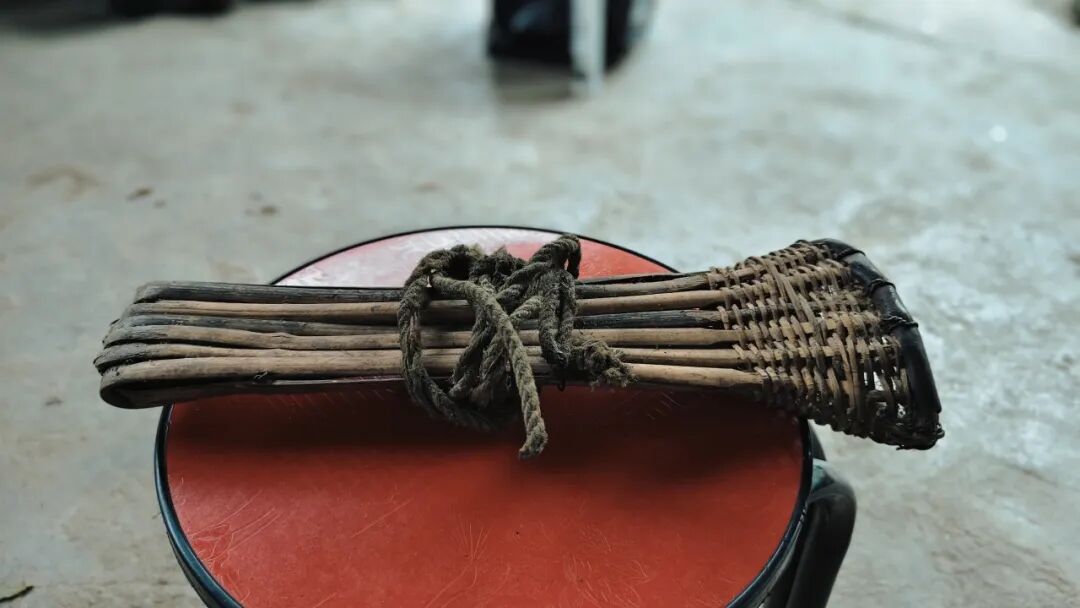
The third item is a knife sheath. Compared with the first two, it has not been in use as long, but for me it is an old companion in its own right – seven or eight years now. Every time I go into the rainforest, I use it to tuck my iron knife into my belt. Why do I call it a kitchen item too? Because on the mountain we use it to fell banana trees, and then use the leaves for bāoshāo! My motto is: in the rainforest, everything can be bāoshāo! Bāoshāo is the method of wrapping food in freshly picked banana leaves and grilling it over an open fire. Dishes include bāoshāo pork, bāoshāo aubergine, and bāoshāo small fish. Banana leaves can also double as a tablecloth during outdoor cooking. The white, tender core of the banana stem is rather astringent on the tongue but actually quenches your thirst, and the banana flower can be stir-fried with minced meat. So although this iron knife and sheath do not look like cooking tools at all, they truly are part of our Jinuo kitchen.
Yuyang
In the countryside of the Northeast, there is a type of dining table called “Stand-to-the-Side”. Unlike the fixed dining tables popular nowadays, this one folds flat: you only prop it open when you need it, and the rest of the time it is tucked against the wall, taking up barely any space – hence the name. It also differs from today’s fold-out tables in that it is held together entirely by wooden joinery, with no iron nails or metal fasteners at all. The tabletop is not supported by four legs in a cross pattern but by three: one is fixed, one serves as the central pivot, and one is movable. Every time you set the table up, that free leg swings open around the pivot like the arm of a drawing compass, then finds a notch beneath the tabletop and clicks into place. And just like that, the table is ready. Even now, when I picture it in my mind, I am struck by a kind of elegance I cannot quite put into words.
When children from the Northeast recall the “Stand-to-the-Side” table, their tone carries a sense of longing and warmth, because whenever it was unfolded, people were gathered together – a family sharing a meal, drinking, wrapping dumplings, writing spring couplets, or playing cards; or a handful of children back from school, huddled together over their homework. It stood there quietly, as if it were alive, keeping company with and listening to the family it belonged to. When unfolded, that golden tabletop seemed enormous, holding so much – plates of food, bowls of rice, cups of wine, words spoken. Once, to me, that golden surface was an eternal world. Then one day I discovered that beyond my hometown there was a far larger world, one always in motion, and the table – now folded and leaning against the wall, never to be raised again – suddenly looked so very small. But the kind of eternal attachment it taught me, to people and to moments, means that even after we leave, I still feel it is there in that vast world, standing alone by the wall, waiting for something.
Living Long-Termism
Tin Duck
The pickle mother-brine that came from my hometown was bottled ten years ago, when my mum ladled it from the pickle jar at our old home in Wushan, Chongqing, and carried it to my place in Chengdu. The brine has been in continuous use at the family home in Wushan – a conservative estimate puts it at thirty years, but on a more generous reckoning, it has been cycling since my grandmother’s time.
My earliest memory of the pickle mother-brine is from our house in the old town of Wushan when I was a child. Then the Three Gorges dam was filled, and the whole old town went underwater. The entire county seat was moved up the mountain, and the pickle jars went up with it. Later still, my mum brought the brine from our family home to Chengdu. After that, I shared some mother-brine with a friend in Hangzhou, who once she had nurtured it, passed some on to a friend in Shanghai. Then I ran pickle workshops in various cities, and the mother-brine began spreading all over the country.
Once, there was a major crisis. I had opened the lid to pick out some pickles for stir-frying but forgot to put the lid back on. The jar sat open to the air for a whole day, and by the time I noticed, a very thick layer of white bloom had formed on the surface. I was frightened to my very soul. I carefully skimmed off every scrap of the white bloom, added fresh vegetables, salt and baijiu, and left the jar sealed for a full month. When I finally opened it again, everything had returned to the way it was before. The vitality of the mother-brine is as tenacious as that of our elders.
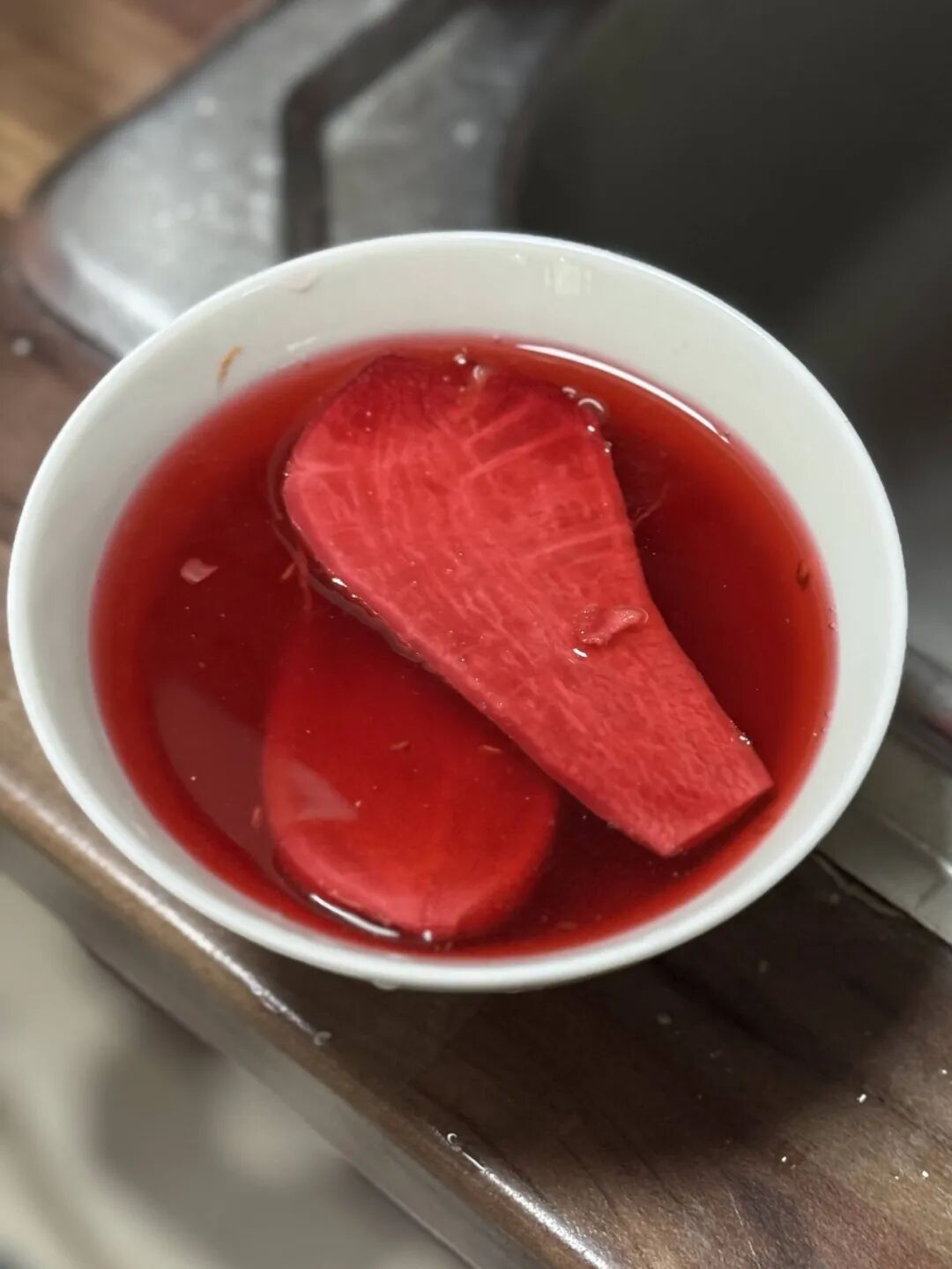
In many parts of Sichuan and Chongqing, people make pickles, but generally they simply fish out the pickles and eat them. Our family has always cooked with the pickle liquid too, using it in certain dishes in place of vinegar. A small side dish my mum would make, something I have known since childhood, is called majī broad beans: dry broad beans are dry-fried over a low heat in a wok; ginger, garlic and green Sichuan peppercorn are crushed together in a stone mortar; soy sauce is added, then a spoonful of pickle liquid, to make a dressing. The toasted broad beans soak up the dressing until they are brimming – numbing, fragrant, sour and refreshing – perfect for a summer when you have no appetite. Only later did I learn this is an old Sichuanese dish. Where my mum learned it, I cannot say, and why she so brilliantly swapped the vinegar for pickle liquid remains a mystery – truly an enigmatic family recipe. Last New Year, I mentioned this dish to my mum when I went home, and she made it again. It tasted exactly the same as it did in my childhood.
Sha Yu
Sister Chicken came from an egg. I cannot remember how many years ago; the year ceases to carry meaning when you try to pin an age on a creature who cannot be identified by age at all.
It is said Sister Chicken has lived in a seedling nursery, a poultry farm, a homestead, an orchard, then at the home of a friend of my parents whose name I have forgotten, and after that in the boot of our car, and then our home.
We might always hope that behind “long-termism” or some similar philosophy of life lies a romantic story, or at least a warm-hearted one, but Sister Chicken was able to survive so long in our home for one reason only – she could overdraw her remaining life to trade for eggs – and that is nothing but sadness, or at best something close to oppressive, the protagonist of my memory imprisoned in a corner of the vegetable garden, her claw tethered to the root system of the South African leaf plant – she loved nothing more than to scratch and peck and scatter droppings everywhere in the garden, so my mum tied her up. Did it work? Obviously yes. Most of the time she could stay only within a 100 cm radius of the South African leaf plant, and only on rare occasions could she escape to scatter droppings once more across the garden, earning a thorough scolding from the humans. There was even one time, when the family had gone away on a trip, that she flailed and threw herself into the air, hung herself on a south-easterly branch and thrashed so violently that her claws swelled with blood for days, and no one knew.
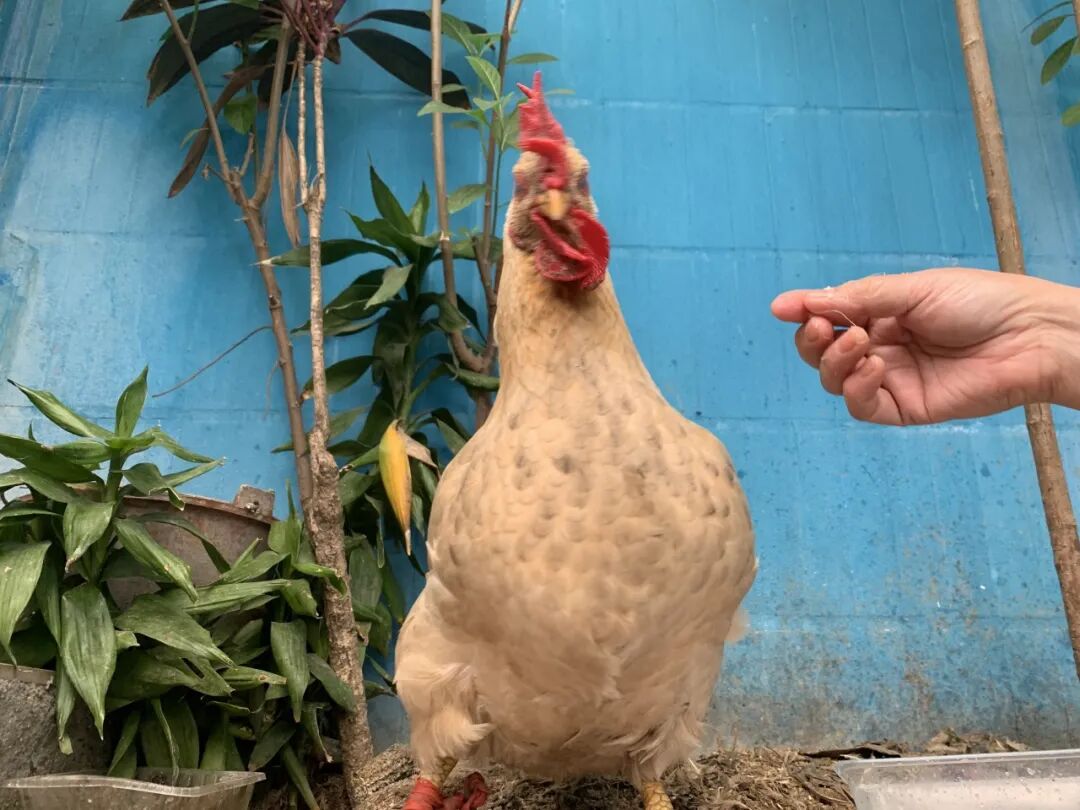
Once the weather turned hot, Sister Chicken’s hormones went haywire – she laid tiny eggs, broke out in ringworm, became a fussy eater, and refused her food. My mum grumbled and swore under her breath but bought fresh corn kernels for her every single day, yet never let her come indoors, because Sister Chicken stank; she could only come inside at night to sleep in a cardboard box. One summer, perhaps the heat was truly unbearable – the sun warped and distorted, rain fell without cease for months on end – and from then on Sister Chicken fell into a depression. She stood in a daze all day long, neither struggling nor doing anything. Everyone knew something was wrong with her, yet no one did anything – just topped up her food, changed her water. No one could bring themselves to send her to her death, either. Sometimes I would crouch beside her, hovering, trying to provoke some response (a foolish jailer), yet she stood frozen as though carved from wood. This slow, creeping torment corroded the nerves of every human under the fetid southern sky who was somehow connected yet stood by with folded arms; this silence, this violence, this endless curse haunted at dusk the soul of every living creature that slept beside her beneath the eaves and yet kept silent – until forever. I remember that a certain memory has a taste – when she caught a chill and died, we ate her.
The soup was sweet.
What Other Old Objects Live in Your Kitchen?
Leave a comment and tell us the story between you and it.
Unless otherwise noted, all images are reader submissions.
Compiled by Kairui
Layout by Minglin
▼
Click on an image to read a related article.