How Do We Understand Food from Afar on Our Tables? A Conversation Starting with a Plate of Meat

Editor’s Note
In 2023, while filming around Qinghai Lake, documentary director Jiao Xiaofang gradually became aware of the changes unfolding in the local pastoral areas: prices for cattle and sheep continued to fall, large quantities of imported frozen meat flooded the market, and the traditional production and sales systems of the grazing lands came under pressure.
After receiving support from Foodthink’s “Lianhe Creative Programme”, Jiao Xiaofang and Qiongwu Tenzin set off in 2024 to circle Qinghai Lake, documenting the real living conditions of herders amid shifting market forces. The result was the documentary Whose Table, Whose Pasture. The film has since been screened multiple times in cities including Beijing, Hong Kong, Hangzhou and Ürümqi. On 4 October, Whose Table, Whose Pasture arrived in Chengdu. After the screening, Wu Xiaohong, a doctoral candidate in anthropology at the University of Exeter, and Gadu Drolma, a doctoral candidate in the Department of Geography at the University of Colorado Boulder, joined the audience in a discussion covering the changes in pastoral areas, consumers’ food choices and a range of related issues.
This year the United Nations has designated as the “International Year of Rangelands and Pastoralists”, and Whose Table, Whose Pasture is continuing to be screened and discussed across the country. We hope that more audiences will join this dialogue about pastoral areas, herders and food systems, and that more people will come to understand, from different perspectives, how changes to the food system are reaching us right here at home.
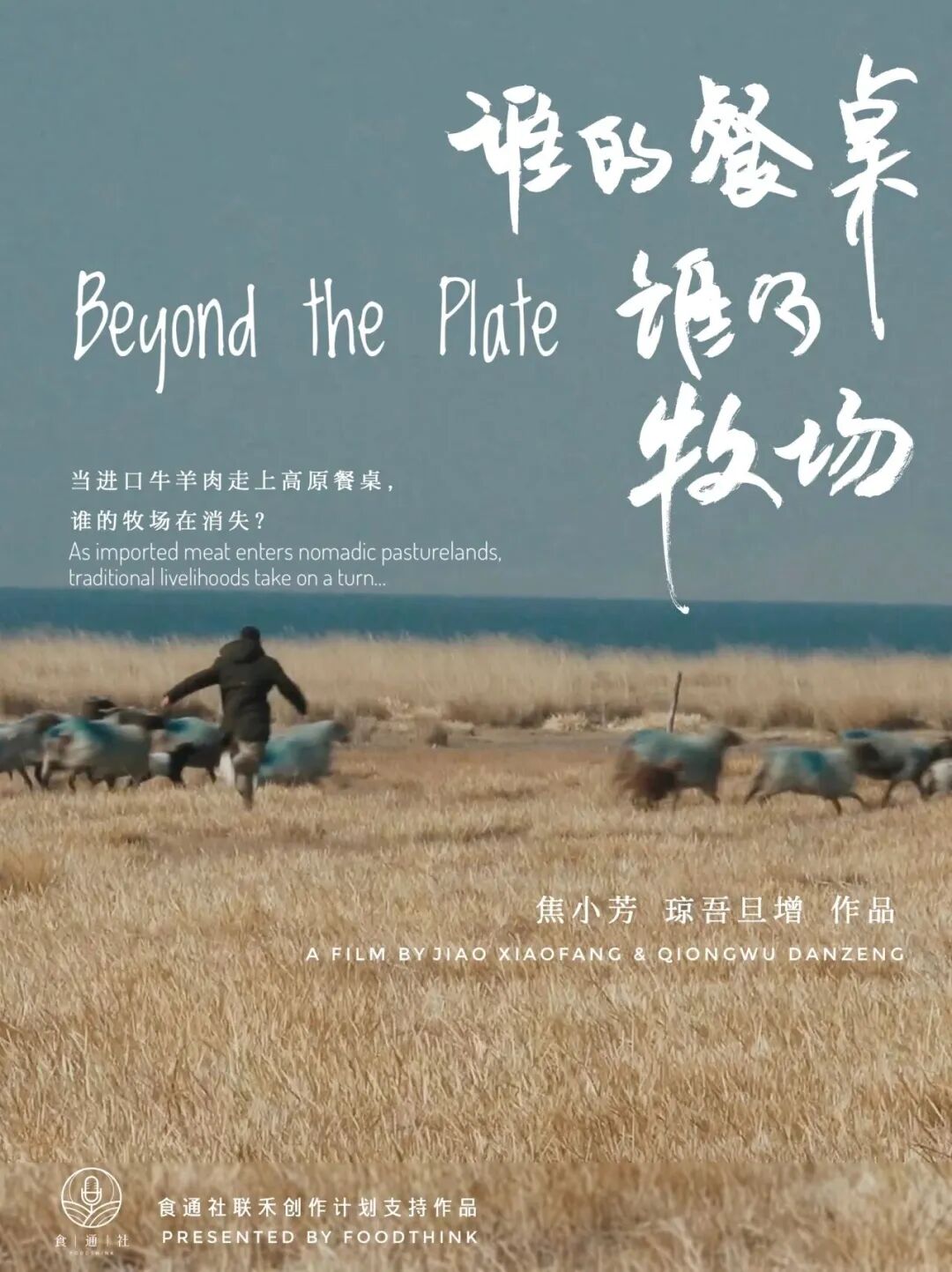
◉ Whose Table, Whose Pasture, a work supported by Foodthink’s Lianhe Creative Programme.
Have Prices Improved Now?
Gadu Drolma: The documentary mentions that when cattle prices were high, they could sell for 10,000 yuan, but now they fetch only 5,000 – and that is compared with the peak price at the time. In 2018 and 2019, African swine fever dealt a severe blow to China’s pork industry, and various other factors combined to push beef prices very high.
On 31 December 2025, the Ministry of Commerce decided to impose safeguard measures on imported beef in the form of country-specific quotas and over-quota tariffs, taking effect from 1 January 2026 for a period of three years. During the implementation period, country-specific quota volumes will increase year by year.
This policy came about because, in 2024, many meat industry associations and enterprises in China reported that imported meat was undermining the domestic beef cattle industry, with prices continuing to slide. The government then launched an investigation and concluded that imported meat had indeed impacted the beef cattle industry, confirming a causal relationship.
The total beef import quota for 2026 is 2.688 million tonnes, of which Brazil’s share is 1.106 million tonnes, Argentina’s 511,000 tonnes, Uruguay’s 324,000 tonnes, Australia’s 205,000 tonnes, New Zealand’s 206,000 tonnes and the United States’ 164,000 tonnes. Australian beef reached its quota on 18 June. Brazil reached its quota on 29 September; exceeding the quota triggers a punitive tariff of 55 per cent. So imported meat prices have risen sharply this year, reaching the same level as local grass-fed meat, which has also pushed up beef and live-cattle prices, with retail prices higher than last year.
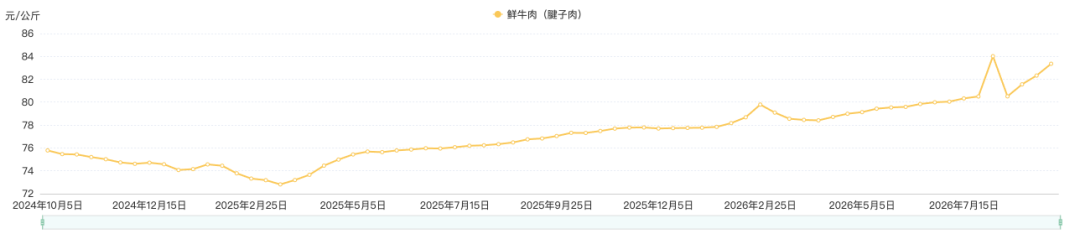
◉ Between 5 October 2024 and 5 October 2026, national fresh beef prices bottomed out on 15 March 2025 before gradually recovering. Source: National Key Agricultural Products Market Information Platform
Wu Xiaohong: You can also extend the timeframe a little further. Looking back from 2015, beef imports that year were roughly 470,000 tonnes. By 2024, they had reached 2.87 million tonnes – the volume has been growing steadily. Although prices have gone up this year, import volumes are still rising; the increase in import quantities has not been a sudden development. It is also related to overall rises in income and to the growing consumer demand for beef and mutton products.
My own research focuses on the relationship between people and dairy cows, so I visit dairy farms. When I first went to a farm, I noticed that if a newborn calf was a bull, not entirely black in colour, and weighed less than 30 kg, it would generally be sold the very same day as a “serum calf” (i.e. calves whose blood serum is extracted for experimental research or vaccine production). Because they are sold so soon after birth, even in winter the farm provided no relatively enclosed, warm environment for them before they were taken away.
This year, when I visited again, things had changed somewhat: bull calves are now kept on even if their weight does not meet the usual threshold or if they still have a patch of white on their legs. After being reared for a period, they are then sold as beef calves, because beef prices have gone up.
So, when we discuss the impact of price fluctuations, we should also recognise that this affects not only herders’ livelihoods but also determines the fate of another group of animals. Furthermore, now that beef prices have risen, whether those effects have reached herders, what the situation is, and how the impact is being felt – these are all things that warrant close attention.
What Has Changed on the Industry Side?
Audience member: Have pastoral areas, under pressure from certain forces, suddenly started using veterinary medicines on a massive scale? And as for the fattening mentioned in the film, has that been a thing since ancient times, or is it something people only discovered over the past twenty or thirty years?
Wu Xiaohong: Whether in the past or today, animals that fall ill need proper diagnosis, treatment and care, and medicines when necessary. In the past there were village veterinarians, and there still are. At the same time, the use of veterinary medicines is governed by relevant regulations. If animal-derived food products containing veterinary drug residues above the permitted level are sold, the responsible parties are held accountable – this is an important aspect of food safety. The inspection and quarantine stamps seen in the film are required, but a quarantine pass does not necessarily mean that drug residues have been tested and found compliant.
Staff from local institutions such as the Bureau of Animal Husbandry and Veterinary Medicine and the Animal Husbandry and Veterinary Station also train herders and go down to the front line of farming to tell them which medicine to use for which illness. For major animal diseases such as foot-and-mouth disease, cases must be reported and handled in accordance with regulations, and the corresponding prevention and control requirements must be met. As for how herders decide on everyday medicine use, for most of it each household makes its own decision.
Gadu Drolma: In Tibetan areas, very few yaks undergo fattening; herders do supplementary feeding instead. Supplementary feeding and fattening are two different concepts. Supplementary feeding means that when the yaks are very weak in winter and there is no grass, you feed them silage, or a mix of tsampa and turnip, to help them get through the winter. In the yak beef industry of Tibetan areas – in Qinghai, for instance in Golog and Yushu – the main output is live yaks. Around Xining, places like Huangzhong, Ledu and Huangyuan sit at relatively lower altitudes, and the state is now promoting the “western breeding, eastern fattening” model. Those who carry out the fattening are mainly Hui people. They used to be traders who would go to places like Yushu and Golog to buy cattle, slaughter them themselves and sell the meat in Xining. But now all cattle must be slaughtered at an abattoir. The old business model has come under regulation. So this group now works in fattening.
I visited a fattening operation near Xining. They have at least 1,000 head of cattle; they fenced off agricultural land in the village and fatten the cattle there. The main purpose of fattening is to get the cattle to gain weight through various means. In a typical case, a three-year-old cow is sold for fattening and can gain somewhere between 50 and 100 kg over a few months to a year. Traditional herders generally do not eat cattle aged two or three years, yet it is precisely two- and three-year-old cattle that are sent for fattening. I asked the people running the operation: do you eat this meat yourselves? Some of them said they do not – they buy their cattle directly from the pastoral areas. So I think that also shows there is a difference between fattened meat and grass-fed meat.
Generally you can tell fattened meat apart from grass-fed meat by looking at the bones. This past summer, when I was back home and had lamb, the bones were narrower than my little finger – the animal had been fattened from a young lamb up to adult weight, but its bones had not grown; it had only put on flesh. You can also tell by the smell and the colour of the fat. There are, in fact, several ways to tell the difference.
But in the market these days everything is mixed together and sold as one. When I did research in Chengdu in May, I found yellow-cattle beef and yak beef being sold side by side at the same price. Once yaks have been fattened, the cost per jin can sometimes be slightly lower, so they end up sold alongside yellow-cattle beef.
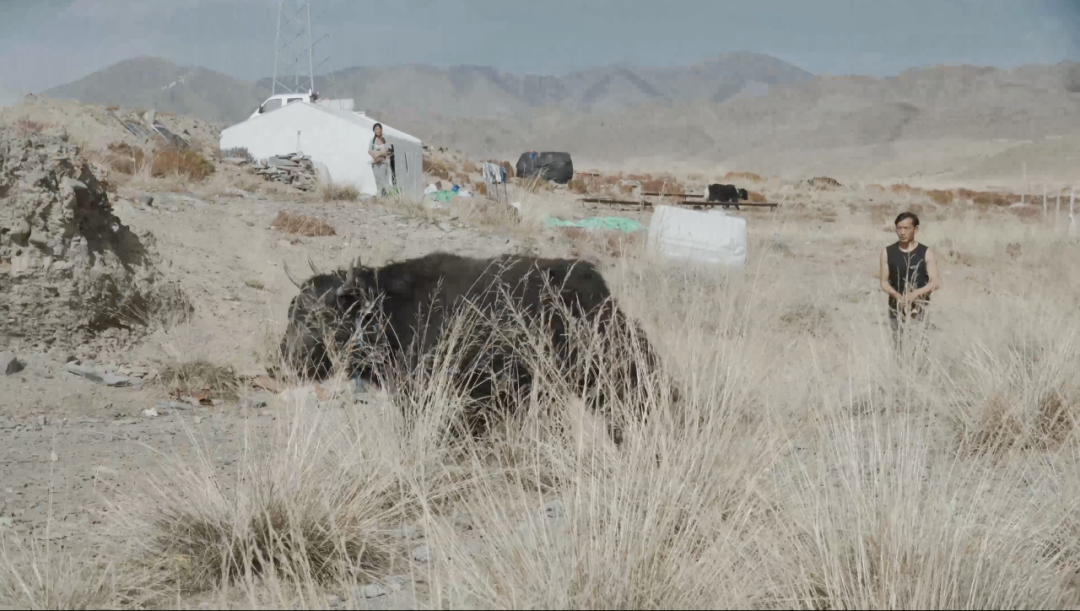
◉ A Qinghai herder with his yak. Image source: Whose Table, Whose Pasture
Audience member: Can Chinese local meat, say yak beef, be cut into steaks? No, it cannot – the breeds are simply different. And Western farming methods are different too. Whether in Brazil, Australia or the United States, they are all large-scale ranches that can produce tens of thousands of tonnes of beef a year. Then as a producer, whether you are a supermarket or a restaurant, the basic requirement is consistency of quality – the texture, the safety, every aspect has to be stable. It also needs to be traceable, so that if something goes wrong you can find the source. In a smallholder economy, the meat from your neighbour’s cattle and sheep might taste quite different from yours. Placed within a large industrial chain, from the production side, meat like that simply cannot be used.
Wu Xiaohong: Because my fieldwork site is in Inner Mongolia, the local red cattle there (formally known as China Grassland Red cattle) – in the pastoral areas I have worked with, the purebred ones are already very rare now, because their yield is indeed quite low. Many herders now carry out what they call breed improvement on their own farms. For example, some families raise Simmental cattle.
Simmental cattle originate from Switzerland, but the Simmentals we raise today are not the original stock that first came from Switzerland; they have gone through a long process of importation, crossbreeding and selective breeding. In the pastoral areas of Inner Mongolia you see a great many Simmentals, or Mongolian cattle crossed with Simmentals. When we talk about “local cattle”, the definition itself has already shifted.
However, one possible risk of crossbreeding is a higher incidence of difficult calving. The local cows have a relatively small body frame. But Simmentals are much larger, and their calves can sometimes be oversized too, which raises the likelihood of a difficult birth. So in the process of changing what we eat, it is not only local culture that is being changed – it may also change the lived experience of the cattle themselves.
In the film, an interviewee says that local herders used not to slaughter their own yaks. Some parts of Inner Mongolia have a similar tradition – in Tongliao, for instance, some herding households will not slaughter their own cattle; they might buy from another household, have someone do the slaughtering, and then eat the meat at home. But the herder families I stayed with in Hulunbuir do exactly the opposite – they slaughter their own cattle themselves and eat it themselves.
Gadu Drolma: Inner Mongolia is a bit different from the Tibetan areas. Breed improvement has not come as quickly there. The high altitude has in a way protected us. It is not possible to raise Simmental or Angus cattle on a large scale, so in our Tibetan areas the yaks are still the local breeds – most of them, anyway.
Wu Xiaohong: But yak farming practices are also changing in some places. I used to think that all yaks were kept free-range, gave birth naturally, and that calves would not be separated from their mothers the way the dairy industry routinely does. Then I looked into yak farming and discovered that there are now operations keeping yaks indoors under intensive housing. So I stopped buying yak milk.
Gadu Drolma: It is usually cooperatives or fattening operations that do that. Herders themselves still rarely keep yaks under intensive housing – they still practise nomadic pastoralism. At the very least, the Tibetan areas still maintain this nomadic way of life.
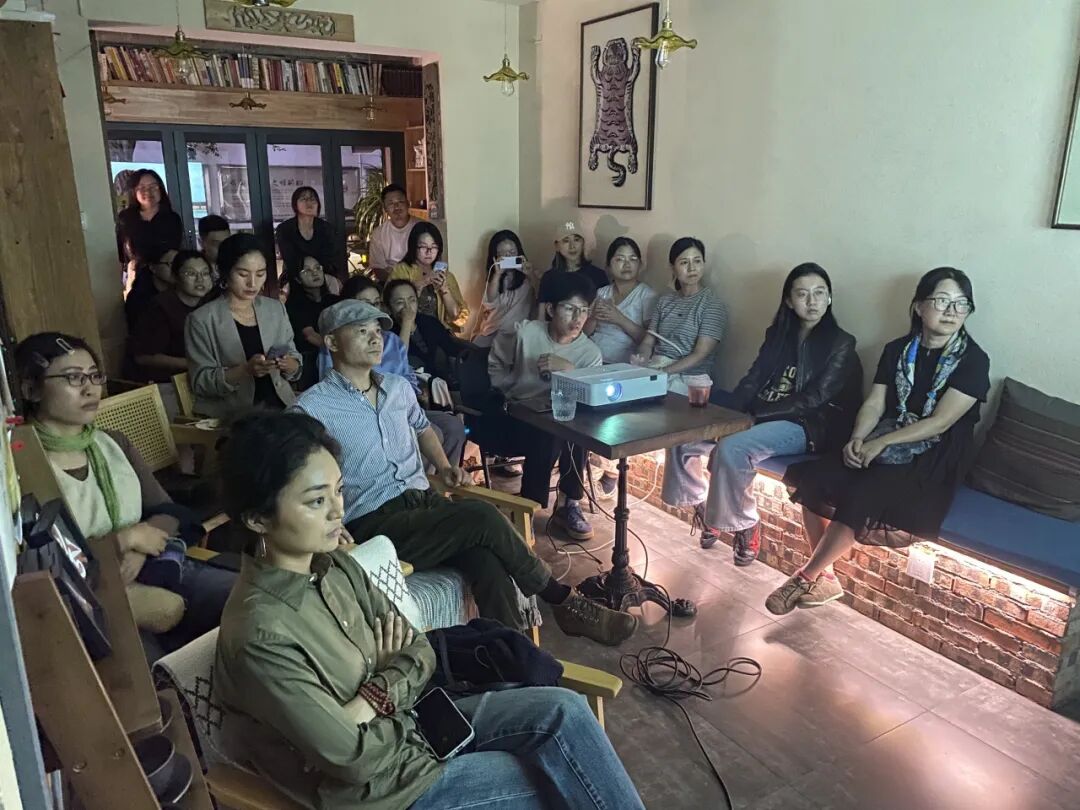
◉ The screening event on 4 October. Photography: GAWA CAFE
Consumer Anxiety and the Way Forward
Gadu Drolma: Consumers, too, need to reflect on this. The constant demand for fresh meat all year round has also given rise to fattening. If we followed the natural growth cycle of animals, there would only be meat in autumn. Our old habit was to buy a great deal of meat in winter – perhaps two head of cattle and a few sheep – freeze it all in the freezer, and eat it right through until this time next year. Or in summer we would eat dairy products and have a little less meat, and by winter there would be plenty again. That is in line with the animals’ natural growth cycle.
Audience member: I seem to have heard a podcast earlier that also touched on the eating habits of herders. Herders used to be very accustomed to eating their own cattle – they felt only that had the right flavour – and now they are being pushed into eating imported beef. This film doesn’t seem to cover that aspect, or have they simply come to accept this taste so easily?
Gadu Drolma: During my fieldwork, herders who own yaks and other livestock tend to prefer slaughtering their own yaks. That way they can eat the offal, the hide has uses too, the blood is made into blood sausage – absolutely nothing on a yak goes to waste.
If you buy imported meat, all you get is the meat – none of the offal. So I think herders’ attitudes towards imported meat are shifting too. Many herders feel that the bones in imported meat are exceptionally large, perhaps three fingers wide, whereas a typical yak bone might only be two. Some of them think it must be horse meat; some say it’s kangaroo; others say it’s meat from the sea. Because in their world there really is no animal with such a massive skeletal frame, so some herders refuse to eat imported meat altogether. And then there are health-related reasons. I don’t know whether there’s any scientific basis for this, but some people feel that imported meat leads to high blood pressure, high blood sugar and high cholesterol – certain health risks – and that eating yak beef never caused such problems, so some simply won’t eat it either.
The herders who do eat imported meat are mostly those who have moved to the county town. Many people have given up herding and settled in town, but they keep their old habit of eating meat. They used to slaughter at home, but now they no longer have their own yaks or sheep. These herders often have limited incomes, so many of them turn to imported meat. There are also herders who, when prices are high – say a yak sells for ten thousand yuan – find that this income buys twice as much imported meat, so they save money.
In fact, a great deal of imported meat goes to hotpot restaurants. Hotpot has become hugely popular in Tibetan areas – people even have it at home. When the seasoning is very heavy, you can’t tell the difference between yak and imported meat. This industrialised style of eating, along with the shift towards heavily seasoned cooking, has itself reshaped what people eat.
Audience member: The film is limited in scope and hasn’t really investigated the consumption side or the production side of meat. In our meat market, particularly for beef and lamb, the proportion sold loose is not high – most goes to large supermarkets and food service businesses. Before the pandemic I ran a restaurant and did some research into meat. Often the reason for imported food isn’t that Chinese people have nothing to eat or not enough; food and lifestyles have become completely globalised. Very often it’s structural shortages that create the need for imports. For instance, consumers want cherries in winter, so they have to be imported. Same with beef. When we used to do steaks, we ran steak samplers: the ribeye came from Brazilian ranches, the sirloin from US ranches, the short ribs from Uruguay, and the Wagyu was Australian Wagyu beef cubes. I think this is a structural shift on the consumer side – people are gradually embracing Western-style dining, including many families buying large packs of steaks to fry at home, far more convenient than slow-cooking beef in a big iron pot.
Audience member: As a city person who will never be able to eat meat from animals raised on their own land, I have to say I’m feeling a bit anxious listening to all this. Is fattened cattle really that bad? What about food that isn’t organic but does meet market hygiene and quarantine standards, can’t be traced back, isn’t organic – what should we do?
Gadu Drolma: I feel that if the meat cannot be traced or its origin cannot be verified, then as a consumer I would choose imported meat sold through legitimate channels. Let me explain why. Customs has certain standards for imports, and several conditions must be met. First, the exporting country must be free of foot-and-mouth disease and bovine spongiform encephalopathy. Second, residues of microorganisms, pollutants, pesticides and the like must not exceed the permitted limits, and there must be no HGP (i.e. hormone growth promoters), meaning no growth-promoting hormones or similar substances used during the animal’s development. To import into China, all these conditions must be satisfied, but there are no requirements regarding the age, sex or breed of the cattle. If a random inspection finds non-compliance, imports are halted. For that company, it means a substantial financial loss. Given the scale of the Chinese market, once exports to China are suspended, it is very difficult to find an alternative market. I also spent over forty days on the ground in Australia, and they said dealings with China are particularly strict – they don’t want to get anything wrong. There was one fattening operation with 35,000 head of cattle, planning to increase to 70,000 within two months. They had previously exported to China, but after a problem arose they no longer export there and have shifted to Southeast Asia. So at the very least, imported beef through proper channels is subject to testing, whereas compliance testing on domestically produced meat may not be as rigorous. If I don’t know where the meat comes from, I personally, as a consumer, would probably choose imported meat.
Audience member: If you could know the source, what would you choose?
Gadu Drolma: I have lived in Chengdu for over ten years and have never bought meat there. Every time I buy yak beef in Gannan and bring it over, or when relatives come to visit, they bring one or two sheep in their car. In winter I fill the freezer to the brim with meat. The texture of yak beef really is different, and the taste of lamb is different too. Unless I’m eating at a restaurant, I won’t buy or consume any other meat. Really, it comes down to the relationships between people. Perhaps something like CSA – community-supported agriculture – needs to be developed here (a model in which consumers enter a direct partnership with farms, prepaying and ordering seasonal produce such as fruit, vegetables and other agricultural goods straight from the source). For our family, we always buy meat from the same household – we trust their integrity. Consumers need to do a lot of vetting in the early stages, but once you’ve made your decision you keep buying from them, and after that it’s all about trust between people. The potential risk, though, is changes in policy: it’s possible that one day all meat may be required to go through an abattoir before it can enter the market as a commercial product.
Audience member: Let me share something a bit more positive. When we went on a study tour in Inner Mongolia, we learned that they are now using big data for traceability. With packaged beef bought from a supermarket, you can scan a code and see the entire production chain. It is actually being rolled out now, but building the full system will take time. From a business perspective, I think it’s important for brands to take this on and build long-term trust.

◉ Post-screening discussion with the audience, Gadu Drolma and Wu Xiaohong. Photography: GAWA CAFE
How Do We Understand Food from Afar on Our Tables?
Gadu Drolma: In food studies there is a concept called “food regime”. There are three stages. The first is the colonial period – around 1870 – when Britain-led nations dominated the world through colonial rule. The extraction of raw materials propelled the rise of the European nations led by Britain. After the Second World War, the food regime became US-led. The United States had vast food surpluses and addressed them by aiding developing countries, spreading the Green Revolution and getting everyone accustomed to – even dependent on – chemical fertilisers, seeds and certain agricultural technologies. In the current phase, scholars define it as a neoliberal food regime, or a corporate regime. The path of neoliberal development demands free trade, privatisation, the government stepping into the background, and letting the market do the work. It gradually developed into a system in which giant multinational corporations produce our food and control its flow. What kind of food we eat is all decided by these corporations. So the changes the Tibetan areas have experienced are also happening in many other regions and countries – it is a very long process of historical iteration.
Wu Xiaohong: In fact, this is not only about the herders’ dining table; set in our own everyday lives, it is the same. We too rarely think about where the food in front of us comes from, or what impact it might have. When you ask this question, it seems as though these choices have been forced upon us, yet for some herders it may also be an active choice.
I have a friend in Inner Mongolia who has long been working on pastoral cultural communication and also runs a cooperative, helping herders get a relatively fair price for their sheep. But when I asked how she chooses her milk, she said proudly: “I definitely drink imported milk powder.” Now, especially in young herders’ households, almost everyone has a mobile phone – this magical “little box”. This “little box” can connect you to the whole world, helping people transcend the geographical boundaries of the pastoral lands to learn more about life, about choices when it comes to food. On top of that, this touches on what we call modernity: for instance, we are “educated” into knowing what is high quality, what is hygienic, what is nutritious. In the process of these perceptions taking shape, both our friends in the pastoral areas and those of us outside them may, for a period of time, treat “imported” as a mark of quality and food safety.
From Pasture to Table: What Are the Environmental and Social Costs?
Wu Xiaohong: If we push this question further – when cheap food arrives at our tables, behind it lie many relationships that concern us directly yet are routinely overlooked. I once attended an exchange between Mongolian and Tibetan entrepreneurs at a bookshop in Hohhot. A senior expert there used concrete data to show that if environmental and other externalities were factored in, mutton would need to sell for roughly 70 yuan per jin (500 g) to cover the true cost of being a “commodity”. At that price, I at least could no longer afford it. So the majority of the food we consume today actually carries the characteristics of a public good.
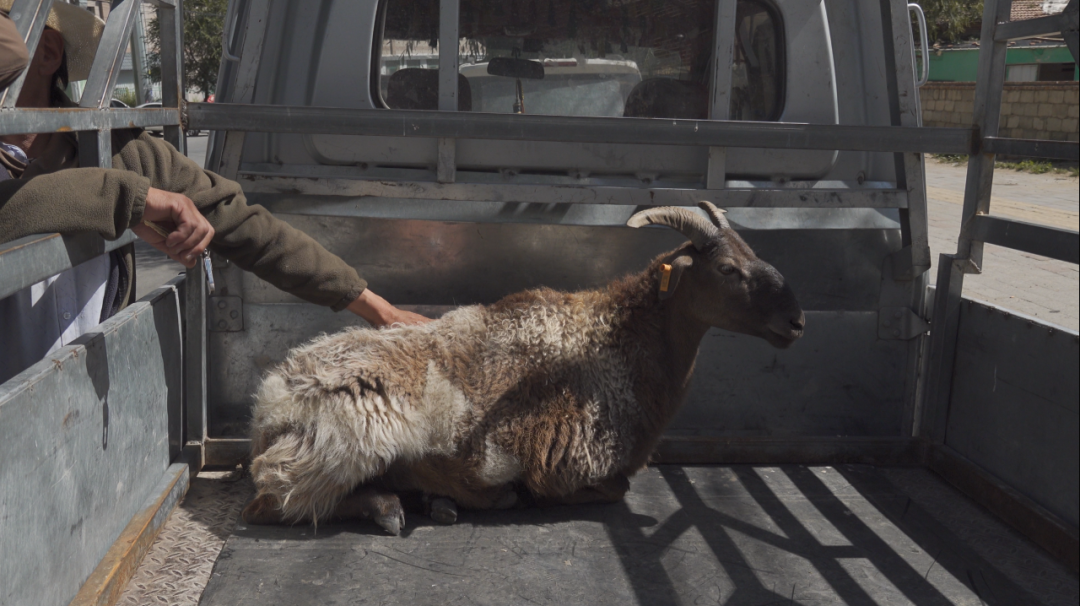
◉ One sheep, and the cost behind it. Photography: Jiao Xiaofang
Wu Xiaohong: We have just discussed the preference for frozen versus fresh meat, but we haven’t yet talked about the “animals” themselves. The beef we eat comes from a variety of sources. Some of it may be from dairy cows that have been culled from the herd – perhaps because their milk yields have fallen, or because they suffer from conditions unrelated to food safety, such as joint problems or lameness. In Inner Mongolia, some of these culled dairy cows are transported south. Why not slaughter them in Inner Mongolia? Because consumers in the south demand freshness, and transporting the animals to be slaughtered on the spot fetches a higher price. But imagine what cattle living in the north endure on the long journey south, especially in summer – and some of these animals have leg ailments. Throughout the transit they are kept standing. In my own line of work, I have spent a long time trying to push for shorter slaughter distances, but it is extremely difficult, because consumers want “fresh” meat, and the market responds. I realise this perspective may complicate our already far-from-easy lives, but I still encourage everyone to think about the animals when you can.
Gadu Drolma: Among cheap imported beef, there is a type called Brahman cattle – they have a distinctive hump at the back, like a fatty growth. They are a breed from India. Australians don’t like eating them; they prefer European breeds. Brahman cattle are actually reared free-range, often slaughtered before the age of two and then exported. Then there are retired or culled dairy cows, and some breeding bulls. But our packaging doesn’t label any of this – there is no mandatory requirement.
I visited an abattoir in Australia, and the meat from there can be found in Tibetan-area markets. They have two production lines: one is for calves – the male offspring of dairy cows, who have little production value, are typically slaughtered at around seven days old. The carcass weighs about 17 kg and is made into burger meat, then exported. So the burgers we eat may come from a calf that lived for just seven days. I’m sorry to cast a shadow over your appetite, but I believe we need to know that this is meat we could well end up eating.
Audience member: It seems beef produces greenhouse gases – it’s the least ecological meat.
Gadu Drolma: Agriculture and animal husbandry account for roughly 30 per cent of total greenhouse gas emissions. When it comes specifically to beef, the main concern is industrialised, large-scale farming. But free-grazing yaks on the Tibetan Plateau, as a native breed, have relatively lower methane emissions – this has been confirmed by relevant research.
Wu Xiaohong: A few days ago, at a press conference in the State Council Information Office series “Getting the 15th Five-Year Plan Underway”, Zhang Zhu, Minister of Agriculture and Rural Affairs, noted that food supply and demand remain in a state of tight balance. Although we eat far less rice and noodles than we used to, consumption of non-staple foods such as meat, eggs and dairy is still rising – and these are produced by converting feed grain like maize and soybeans. Roughly speaking, it takes about 2 kg of feed to produce 1 kg of chicken, 3 kg for 1 kg of pork, and 5 kg for 1 kg of beef. Overall demand for grain will continue to grow. The water use and greenhouse gas emissions generated from the maize-growing stage onwards are actually very substantial. If we keep raising more and more animals, the total energy consumption – including the use of water and other resources, as well as greenhouse gas emissions – will only increase.
Gadu Drolma: Yaks make a huge contribution to ecology and plant biodiversity. For instance, when yaks graze they carry seeds; their treading promotes biodiversity; there is no need to deliberately sow or till the land – the yak is a vital link in the ecological chain. This has been confirmed both in practice and in research. And if you were to travel to the Tibetan areas and see nothing but Simmental cattle and Angus cattle, what would the landscape look like? The yak is also part of the region’s cultural capital. There is also a contribution to public health: yak meat is highly nutritious, with a higher protein content than Angus beef, lower fat, and a slightly higher proportion of unsaturated fatty acids. Then there is the contribution to employment: yaks are reared at household level, providing livelihoods for many people and supporting food security in the local and surrounding areas. So the yak is not simply one animal – it is part of the entire ecosystem.
Audience member: You mentioned earlier that yak rearing among herding households in Tibetan areas can hardly achieve the kind of standardised mass production seen in the West. Beyond the objective constraints of the high-altitude environment, there is an important consideration of social structure: herders’ livelihoods and way of life are built on this very model of sustenance. If standardised mass production were to be achieved, the livelihood transition of large numbers of herders would need to be resolved. And this is not merely an economic question – it touches on their security, education, and their sense of belonging and emotional attachment to the land. If a transition is unavoidable, the core issue is how to minimise the impact of external risks. Because if the existing way of life is maintained, herders can actually live very well. It is mainly the external factors – ecological and otherwise – that make this difficult.
– This is Foodthink’s 852nd original article –
– Post-Screening Discussion

Wu Xiaohong | PhD candidate in anthropology at the University of Exeter, UK. Her work has long centred on animal welfare practice and the study of human–animal relationships.

Gadu Drolmaདཀའ་ཐུབ་སྒྲོལ་མ། | PhD candidate in the Department of Geography at the University of Colorado Boulder, USA. Specialising in food geography, she researches the impact of global food systems on nomadic pastoral peoples.
– Directors
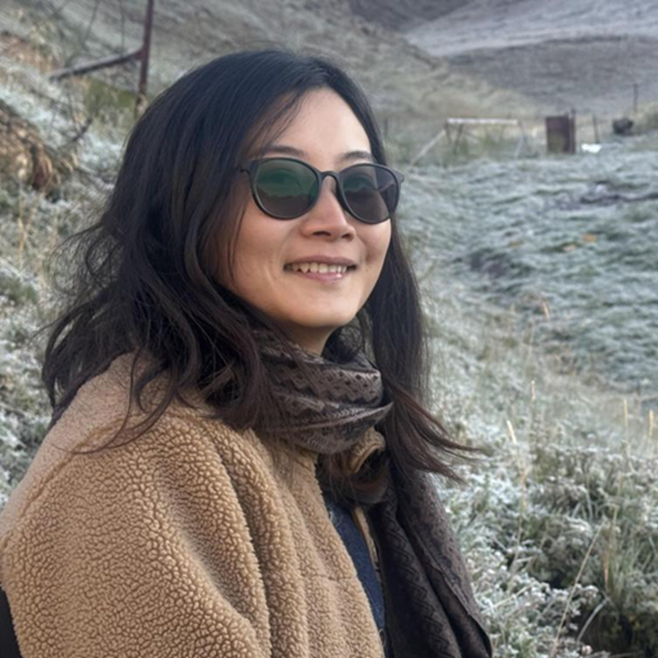
Jiao Xiaofang | Documentary director and visual anthropology researcher. She has long focused on local knowledge, ecological ethics and women’s experience in western China and the coastal regions of Southeast Asia. Her films combine ethnographic observation with poetic expression, exploring the relationship between people and the natural world and the emotional landscapes of everyday life. Her documentary Whose Table, Whose Pasture? (2025) was selected for the 5th World Nomad Film Festival and the 6th China Ethnographic Documentary Film Festival.
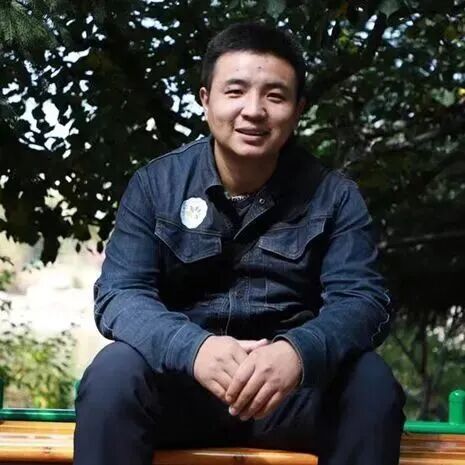
Qiongwo Tenzin | Tibetan documentary maker and community activist, committed to ecological conservation and visual education on the Tibetan Plateau. He formerly served as coordinator of the “Village Eye” Tibetan-area programme in Yunnan and as regional representative of the Alxa SEE Sanjiangyuan Project Centre, and is currently head of the Human–Bear Conflict Programme at the Qinghai Xuejing Ecology Publicity, Education and Research Centre. Over the past decade he has championed herder film training and community ecology projects in Yushu, Aba and elsewhere, supporting herders in using film to document their own environment and culture. His work weaves together film, ecology and public education, dedicated to building understanding and coexistence between people and the natural world.
Thank you to GAWA CAFE for providing the venue for this event
Edited by Xiao Dan
Layout by Xiao Shu
Scan the QR code to tip and support original Foodthink content
▼

▼
Click the image to read related articles
▼
Click a keyword to browse more article collections
Seeds | Agricultural Technology | Policy | Fermentation | Nutrition | Fruit | Fisheries | Events | Recruitment | Takeaway | Wet Market | Animal Husbandry | Food Talk | Sharing Sessions | Book Clubs | Harvest Festivals | Smallholder Stories | Climate Change | Rural Development | Cooperative Economy | Urban Farmers | Food Safety | Digital Technology | Biodiversity | Pandemics and Food | False Solutions | Agroecology Internship Programme
Beijing | Hebei | Shanghai | Guangdong | Guangxi | Henan | Sichuan | Jiangxi | Xinjiang | Shaanxi | Hong Kong | Chongqing | Zhejiang | Jiangsu | Guizhou | Taiwan | Inner Mongolia | Philippines | Canada | Russia | Mexico | Italy | United States | United Kingdom | Germany | Netherlands | Thailand | Sweden | Japan