At the Jokkmokk market, John and some thirty cousins hawk reindeer meat and silver jewellery, the four-hundred-year-old fair as bustling as ever; yet boarding schools, racial research and Kiruna’s newly discovered rare-earth deposit have never exited Sámi life.
Foodthink’s second Ecological Agriculture Internship Programme has connected 21 young people — journalists, programmers, chefs, and university students — with nine ecological farms across the country, where they are rediscovering food and the land through turning soil, raising seedlings, and composting.
The Dutch nitrogen-reduction policy has put farmers in the dock, yet Rabobank and agribusiness giants like Cargill truly drive—and profit from—high-density intensive farming. With over 40% of farmers below the poverty line, cow dung is merely the most conspicuous scapegoat in the nitrogen crisis.
Since returning home in 2011, Yu Jiangang has resumed ecological cultivation of Hangzhou white chrysanthemum in Zhenghebang, Tongxiang. Six years of typhoons, extreme heat and a partner’s total crop failure have left only this one mu still farmed by a villager.
Tomato shortages and purchase limits gripped British supermarkets in early 2023. Decades of fixed low-price contracts had forced growers to cut production and offloaded costs onto migrant labour — while corner shops squeezed out by supermarkets became the only place left to buy vegetables in a crisis.
Miyun’s Feiniao yu Mingchong founder Yifang, Xiao Yunsheng of Beijing Organic Farmers’ Market, host Xiao Jing – three mothers on what a farm can give children. A seed planted, a peach ripening naturally, uncertainty of “relying on the heavens for a living”: a sense of reality no desk offers.
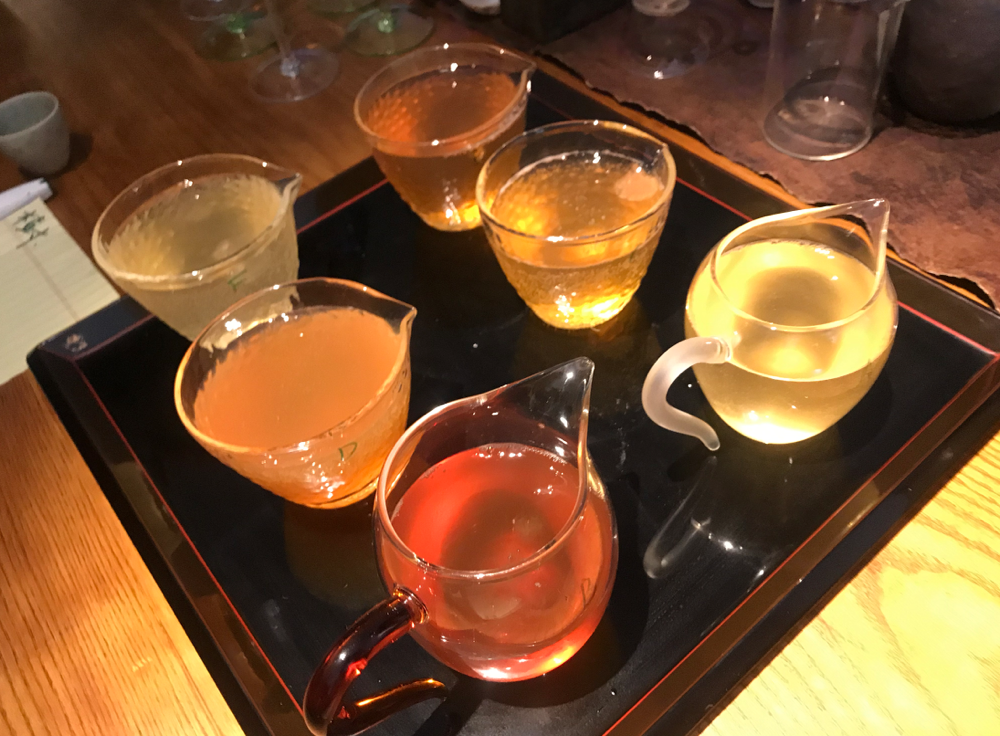
In early summer 2020, Zhang Xiaoshu first tasted kombucha fermented with Chinese tea at a friend’s by the Drum Tower. Three years on, she, tea friends Shuyu and Kiwon, and a growing circle passed cultures, blind-tasted, and guarded connection through a jar of fermentation amid lockdowns and scattering.
Environmental advocates Li Jiacheng and Mao Da, drawing on the book Where Does the Garbage Go?, point out that Japan’s incineration-dominated system is not the best model: in at least 10 Chinese provinces and regions, incineration capacity has already exceeded waste collection volume.
Pesticides and pesticide residues, antibiotics, food delivery waste, the disappearance of wet markets, Community Supported Agriculture – the four consumer rights of safety, information, choice and voice all have specific, actionable pathways in food consumption.
More than ten young people in Foodthink’s 2023 cohort in the Ecological Agriculture Placement Programme have given their answers: some to reclaim the childhood taste of vegetables, some to master growing knowledge at the front line, some to understand agriculture and the land anew through their bodies.