
Only in the Corners Delivery Can’t Reach Can You Eat Well
Foodthink Notes
China’s dining tables are sustained by the countryside, yet the rural table itself rarely receives attention. We hope this piece will offer some inspiration to those heading to the countryside for the Qingming break. We welcome you all to share your own experiences and observations of eating in the countryside.
I. Eating in the Village
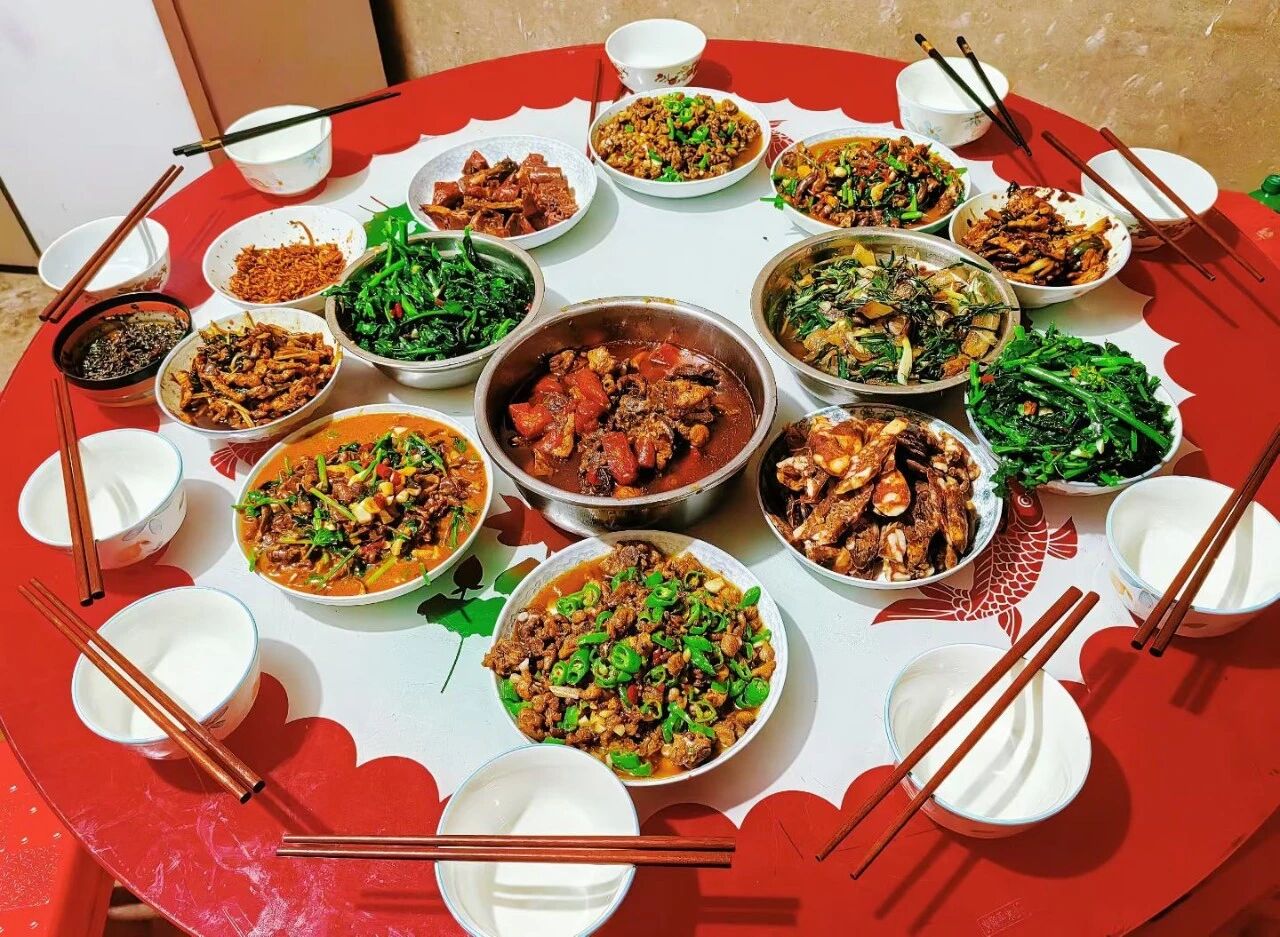
On 8 February we set off from Wenzhou, flying and chasing high-speed trains, travelling the entire day to finally reach the old family home in the village by nine that evening. My father-in-law brought out a huge bowl of pig’s ears and pig’s head meat, along with a bowl of “chilli paste”. My daughter Shuer and I, ravenous, simply picked up the food with our hands.
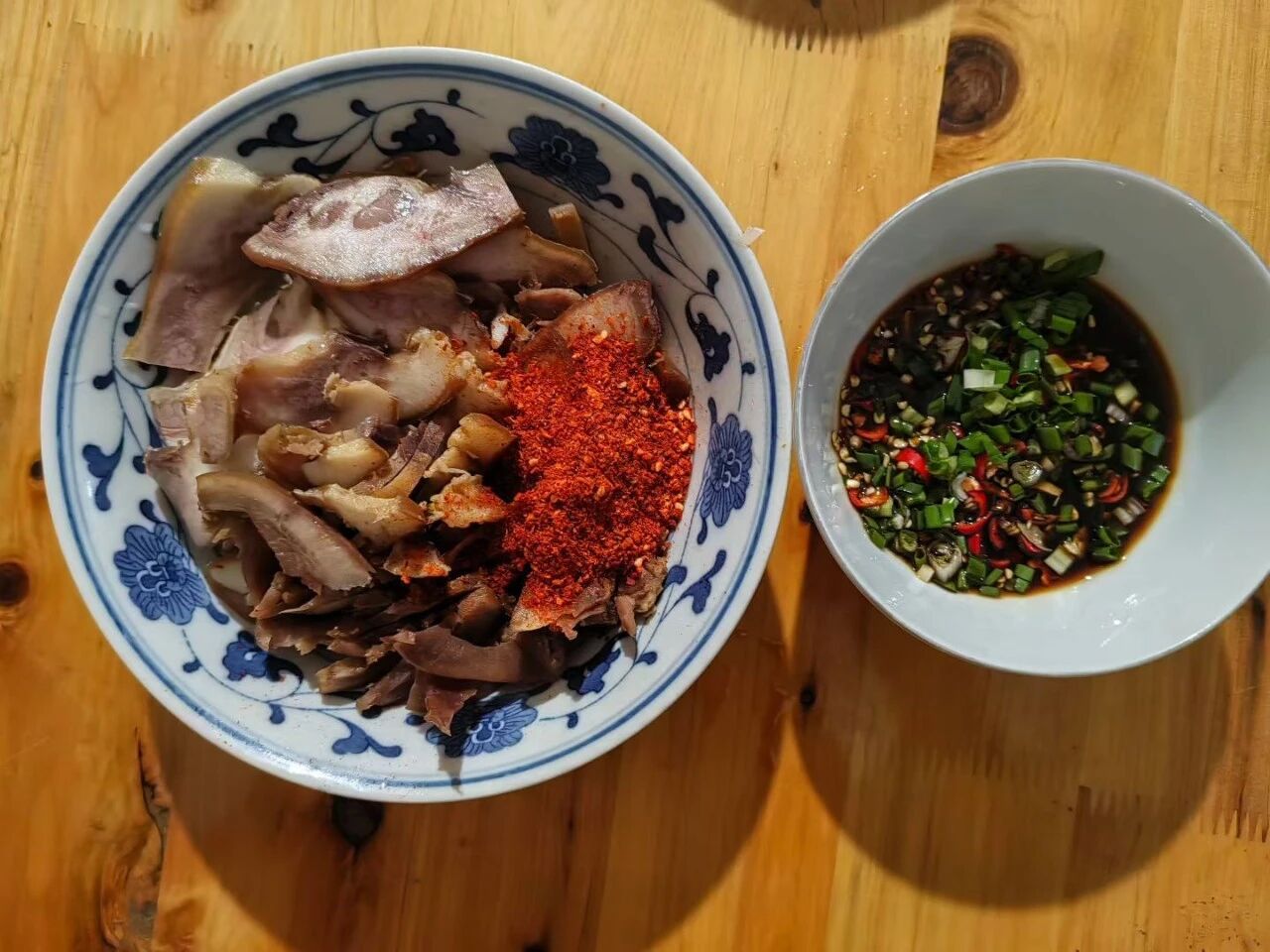
This is probably one of the very few places left in China not yet infiltrated by fast food, takeaway, and ready meals. The location is so remote that no courier will deliver a parcel to the door. Ride-hailing apps like Didi and grocery-delivery apps like Dingdong Maicai show the location as Wannianfen, yet no driver or delivery rider will accept the job. Fortunately, apart from the children, nobody here craves cola or fried chicken, so it doesn’t hinder the family’s meals in the slightest.
I was also briefly freed from my caffeine dependency. As a heavy coffee addict, in Wenzhou I kept going on 7.9-yuan milk lattes from the corner shop – milk close to its best-before date, coffee beans slightly stale and oily. During these New Year days, if I wanted a freshly ground cup of coffee, I would have to walk forty minutes along mountain paths, catch a bus that ran just once an hour, and ride for another hour to Weiyuan County’s Wanda Plaza. The round trip alone took at least three and a half hours. If I missed the return bus, I would need to spend at least 80 yuan on a taxi.
Beyond coffee, sourcing other ingredients in the countryside was surprisingly difficult, too. My parents-in-law’s village had been experiencing population decline for five years. The residents were mostly elderly, and the young people barely farmed at all. The elders ate mainly vegetables and citrus fruit from their own plots; for other fruits or pork they had to go to the township market. Villagers also reared chickens and ducks, but only slaughtered them for guests on festivals. The eggs they ate came from their own hens, but they only consumed unfertilised eggs. If an egg was fertilised, the elders could not bear to eat it – they would take it to the poultry farm to sell.
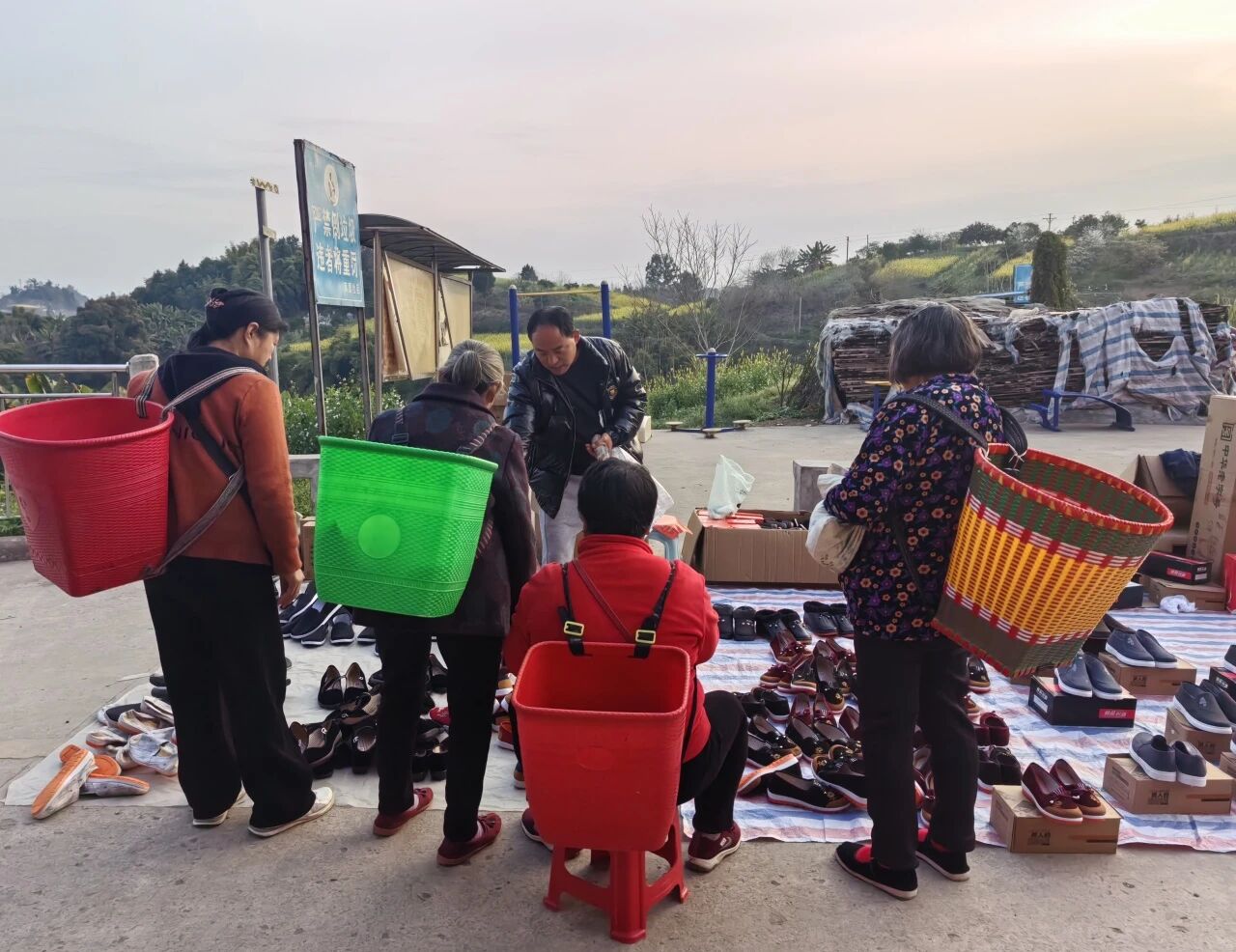
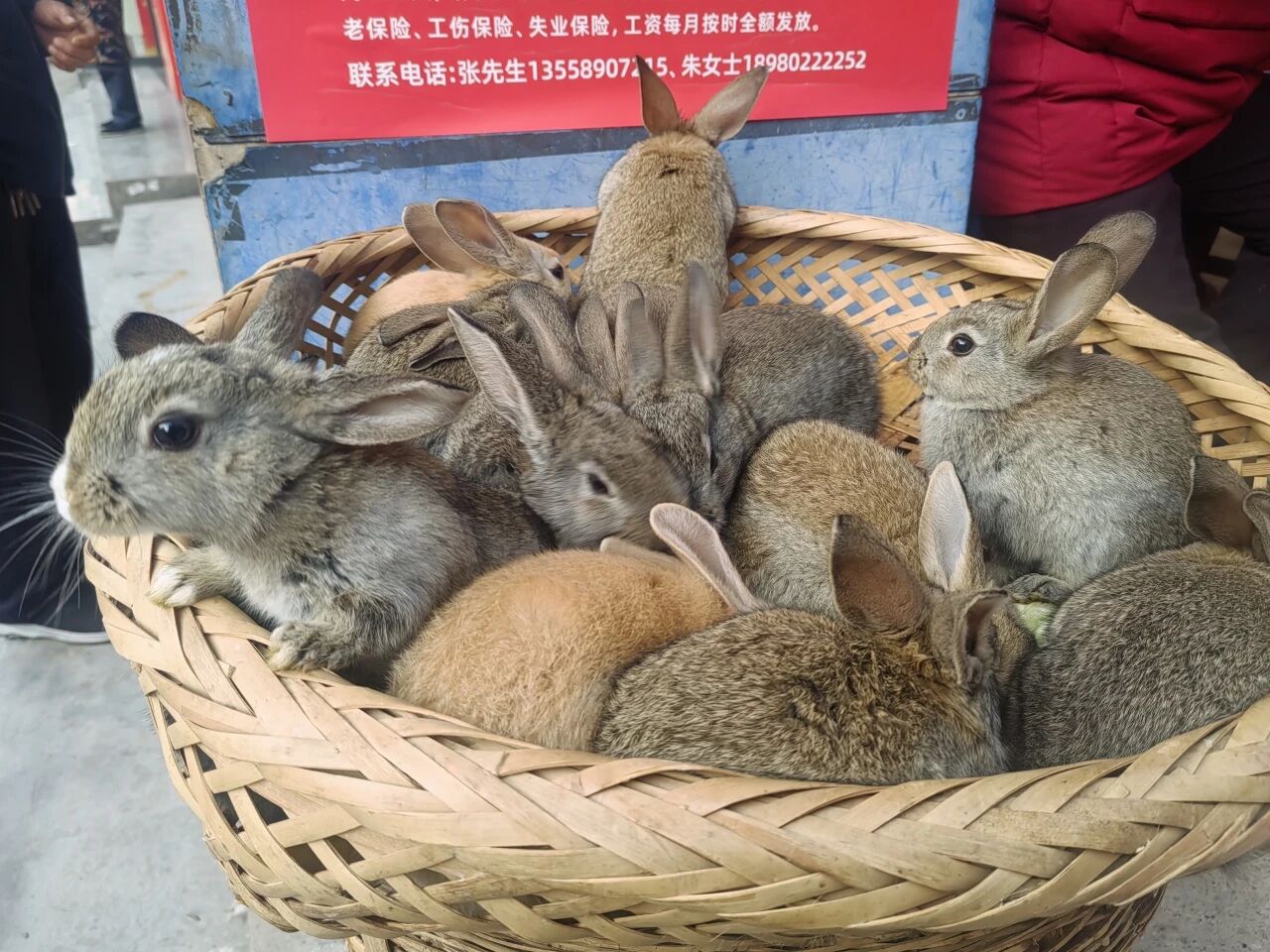
Over the eighteen days we spent in the village, we often headed to the township market, though several times we overslept and missed it. The elders would set off by six at the latest, while it was still dark. By ten in the morning the market had already dispersed. Among the market stalls you could find live chickens, ducks, and rabbits – a sight rare in urban markets – and even witness pigs being slaughtered on the spot. Every elderly market-goer carried a bamboo basket on their back. The grandmothers wore knitted plum-coloured woolly hats and bright-red floral padded jackets; the grandfathers wore fur-lined Lei Feng caps and army greatcoats or navy-blue Zhongshan suits. The scene looked like something lifted straight out of a Jia Zhangke film.
Some ingredients, however, still required a trip to the town market. Of all our meals in those two weeks, the most memorable was the one when three family households gathered around a hot pot. Everyone drove for an hour, over mountains and through valleys, to Rong County’s busiest old-town market to gather the ingredients. Lamb broth and lamb offal, tripe, beef aorta, beef book tripe, sliced lamb rolls, sliced beef rolls – these hot-pot staples simply were not sold in the township.
My second brother-in-law brought out the family’s “prized treasure” – a copper hot pot. Watching my niece use a pair of tongs to shove briquettes into the copper’s mouth brought back vivid memories of the 1980s and 1990s, when we used to burn coal at home and dip lamb rolls in boiling broth – my youth came rushing back. The broth base was spicy beef tallow, into which they poured a jin of lamb broth. For the first time, I gorged myself on tripe, lamb intestines, beef book tripe, and beef aorta – all the proper hot-pot classics, eaten until completely stuffed. My eldest brother-in-law also brought over two bowls of chicken blood left from butchering the chickens; it had set into a purplish-red jelly after sitting for a while.
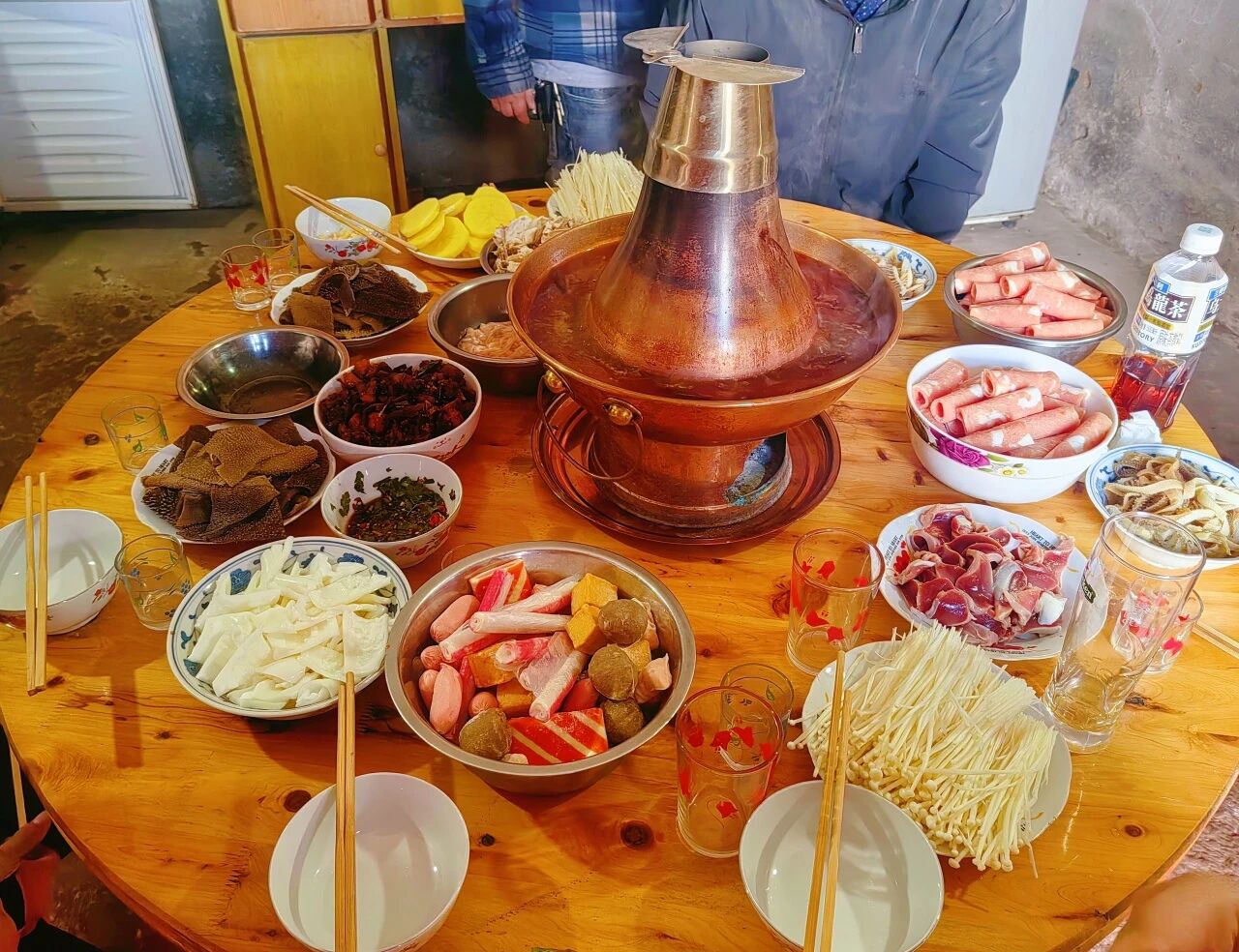
In Sichuan, vegetables are generally not added to the hot pot, because the leaves absorb too much oil. Even if you want them, you save them until the very end. As the hot-pot feast wound down, we only then began cooking cabbage, celtuce leaves, Swiss chard, and pea shoots. All of these were either grown by my father-in-law or picked from neighbours’ plots. In the village, popping into a neighbour’s field to pick a handful of vegetables is perfectly fine.
Apart from the hot pot, Fifth Aunt also whipped up a high-heat stir-fried rabbit stomach – celery and twisted chilli stir-fried with rabbit stomach. I finished nearly half the plate before I could stop; it was so good that my chopsticks would not rest. The dish takes real effort. First, wash the rabbit stomach thoroughly with salt, vinegar, and rapeseed oil to remove the gamey smell, then cut it into thin strips or small pieces and blanch in boiling water. Prepare dried chillies, young ginger, green peppers, bird’s-eye chillies, pickled chillies, Sichuan peppercorns, and garlic, all cut into small pieces. Stir-fry the rabbit stomach over high heat in rapeseed oil, then add the prepared seasonings and your choice of vegetables. Season with salt and cooking wine to taste while tossing. To mask the gaminess, you must be generous with the pickled chillies.
“Auntie! Uncle! (That’s what we call you here in Sichuan dialect.) It’s all thanks to you – your coming home means I get to have a proper feast and eat better than usual, hehe,” my niece whispered to me as she swished tripe in the broth.
II. From Catching to Cooking: Doing a Fish Right
Five years ago, gas pipework reached every household in the village, yet my father-in-law still insisted on cooking over a wood-fired stove. First, the rice is washed clean and drained, then boiled until about sixty or seventy per cent done (for firmer rice, stop at fifty or sixty per cent). A steamer tray is set into a wooden bucket, a muslin cloth laid over it, and the rice poured into the tray. Chopsticks are used to poke several holes to keep the grains loose and aerated. The wood-fired stove is lit, a large iron wok is filled with boiling water, the wooden bucket is set inside the wok, the lid is placed on top, and once steam begins to rise the rice steams for another fifteen minutes. The result is more fragrant and glutinous than rice made in an electric cooker. Even without premium Wuchang rice, the cooked grains fill the air with a wonderful aroma.
The spicy native crucian carp cooked by the men was equally outstanding. Each time, they prepared twenty or thirty fish: scales scraped clean, bellies slit open and guts removed, while keeping the swim bladder and fish roe. Each fish is first deep-fried; then a pot of chilli water laced with Pixian doubanjiang is brought to a simmer, with ginger, garlic, chillies, star anise, and other seasonings – all prepared in advance – stirred in. The fried fish is simmered in the pot for a little while, then finally sprinkled with young coriander and spring onions, pulled straight from the garden and chopped into sections, before being scooped out into a serving bowl. But to enjoy a plate of spicy native crucian carp – from catching the fish to carrying it to the table – takes five hours. Behind the easy pleasure of savouring that tender fish lies a great deal of patient labour.
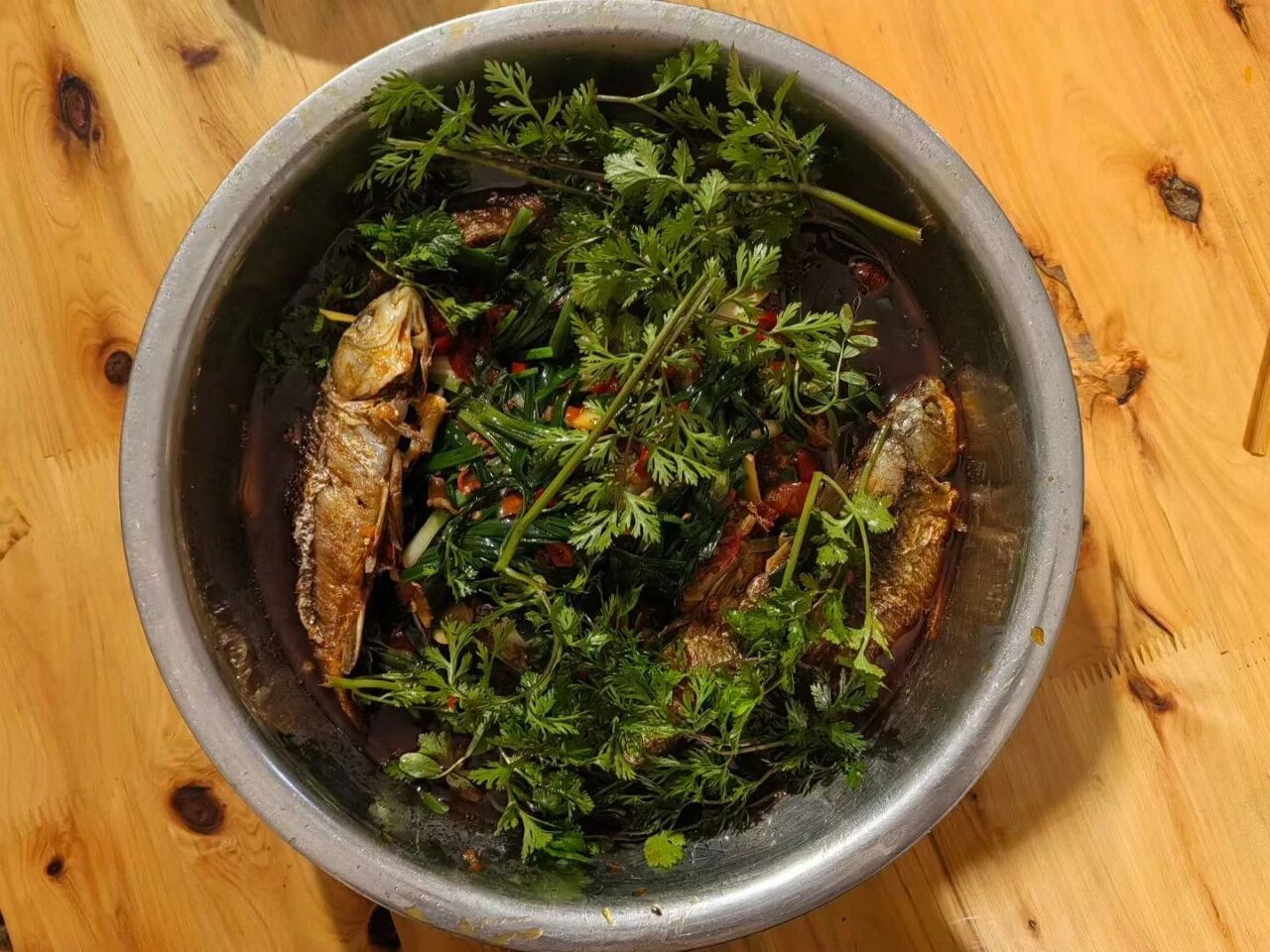
In fact, fish is hard to come by in the Sichuan countryside. Only during the New Year can you buy crucian carp at the township market, and even the common varieties cost over ten yuan a jin – nearly half as expensive again as Wenzhou’s markets. For everyday river seafood – fish, shrimp, shellfish – you have to go to the county town, and for river crab or mud crab, you essentially need a restaurant. Eating fish became an event steeped in New Year ritual.
Over the holiday, relatives loved to come fishing at the pond. My husband, his eldest brother, and his younger cousin formed an unbreakable fishing trio. The three men would often spend three or four hours hauling out forty or fifty fish. Honestly, I could not fathom the joy of it – I kept thinking it would be so much simpler to just drain the pond and net them all in one go. But the men had the patience to sit on the bund beside the water, fishing until dusk. They would dig up a few earthworms from the soil for bait, cast the float out into the middle of the pond, watch the float intently, and the moment a fish tugged and the bobber dipped, they would strike the line at once.
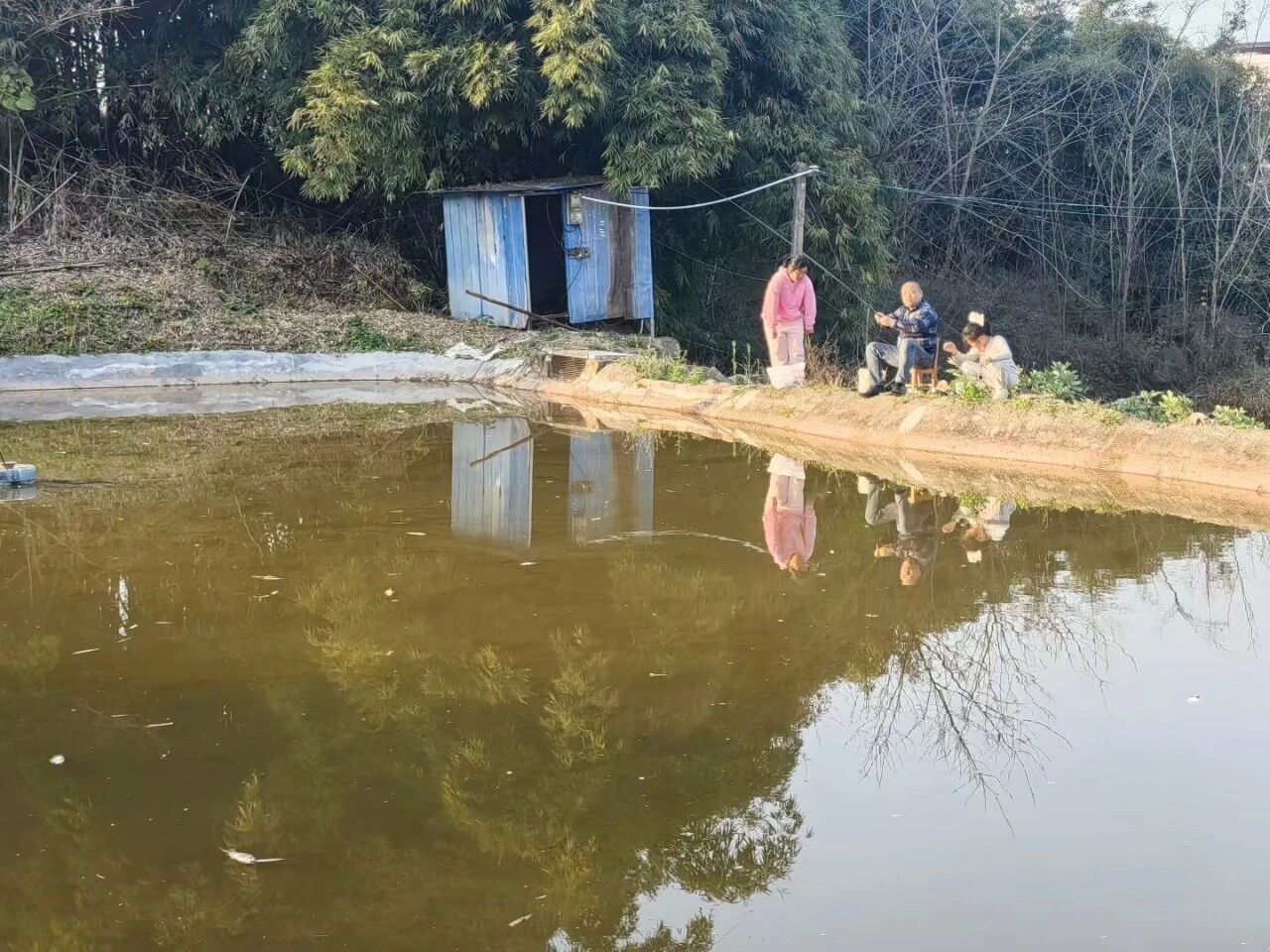
Since Fifth Uncle took up fish farming, villagers from two or three neighbouring villages have come to his pond for their everyday fish. They check in advance when he plans to harvest, agree on a time, and turn up in a group to buy. The fish are fed not on commercial feed but on a mix of grain with sweet potato and corn, which gives a better texture, and they are cheaper than in the township: there, fish typically go for twelve to fifteen yuan a jin, while Fifth Uncle charges ten.
Late last year, Fifth Uncle and Fifth Aunt both went to the county town to work as kitchen hands at a restaurant, and the pond sat untended for nearly a month. This winter has been mild, with a wide swing between day and night temperatures, and on top of that Fifth Uncle had bought a cheap batch of injured fingerlings with cuts along their bodies, so by February quite a few fish had died in the pond.
When we first got back to the village, the surface was dotted with small dead fish floating belly-up. Unlike the dark crucian carp on sale at the fish stalls in Wenzhou, the native crucian carp of Sichuan are silvery-white. My husband scooped out all the dead fish, switched on the air pump to oxygenate the water, and ran a pump to draw water from the pond’s lowest point to cycle it, and over the following days we caught a few small crucian carp.
Past sixty, Fifth Uncle has no intention of working away from home again. This year he plans to stay put: tilling fields, growing vegetables, raising fish and rearing pigs.
In fact, Fifth Uncle and his wife did not reach the village until ten on the night before New Year’s Eve. They spent the first day of the New Year playing cards, and first thing on the second morning, Fifth Uncle was out pushing his wheelbarrow – a single-wheeled cart – from house to house, collecting precast concrete slabs salvaged from house renovations, to be used for refurbishing the pond. He first mixed cement in the yard, cut the slabs to size, laid a layer of cement on top of them, and fitted them around the inner edge where the fields border the pond – this prevents the water from seeping away through burrows dug by crayfish and ricefield eels at the pond bottom. With years of neglect, a full overhaul is expected to take half a year to complete. Over the New Year break, Fifth Uncle laid roughly fifty metres of slab – about one-fiftieth of the total job.
So by next New Year, Fifth Uncle should be able to pull on a pair of waterproof waders, knee-high rubber boots, wade into the water and haul out fish, no doubt emerging with a few lively silver carp and grass carp clutched to his chest. And we returning wanderers will get to enjoy more elaborate fish dishes like boiled fish and seething fish.
III. Pea Shoots, Tenderer Than in the City
My sister-in-law is devoted to them; under her expert direction, we stripped nearly half a mu of pea plants bare. “Ate so well – even our poos are green!” By late February the shoots were growing tough, and thin, flat pea pods were forming.
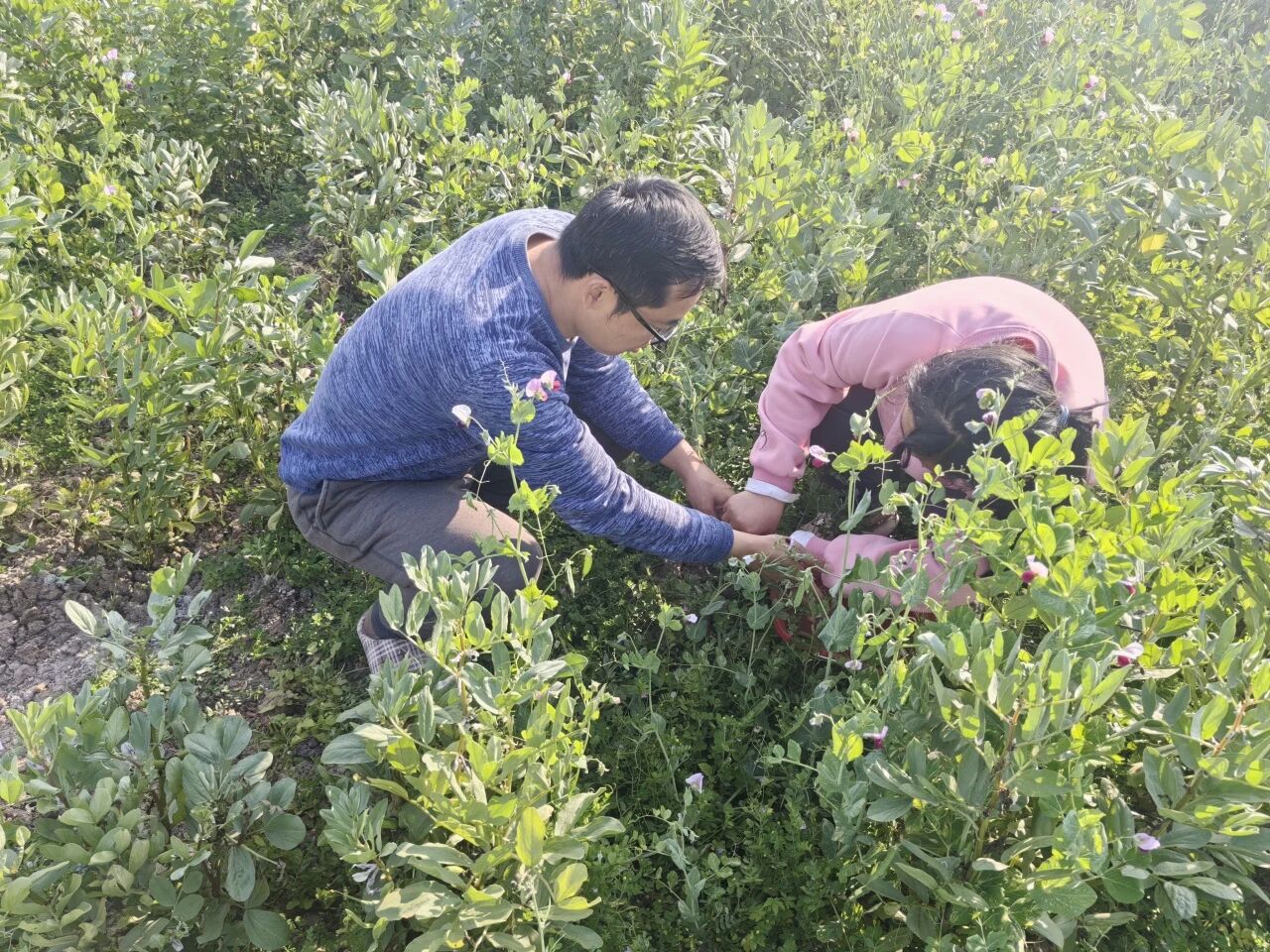
In recent years, pea shoots have become a prized premium vegetable, hotly contested across the internet. On Dingdong Maicai, they hold a steady price of about ten yuan per 200 grams year-round, and the shoots you receive tend to be tough – if your teeth aren’t up to scratch, you’ll find them hard to chew. At the county-town market they normally sell for four or five yuan a jin, rising to ten over the New Year. This New Year, thanks to the village pea fields, we achieved “pea-shoot freedom”.
I checked the Weiyuan County government website, and a news report states: “Wutong Village grows peas over more than 600 mu, yielding 3,000–4,000 yuan per mu. Pea shoots offer high returns and a short growth cycle, yet the harvesting season runs from October to February of the following year, allowing eight to ten cuts per season. More than two hundred households in the village cultivate peas. At present, pea shoots harvested in Wutong Village are sold to Beijing, Shanghai, Chongqing and other places at nine yuan per kilogram.”
In a village where the resident population is under 3,000 and each household farms less than two mu, villagers are flocking to grow peas. Many young people, spotting the strong returns pea shoots offer, have returned home, contracted seven or eight mu, and become large-scale growers.
The New Year spread boasts three heavyweight dishes, every one built around pork: shao bai (Sichuan-style braised pork belly), meatball soup, and crispy pork soup. Yet every one of them depends on pea shoots.
For shao bai, only the fatty layer of skin-on pork belly is selected; it is split in the middle and stuffed with a filling of red bean and black sesame. The skin side is brushed with dark soy sauce, then laid on top of glutinous rice and steamed. Pinch up a slice of feiganr – Sichuan dialect for fatty pork – and it glides over the tongue: sweet, but never cloying.
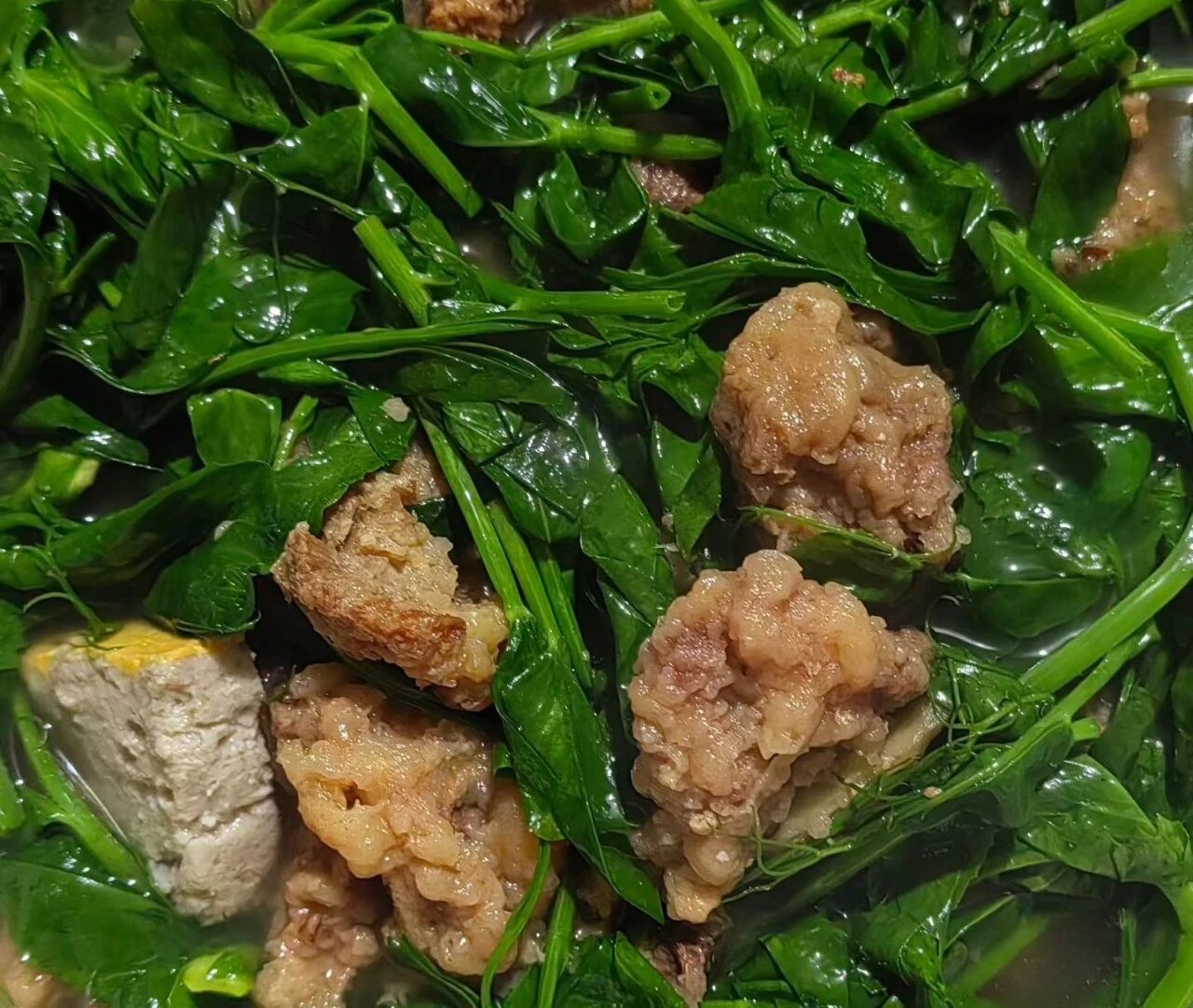
Meatball soup is light and silken. Pork with a three-to-seven ratio of fat to lean is chosen, seasoned with spring onion, ginger, salt, pepper, and light soy sauce, then minced to a paste and stirred relentlessly until completely smooth. Sweet potato starch and egg white are folded in and mixed through. The paste is quenelled into balls and poached until cooked through, then cabbage and pea shoots are dropped into the broth – just thirty seconds to wilt the leaves and it is ready. But in the countryside, “meatballs” are actually square: the paste is frozen into a slab and sliced, which is far easier to cook.
Crispy pork soup calls for spare ribs or pork belly. The meat is marinated in salt, minced ginger, cooking wine, sugar, and crushed Sichuan peppercorns. A batter is made from sweet potato starch and egg – here, you must not add any water – and the meat is coated evenly in the batter before being deep-fried in rapeseed oil until golden. The fried pieces are then simmered into a soup until tender, and at the end cabbage and pea shoots are wilted in – the same step as in meatball soup.
IV. Eating Meat in the Countryside
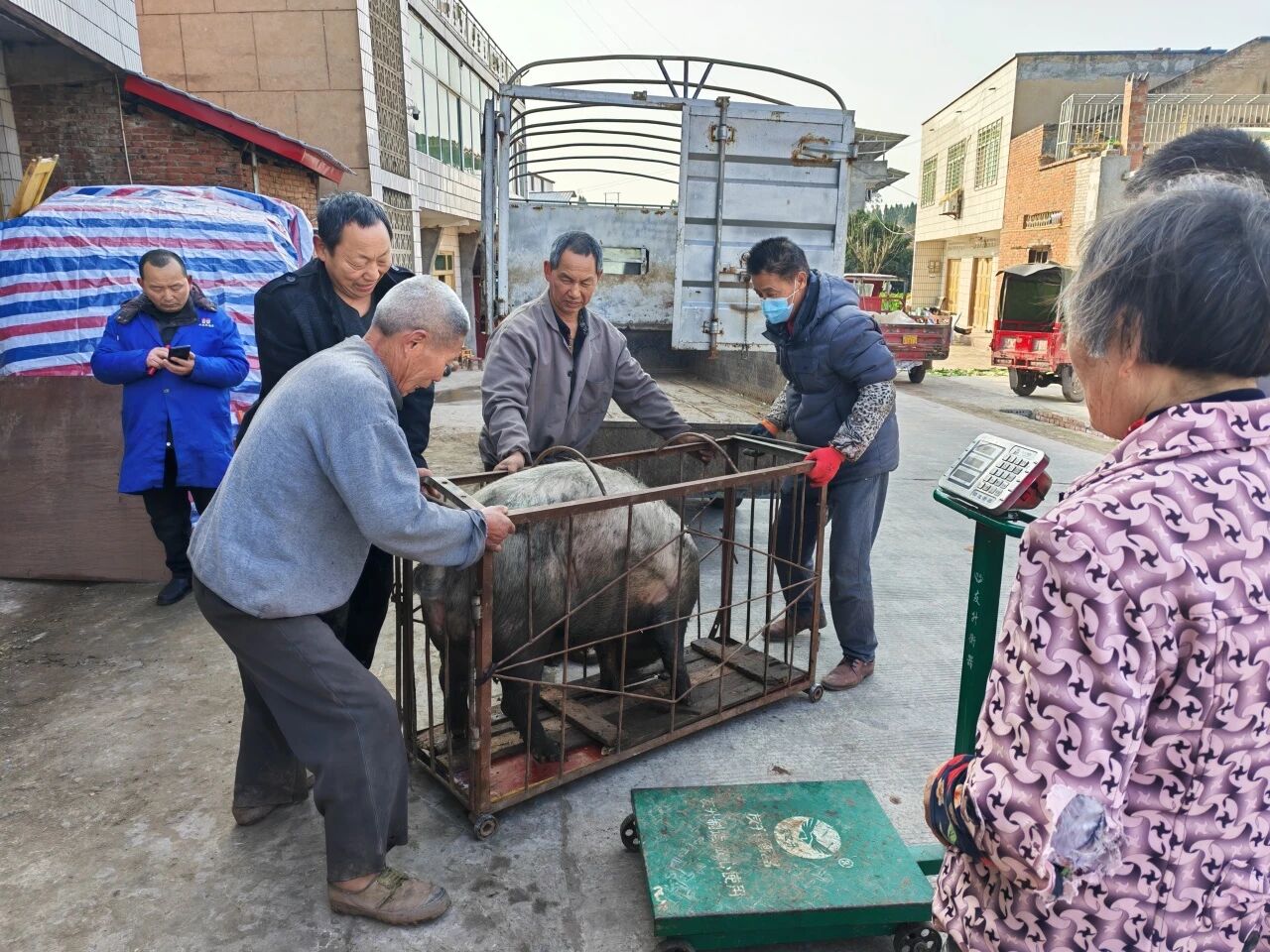
Pork is the true everyday choice for local cooking. Prices vary by cut: the fattiest scraps go for eight yuan a jin, pork belly for fifteen, spare ribs for twenty-two, and shank bones for thirty. Cold-dressed pig’s ears and pig’s head meat cost twenty-five yuan a jin. Not many households in our village raise pigs, though. If a family hosts a New Year banquet, they will call in a pig-slaughterman to butcher the animal at home. Other villagers wait until their piglet grows to around 300 jin, then drive a tractor to haul it to a nearby pig farm. Although the pork we eat in the countryside is bought from the market too, the belly meat, once boiled, turns tender and springy – far tastier than the rock-hard belly you pick up on discount from a budget supermarket in the city.
In the Sichuan countryside, the elderly still follow the old rural rhythm of rising with the sun and resting at dusk; a sense of time is a loose thing here. Shuer and I spent our days drifting aimlessly through the fields and hedgerows. The day we climbed the hill to visit Youngest Uncle (my father-in-law’s youngest brother), we saw a group of men carrying a pig to the scales, then herding it into the bed of a small lorry, ready to deliver it to the township butcher.
I worked out the totals: from 8 February to 3 March, twenty days in the village, and between our family of three and assorted relatives, we got through one-tenth of a pig (pig’s ears, pig’s head meat, pig snout, and pork belly), dozens of white crucian carp, eighteen trips to the township morning market, and nineteen days gazing at the rapeseed flowers. The trip home even cured Shuer’s fear of dogs. She spent her days crouching by the henhouse, waiting for the glossy black hens to lay, then reaching in to pull out fresh eggs still smeared with droppings, hoping that her cousin from the county town would come back to Grandpa’s old house and take her out to play.
It has been a mild winter this year. By mid-February, the soft chirring of swallows could be heard from the yard. There is a saying in the village that a swallow nesting under your eaves is a good omen. On the day we set off back to Wenzhou, we slipped quietly out of the yard, terrified of disturbing the birds. The rapeseed flowers swayed in the breeze, and every hill and valley glowed golden. Farewell until next year – rustic Sichuan flavours.

All images in this article are provided by the author
Edited by: Xiaodan