
Living by the Sea, They’ve Found Another Way of Doing Business
Foodthink Speaks
Through the establishment of Community Protected Areas, Thai fishermen now have a voice: they can decide for themselves how the sea and the mangroves are used, and have even wedged co-management rules into the higher-level national-park legal framework. But what comes next? This piece introduces the many sustainable fishing schemes that local fishermen have devised.
I. The Larder on Our Doorstep
Those of us who have spent our entire lives on solid ground were at first unable to believe that the fishermen simply walk into the mangroves to gather shellfish. Even when we floated on the water and gazed at the mangroves from a distance, those arched roots plunging into the sea made it look as though no one could possibly walk there. We asked again and again: do they really “walk” into the mangroves to collect crabs and shellfish?
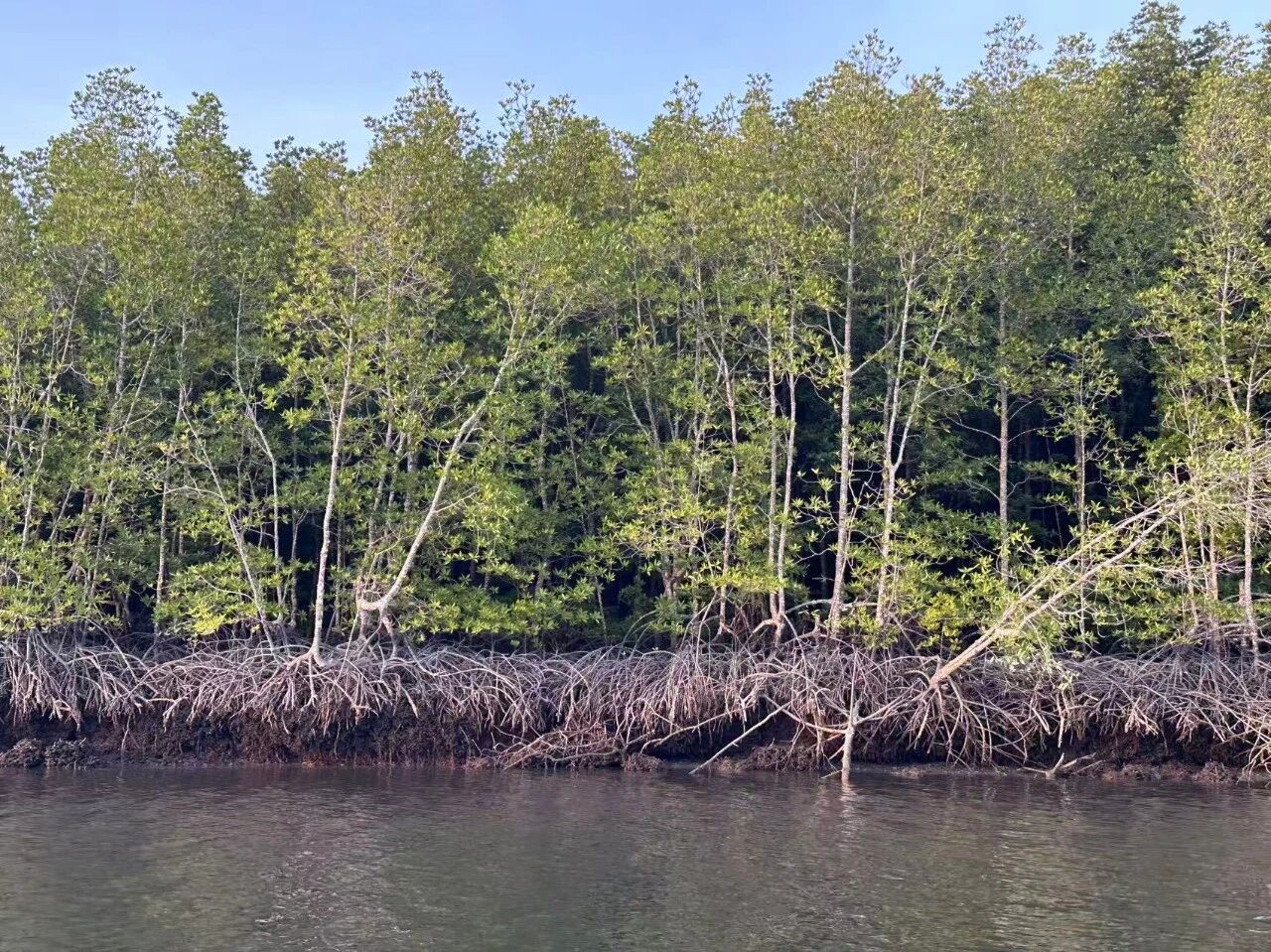
Bending down to look closely at the muddy path, you can see dozens of small holes – crab burrows. Lean in even further, until your face is almost level with the ground, and you can spot neat rows of tiny pellets, the little balls a crab ejects after its meal… A fisherman points casually at a tree and explains what it might be used for, while I am still trying to get the hang of the undulating roots underfoot so I do not trip over.
This is perhaps the most fundamental reason why a local landscape must surely be “developed” by the locals themselves – in their eyes the mangroves are perfectly ordered, an inexhaustible natural larder; in mine they are a tangled, chaotic, muddy mess. This “ATM” they speak of is so generous, yet I do not know the PIN. It would take long, deliberate training before my eyes might begin to read it all.
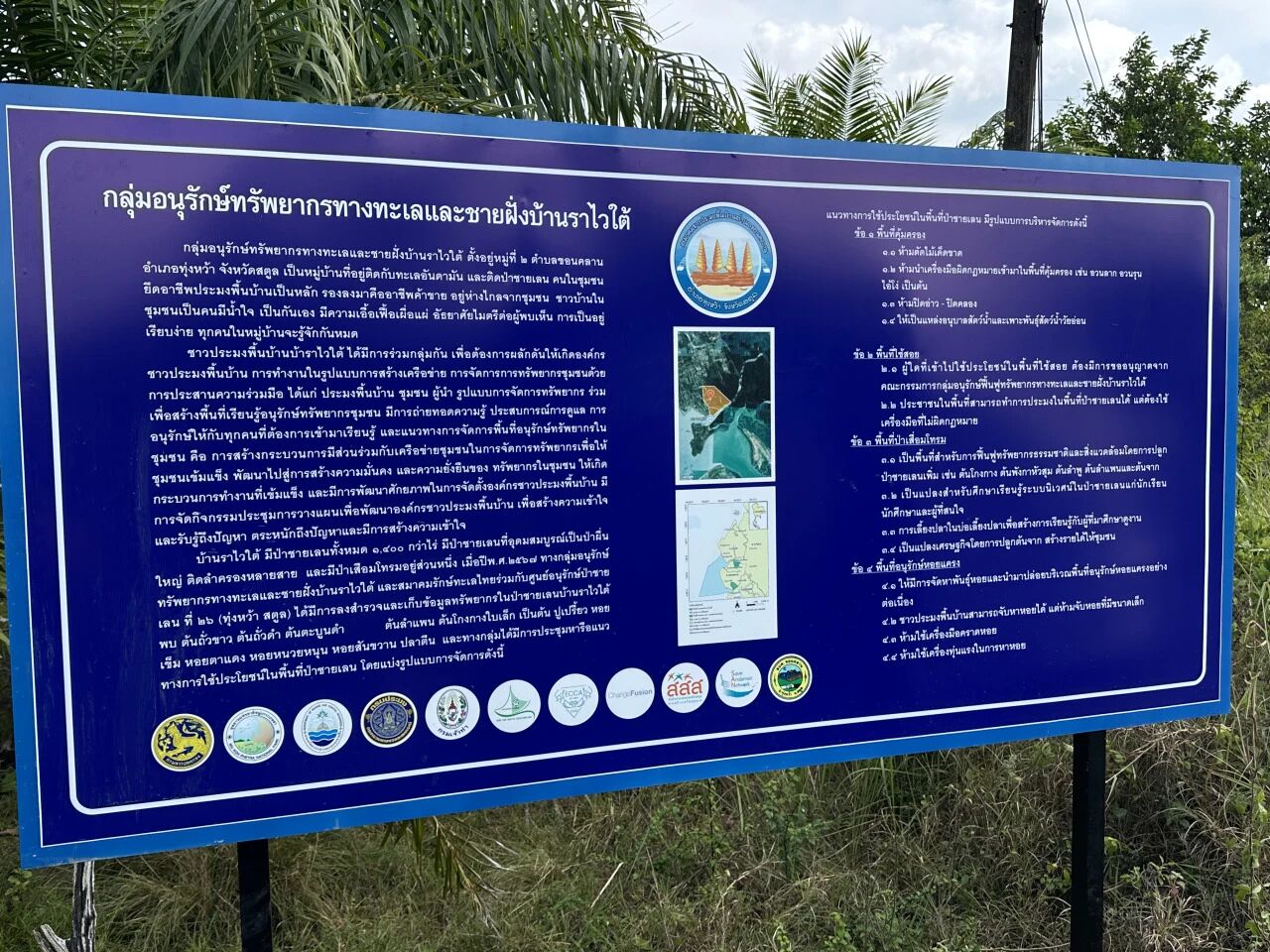
Beside the community centre stands a gleaming new blue signboard – a community covenant. It sets out clearly what members may and may not do within this area: strictly no felling of trees, no blocking of waterways, and no use of destructive fishing gear such as trawl nets, push nets, folding traps, or mechanised methods. Residents may, with the permission of the Community Protected Area committee, use legal, non-mechanised traditional tools to catch fish and shellfish above a minimum size within the zone. The covenant also provides for the cultivation of nipa palms and demonstration aquaculture to generate income, and for opportunities for students and interested visitors to study and conduct research.
From a bamboo raft you can appreciate the mangroves up close, in all their detail. In the Suso Community in Trang Province, the mangroves were felled by a company for more than twenty years under a Concession. The villagers say that once the Concession ended and they began their own conservation efforts, the mangroves slowly returned to good health. They have indicators they can see with their own eyes – the monkeys came back, for instance. We even watched an otter dart out of the water onto the bank from our raft, sleek and glistening like a bolt of lightning.

The villagers secured funding from the government department in charge, the Department of Marine and Coastal Resources (DMCR), to carry out mangrove species monitoring twice a month; they place nets at the channel mouths where the waterways meet the sea, so that on both the incoming and outgoing tides they can collect debris carried in and out by the water… The most routine work of all is planting mangroves. Villagers may fell a mangrove for house-building and other uses, but for every tree cut down, they must put ten saplings in the ground in compensation.
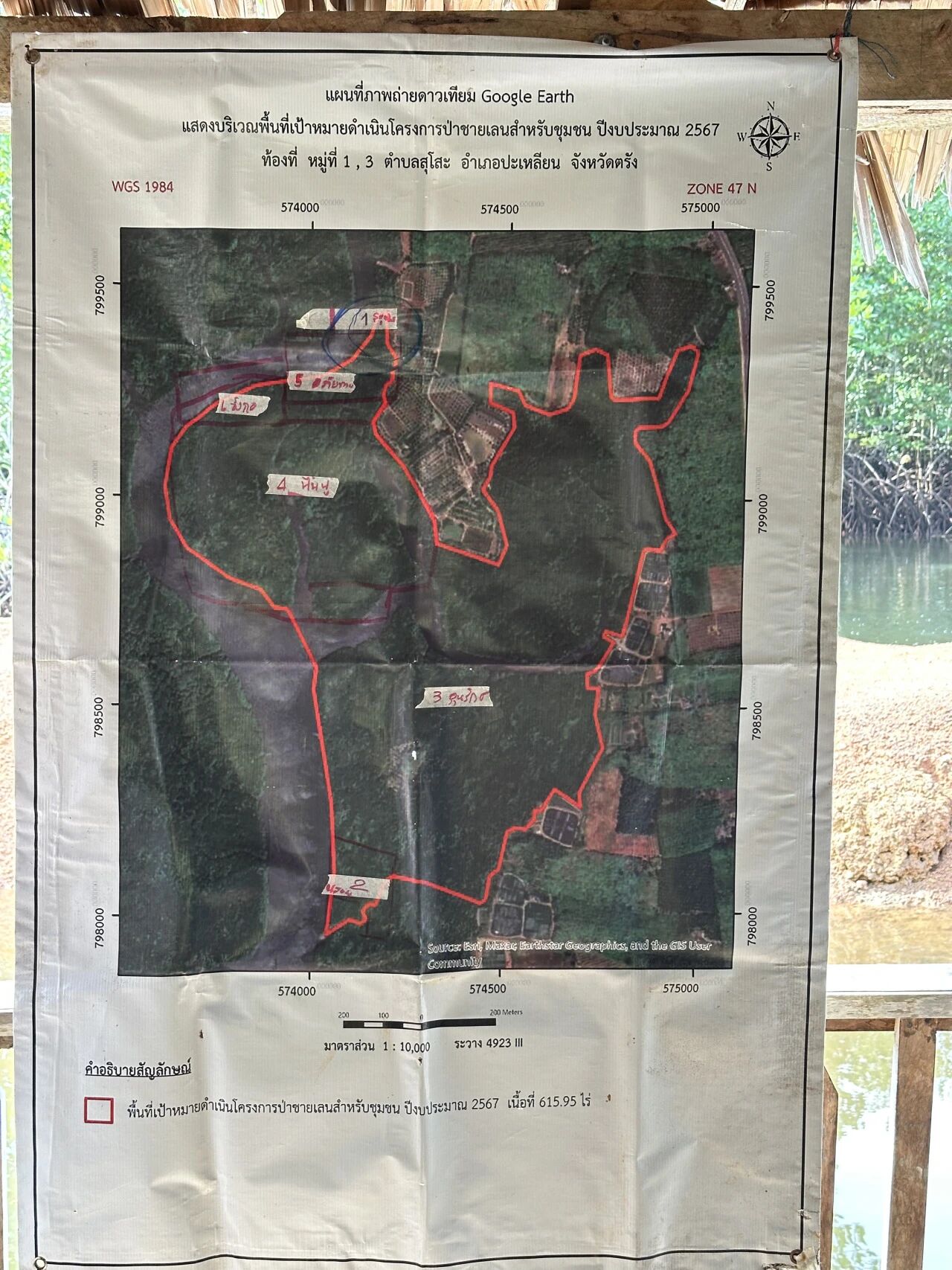
Just as a government-run nature reserve is zoned, so too do the villagers divide their Community Protected Area into management zones. Zone 3 in the map is a strictly protected, no-development area; the villagers describe its purpose in their own words – this is the zone left for the animals. In religious terms, as they put it, “leave the life alone”. Zone 4 is the ecological restoration area.
Even the bamboo raft that brought us around for the tour is part of a fee-based eco-tourism operation run by a dedicated villagers’ group – it lets visitors learn more about their conservation story while also providing income.
The villagers also feel the fish stocks have grown richer. In the old days they would go out and come home empty-handed; now they can simply walk into the mangroves, pick up shellfish on the beach, and some people have even set up chicken coops among the mangrove roots to raise chickens and top up the household income.
The main catch here includes white seabass, whiteleg shrimp, Black tiger prawns and mud crabs. You only sell what you cannot eat yourselves – there is no need to go to market, as traders come to the jetty to buy. An old fisherman says that a slender kind of fish still lives in this sea; it fetches a high price and is mostly exported to China.
After sunset, at the lowest tide, where the water barely reaches your shins, you can catch whiteleg shrimp as long as your finger. Sometimes you see a hundred or more people bent over the beach in a glorious scrum. People from outside also come to scavenge the tideline, but the local fishermen say there is really no way to stop them: “As long as they don’t use destructive gear, it’s OK.”
The villagers’ main income comes from gleaning and fishing. By gleaning, you can earn 500 Thai baht in half a day (about 100 Chinese yuan). For an inshore fishing trip in a small boat – one operator, a day return – you can bring in a catch worth 2,000 to 5,000 Thai baht (400 to 1,000 yuan). A larger boat with two or three crew members, which usually spends a night at sea, might yield a catch of 5,000 to 10,000 Thai baht (1,000 to 2,000 yuan), though this too is in nearshore waters.
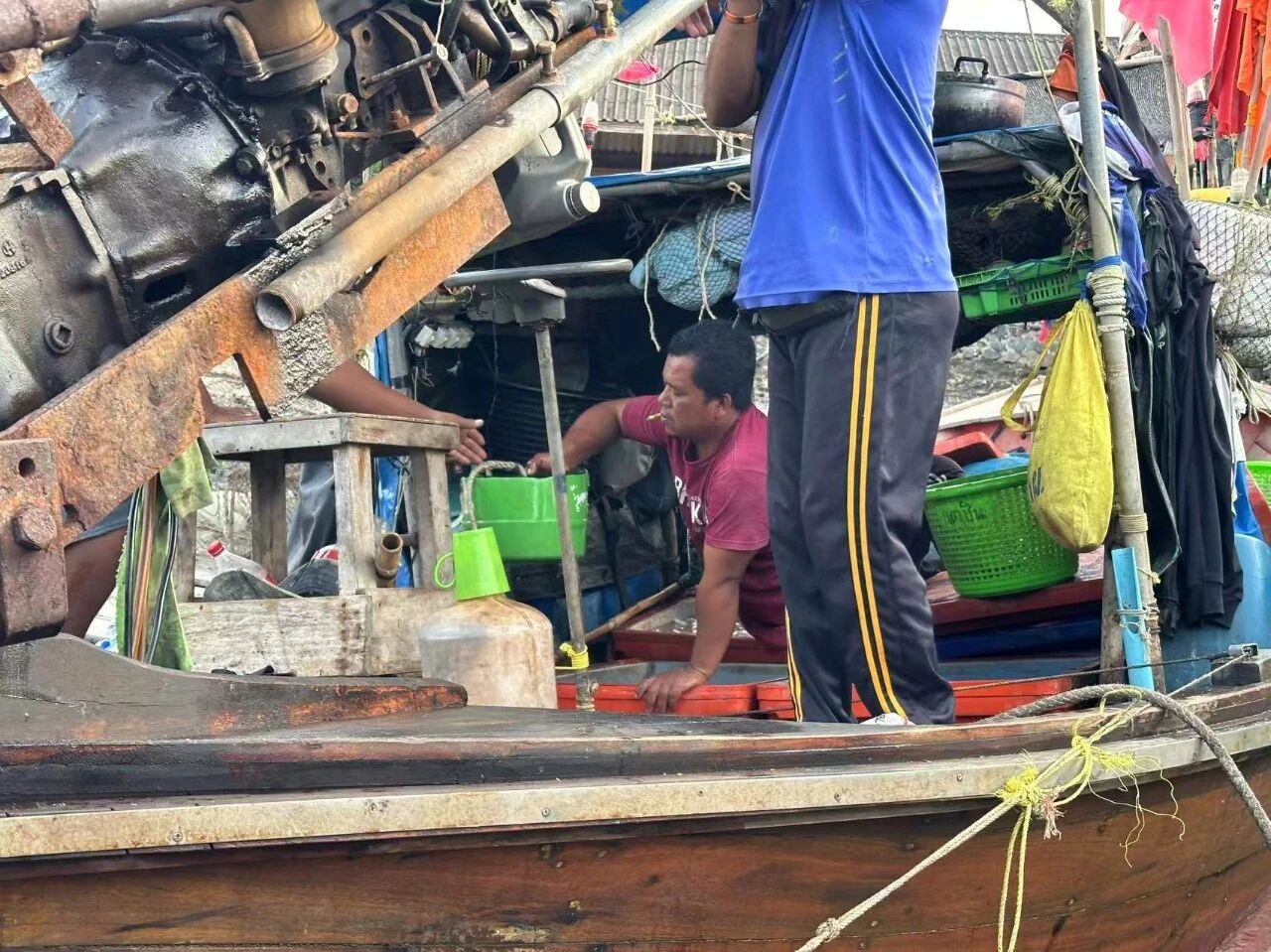
If you sail far out to sea to fish, would that earn more than this way of making a living? When we put this question, a blank look crossed their faces. They were not sure how the catch from deep-sea fishing compared, but the fuel, labour and machinery costs would certainly be higher. They feel this mangrove forest already provides them with more than enough food and drink. They are content. Why go far when what you need is right at hand?
II. How the Fishermen Are Rebuilding Their Own Food System
In October 2013, in response to the proposed Landbridge project in southern Thailand, the civic leader Tab – as head of the Thai Sea Watch Association (hereafter “Thai Sea Watch”) – led protesters on a one-week, 200-kilometre march. Thai Sea Watch has also been a key player in guiding several fishing communities to establish Community Protected Areas within national parks (See the first field note for Tab’s story).
The project aimed to build a logistics corridor linking the Andaman Sea and the Gulf of Thailand, allowing cargo to cross the southern Thai peninsula overland, bypassing the busy and longer route through the Strait of Malacca and cutting transport times. Its two ports – one on the eastern coast, one on the western – were to be located in Songkhla and Satun, respectively.
The proposal sparked fierce social conflict within Thailand, meeting especially strong resistance from local communities, fishermen’s organisations, and environmental groups. Opponents argued that the project would inflict massive, irreversible damage on the marine ecosystems of both sea basins – the Andaman Sea and the Gulf of Thailand – thereby threatening the livelihoods of small-scale coastal fishermen.
Satun Province is Tab’s hometown; he moved back over a decade ago to oppose the project. He says it will affect more than 200 villages and force many people to relocate.
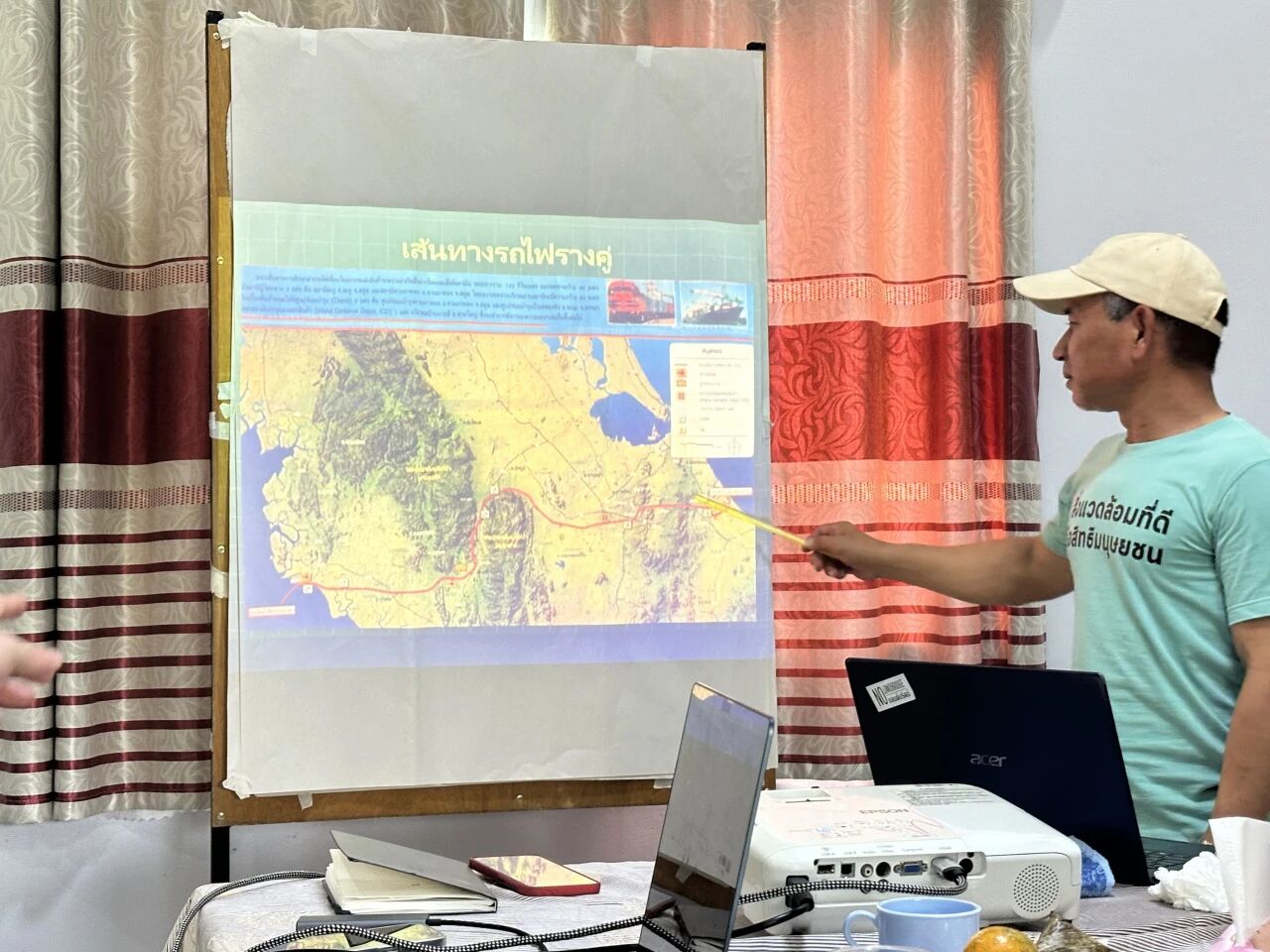
Nine of the protesters were arrested. For a variety of reasons, the government eventually put this mega-project on hold.
Within the fishing community itself, opinions on large-scale development projects are divided. One NGO leader voiced what a number of fishermen feel: We have good weather, the sea, beautiful beaches – we own these resources and we can manage them well ourselves. We do not need any other development plan.
But after the project was temporarily shelved, some fishermen put a question to Tab and his colleagues: If the mega-projects are stalled, what other development plans do we have?
It was then that Tab realised how vital this sea – the one they have worked so long to protect – truly is. How exactly can this ocean be used to help fishermen live well?
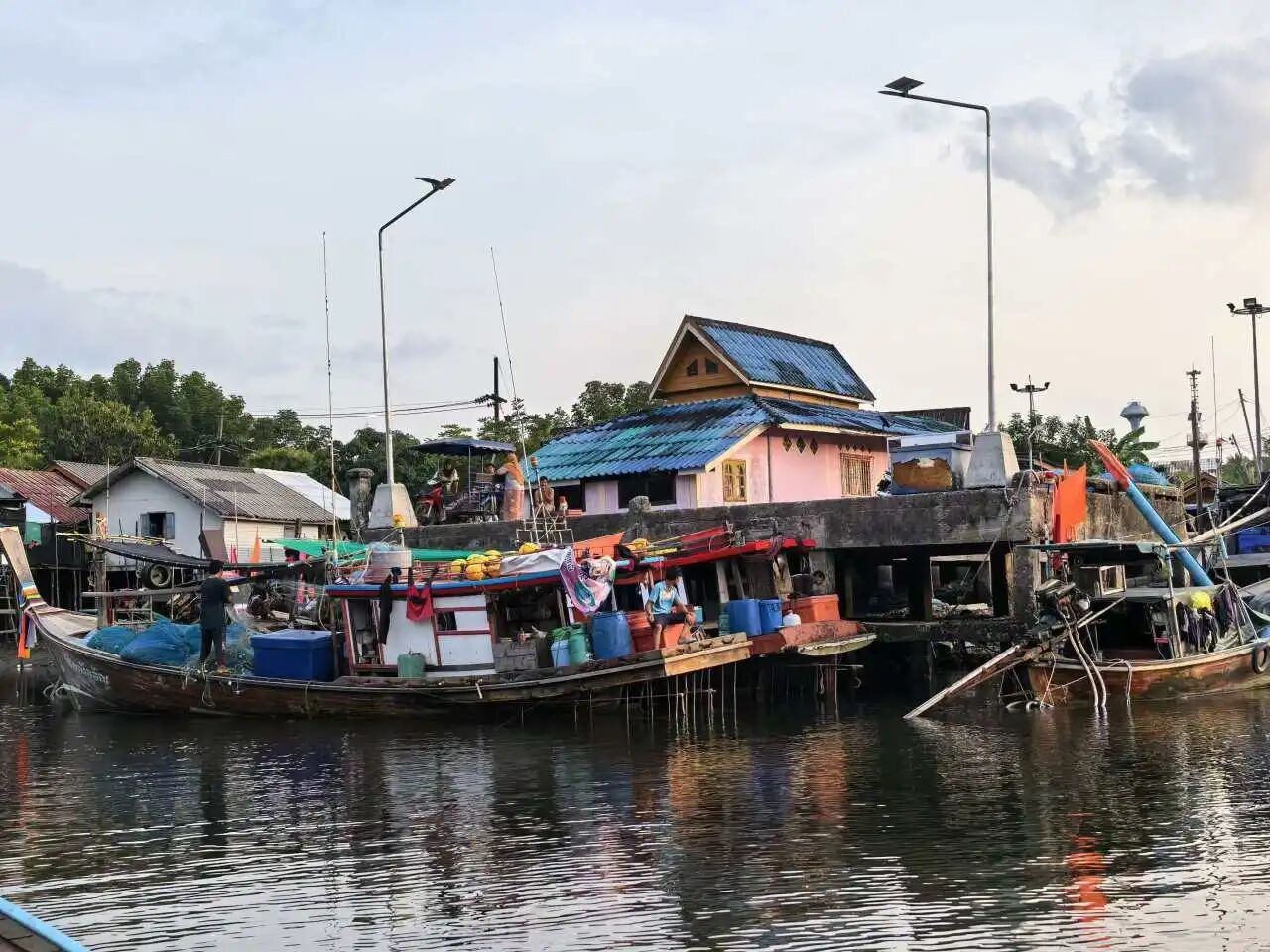
As an NGO, Thai Sea Watch believes that small-scale fishermen have the strongest incentive to protect marine resources, because they depend most on a healthy sea to sustain their catch. Industrial fishing, by contrast, means sweeping the nets clean.
Thai Sea Watch therefore aims to support conservation by building a consumer market that sustains the dignified livelihoods of small-scale fishermen. Listening to him talk, I thought about how this mirrors Foodthink’s advocacy of ecological agriculture value chains. The two are mirrors of each other across farming and fishing: when we choose to support a particular conservation path, we are also endorsing the food producers who work within it.
Small ecological farmers, too, need healthy soil and agricultural biodiversity to keep a farm running in good balance; decades of industrial agriculture have shown it to be a myopic practice that mines the soil, taking far more than it gives back. The conflict between small-scale fishermen and industrial fishing looks remarkably similar.
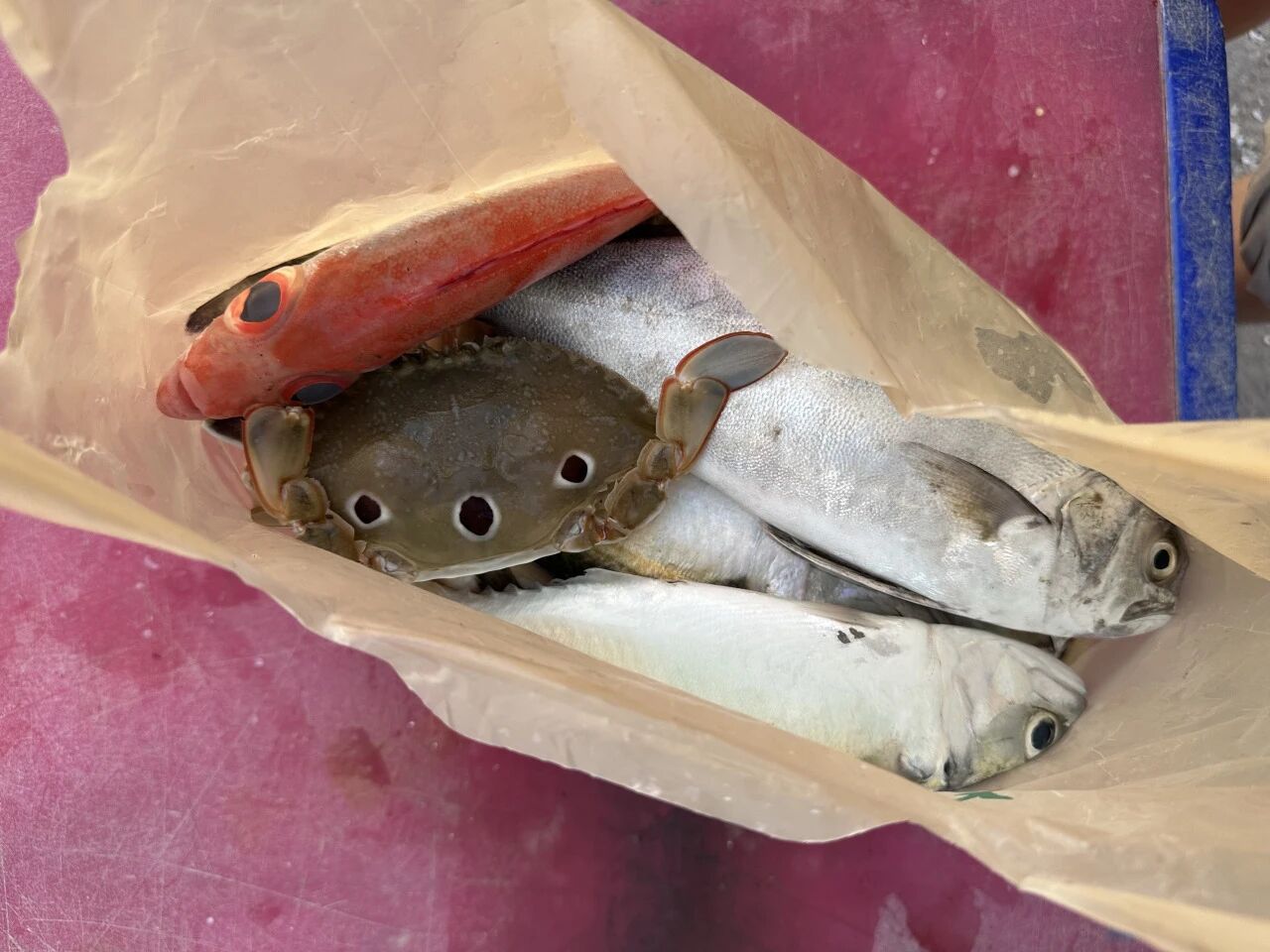
In terms of volume and efficiency, artisanal fishermen cannot match the big trawlers, but they have their own advantages: mature fish, freshness, and – for short-distance supply – no chemical preservatives. Discerning eaters are willing to pay a fair price for seafood of this quality, but how do the fishermen actually capture that value?
So the key lies in creating new retail markets and giving fishermen a voice in the supply chain.
III. Healthier Seas, Healthier Seafood
“They use traditional fishing gear for sustainable catch, with an identifiable place of origin. Consumers know which bay their food comes from, and the fishermen take pride in their trade.” This is how the Ashoka Fellow award citation for Tab reads. He has also worked with organic certification experts to design a quality certification scheme for sustainably caught seafood. The certification committee includes small-scale fishermen, consumer representatives, academics, and civil society organisations working in coastal communities.
As the opening of the first field note mentioned, when we visited in late January 2026, we experienced the restaurant run by the fishermen themselves. And when it comes to getting fishermen to run a business, Tab seems to have hard-won realisations – he held forth at length about “the litany of hardships” –
Fishermen must wear two hats: “food producer and business person.” Although this is a path they are keen to explore, only those who have tried it know how difficult it is. After stumbling through pitfall after pitfall over the years, they discovered that fishermen are not good at selling; as profit margins were too thin, the cooperative members all eventually drifted away.
So Tab stresses: this is not voluntary work – the business needs income to keep going. The fisherman-run restaurant we visited was launched with seed funding from the local fishermen’s association – a modest grant of just 3,000 Thai baht (about 650 Chinese yuan). They issued 1,800 shares at 100 Thai baht each; membership requires buying shares, but no member may hold more than 100. There are currently 98 members (shareholders).
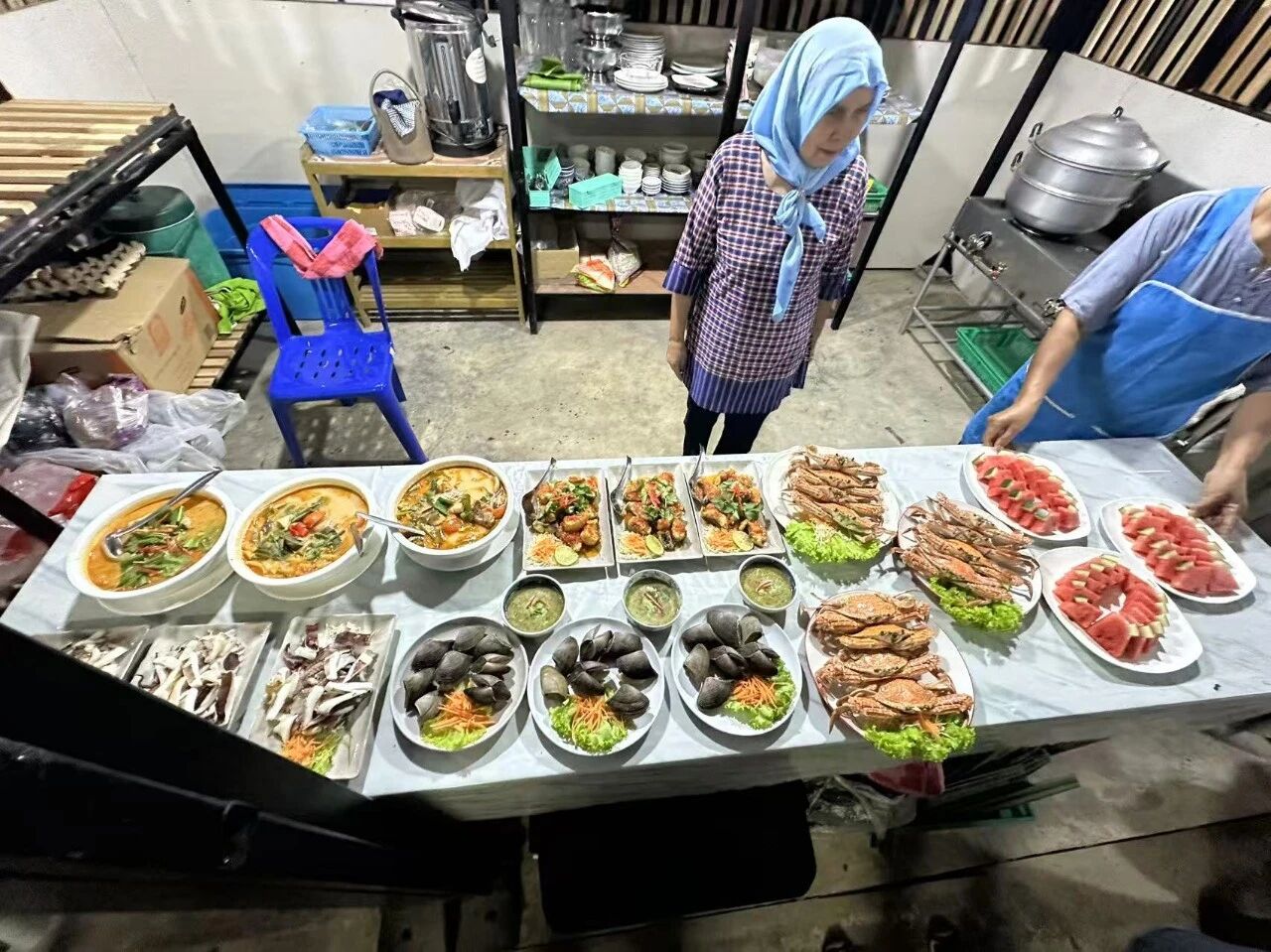
The restaurant only opened last year, and already the books show 500,000 Thai baht in funds – this includes both profits and the 98 shareholders’ invested capital. They have decided to reinvest 50% of profits back into the restaurant’s operations, distribute 30% as shareholder dividends, and dedicate the remaining 20% to community marine conservation and donations to temples.
I hope that next time I visit Satun, I can still eat at this restaurant that truly belongs to the local fishermen.
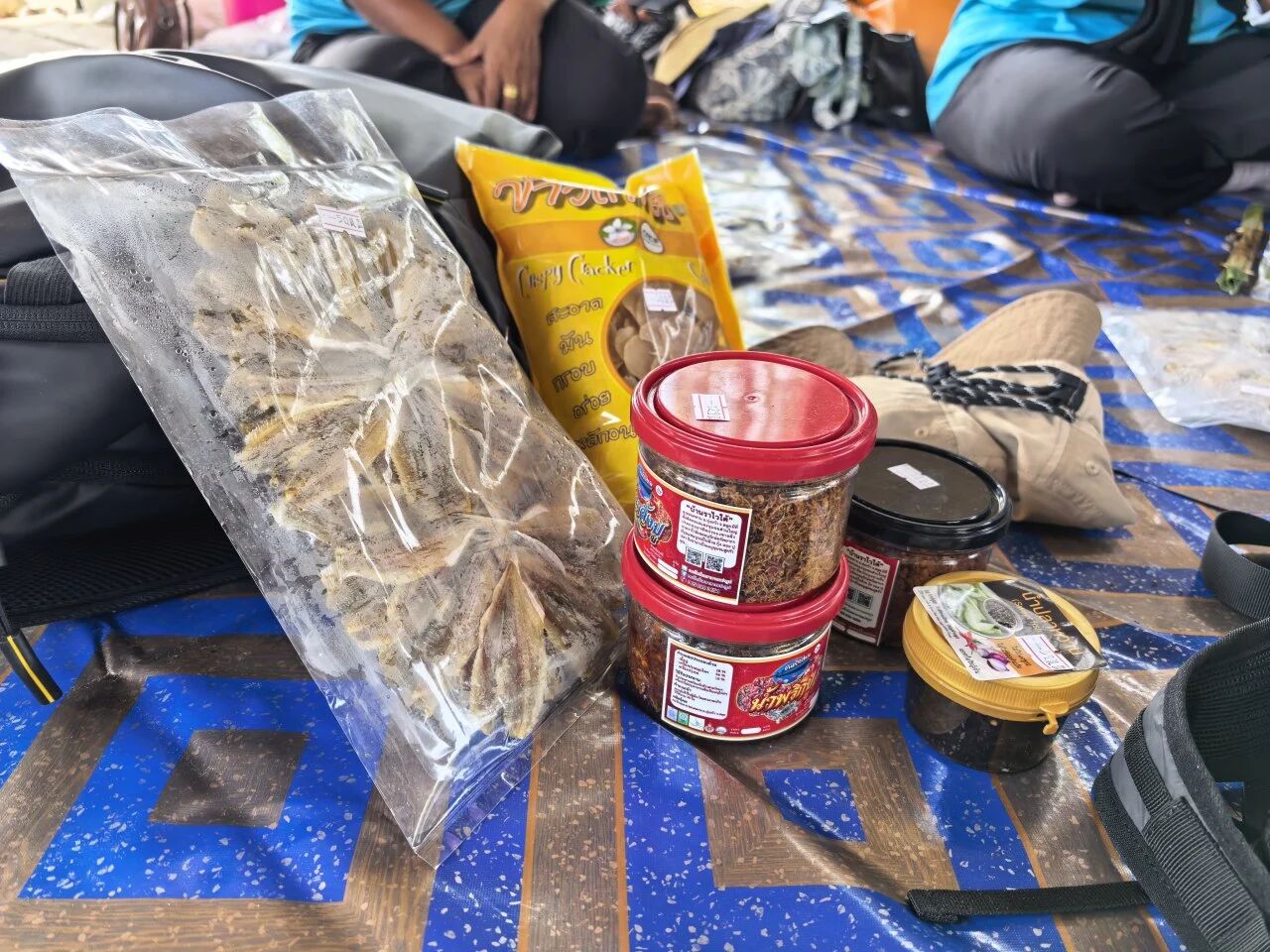
To further expand their income, the women fishermen in Rawinan Village in Satun have also set up a processing group, producing items such as chili sauce and crab flakes to add value to their catch and tackle the challenge of preserving seafood. They registered as a social enterprise and received a 5,000 Thai baht grant from Thai Sea Watch (just over 1,000 Chinese yuan), along with a photovoltaic panel donated by the government energy department to power their food-drying equipment – this is the only external support they have received. The group currently has 32 members, but it is still in its early days and has not yet achieved stable profitability.
IV. From Voluntary Conservation to Sustainable Livelihoods
Just as Tab had long since realised, the community activists of Duck’s generation all feel that conservation action which brings no benefit to fishermen’s livelihoods is unsustainable – quite unlike voluntary work that is “all about conservation, no concern for profit”. Over the past ten years, Duck and those around him have begun exploring ways to “monetise” their efforts.
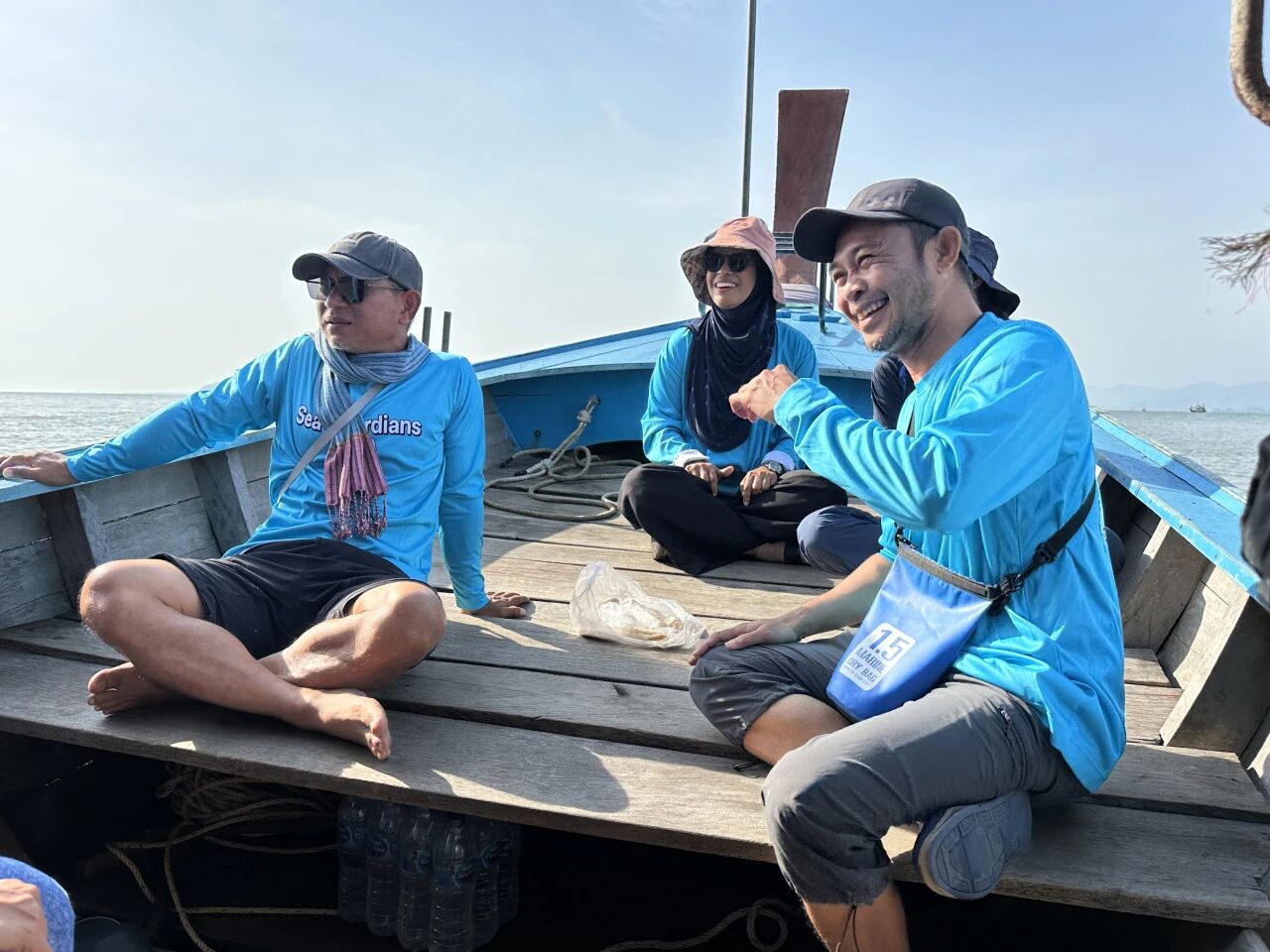
Remember the Sisyphean effort described in the second field note, where fishermen kept releasing crab seedlings and restoring seagrass beds to protect dugongs? Well, the story has another side – “If you live by the sea, you make a living from the sea”, and this time it means earning a living through tourism. In Satun Province’s well-known Mu Ko Phetra National Park, shaggy seagrass beds encircle the islets; a boardwalk runs from the jetty to the island, where visitors can see fossils, striking rock formations and other geological wonders. The fishermen point out that there are also clownfish – “Nemo” – and for the locals, all of this is what draws in visitors.
Here, the fishermen in the eco-tourism group can act as guides without paying any additional fee to the national park – essentially giving them free access to the park’s tourism resources. The national park has also approved ten fishermen to run ferry services, and the fishermen keep their own jetty.
Under Duck’s guidance, we enjoyed a half-day eco-tour of the national park.
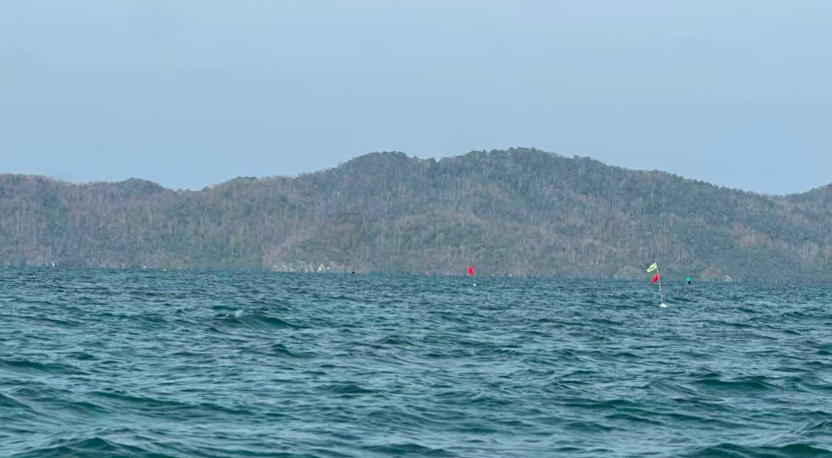
Without him narrating beside us, we would never have known how many stories were unfolding beneath the surface. Take a cluster of plastic barrels bobbing on the water, each topped with a brightly coloured flag: Duck tells us that every barrel marks a net below, set to catch prawns and crabs, all individual fishermen’s efforts, and you can tell whose net it is simply by the colour of the flag. And the fact that fishermen can fish “brazenly” within the national park is precisely because they successfully established a Community Protected Area here (see the second field note).
Further on, we spotted another patch of floating blue plastic barrels, their upper halves whitened by seagull droppings. These are fish habitats made by the fishermen themselves, which they call “Fish Homes”. The boat’s engine cuts out, and the world goes quiet all at once. Duck launches into one of his well-practised talks: they have been building Fish Homes for ten years now. The idea originally came from the fishermen themselves, who noticed that underwater fish traps attracted fish to settle around them – why not replicate that on a larger scale as a refuge for fish? But it took a very long time to persuade government departments and outsiders to accept the concept.
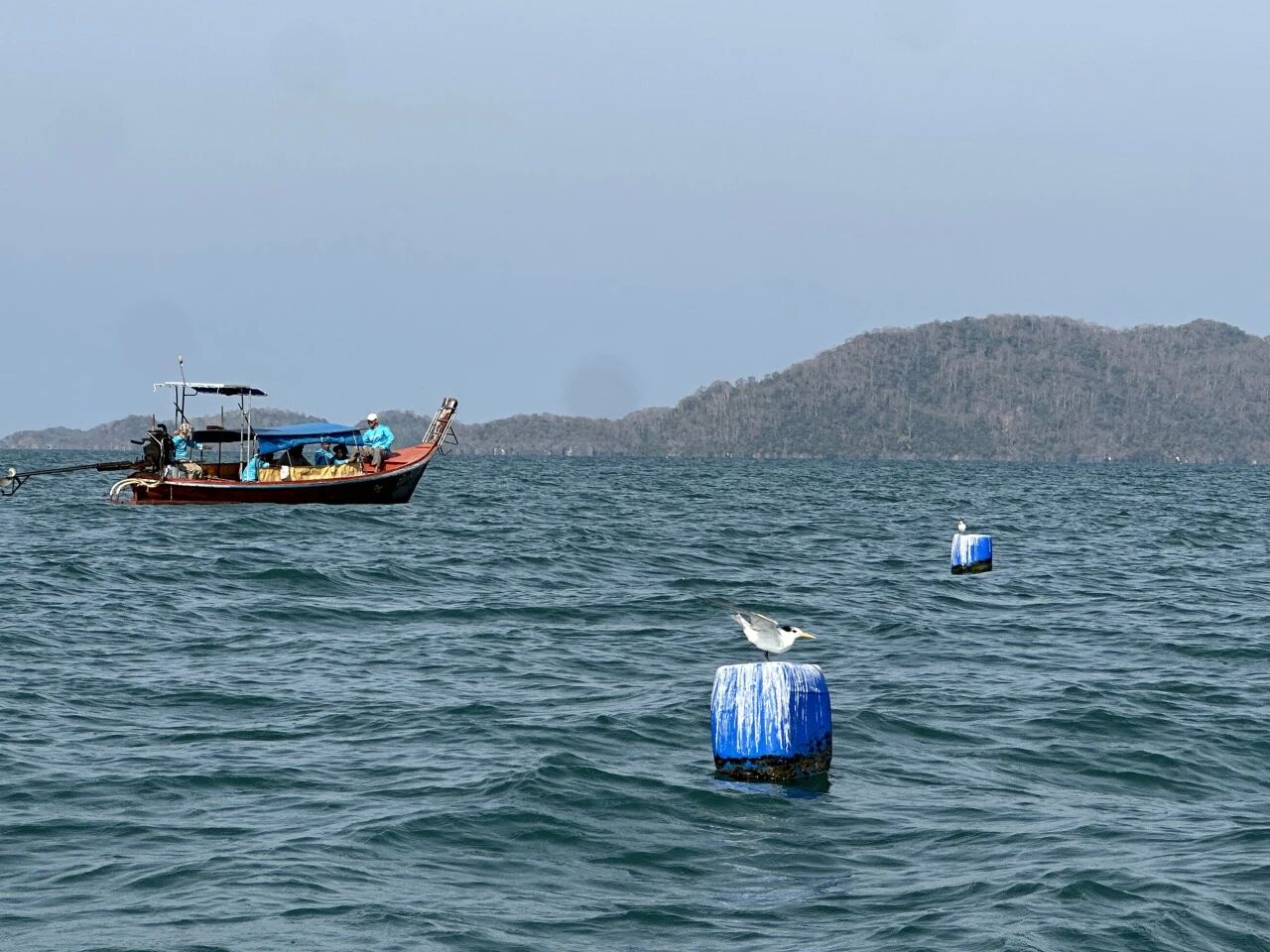
So-called “Fish Homes” are built by securing large bundles of coconut leaves to the seabed with bamboo poles – essentially an artificial reef providing shelter for fish. “They feel safe among them,” Duck says. After six or seven months submerged in the seawater the coconut leaves begin to rot, and fresh leaves have to be replenished.
Some fishermen did not understand at first – all they cared about was catching more fish. But from the fifth year on, with Thai Sea Watch coordinating the effort, fishermen began monitoring and found that fish stocks were indeed increasing. The data not only helped the fishermen better understand the progress and significance of what they were doing, but also made it easier for them to communicate with the outside world. “Although the fishermen can feel that Fish Homes are helping fish stocks recover, their testimony alone is not enough to convince outsiders – scientific research is needed to prove it,” Tab says. They have only recently begun collecting data: fishermen dive to record species and are trying to build a fish catalogue, but the frequency of monitoring remains constrained by the budget.
He hopes to bring in scientists to provide guidance and establish a baseline dataset. But all of this means greater funding needs, too.
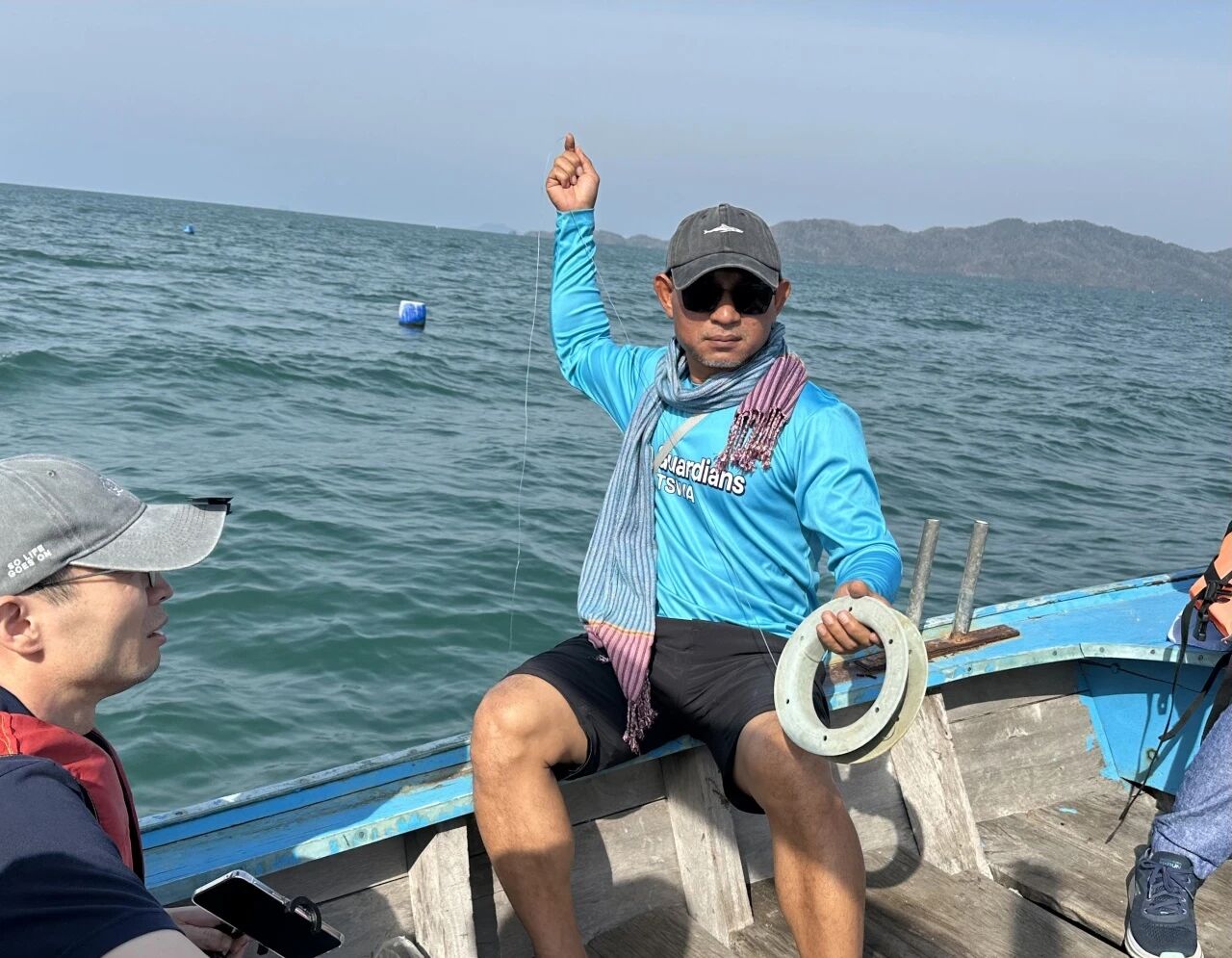
On the way back from the little island to the mainland, another Fish Home appeared, marked by a small cluster of bamboo poles poking out of the sea. Without Duck pointing it out to us, we would almost certainly have missed it in the vast, glare-swept swells.
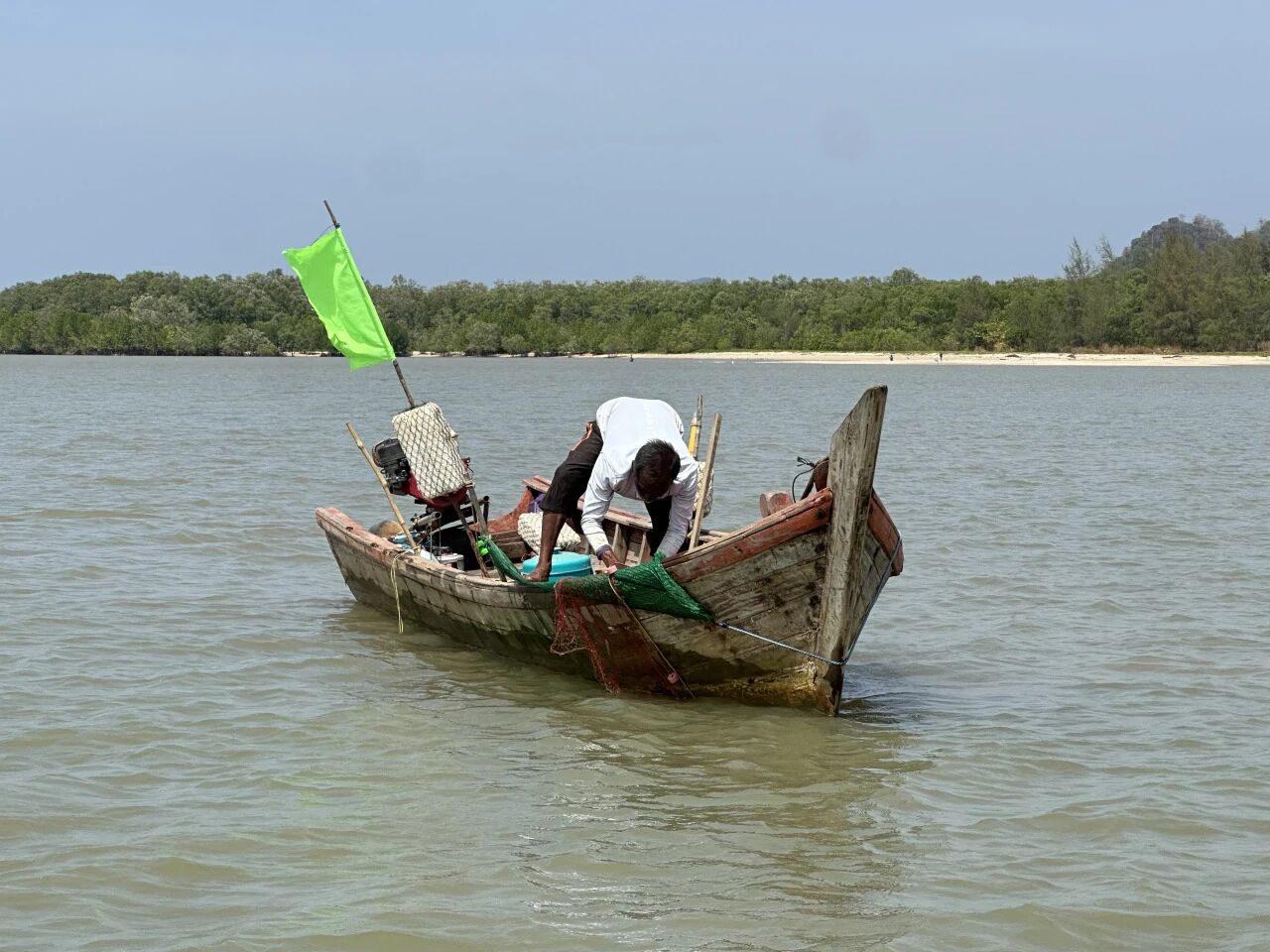
As we neared the jetty, an old man in a tiny skiff appeared on the water, setting a gillnet. The fishermen burst out laughing and motored over to greet him. The old man turned out to be Duck’s father. When he threw himself into the marine conservation movement thirty years ago, he had been in his prime. His life had taken him through the rise of industrial fishing, the collapse of fish stocks, the national park’s eviction of fishermen, the fishermen’s fightback against commercial trawl boats, and finally the hard-won establishment of Community Protected Areas within the park’s boundaries… Now, in his twilight years, watching the fruits of his youthful deeds blossom, and even seeing a group of people from China travel all this way to visit – what must be going through his mind?

Unless otherwise noted, all images are by the author
Editor: Pei Dan