Under poverty-alleviation subsidies, farmers in Gong County (pseudonym) grow greenhouse vegetables—yet find no rest all year round, missing even Hakka ancestral hall gatherings. White lotus, despite lower returns, lets the whole family—old and young—each find their place.
Despite 20,000–30,000 yuan per mu from greenhouses, Gong County farmers still grow rice and lotus—paddy fields have been taken over by linked greenhouses, costs become unsustainable once subsidies end, and skills and hiring demands do not suit the pace of the elderly left behind.
At Sister Yanping’s Baicao Garden in Guigang, Guangxi, from handling courier after-sales past midnight and hauling waste with a carrying pole each day, to spending three to five years rebuilding soil ravaged by agrochemicals, Natural Farming is far from the effortless “relying on heaven’s bounty.”
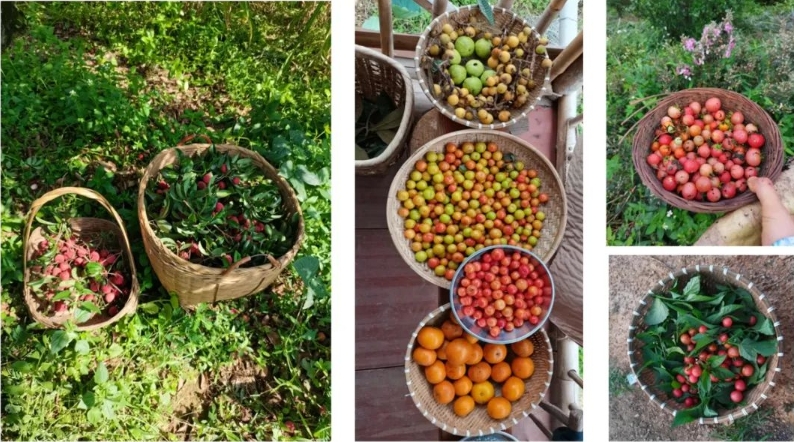
Sister Yanping is trialling Natural Farming across over 50 mu of orchard in Guigang, Guangxi: leaving ripe fruit on the branches to pick slowly, leaving waist-high grass around the trees, dropping unsellable fruit back beneath them – an orchard becoming a living composting ground.
In 2015, a couple born in the 1990s – Yingying and Zhiqiang – returned to their hometown of Pingquan, Chengde, Hebei, and set up Lianxiang Farm. Over eight years, they have grappled time and again with pests, weeds, extreme heat and hiring difficulties – yet they persevere.
Kouzi arrived alone in Villain’s Valley two years ago to farm. Of over a thousand saplings, most were tuition fees; fruit flies spare barely one pumpkin in ten. Every mouthful, then, must be savoured and treasured.
At Letian Bay Farm, consumers rent plots in the countryside not for organic certification or environmental ideals, but for a sense of ease so scarce in the city: seeing how vegetables grow, recognising one’s neighbours, eating cucumbers without peeling.
After over three years in Wicked Valley, Fujian, farmer Kōuzi has reaped an entire paddy crop by hand for the first time, from transplanting to final cut. The harvest was treated as a festival: harvest meals prepared three days ahead, the first block of paddy cut between downpours.
From 300 mu in Bashang to 9 in Huailai, Baxia: Huang Lifeng and Li Yuxia let Eurasian magpies peck their tomatoes, save 60 per cent of water with drip irrigation, and sell home-grown veg at the Beijing Organic Farmers’ Market at weekends — enough for a family of four.
More than a month after the floods receded, the Longjiazhuang market reopened, yet nearly half the farmers’ east-side stalls remain empty. Aunt Li’s two mu of farmland lies buried under silt and debris. ‘People are fine, the land is done,’ she says. Compensation has yet to materialise.