
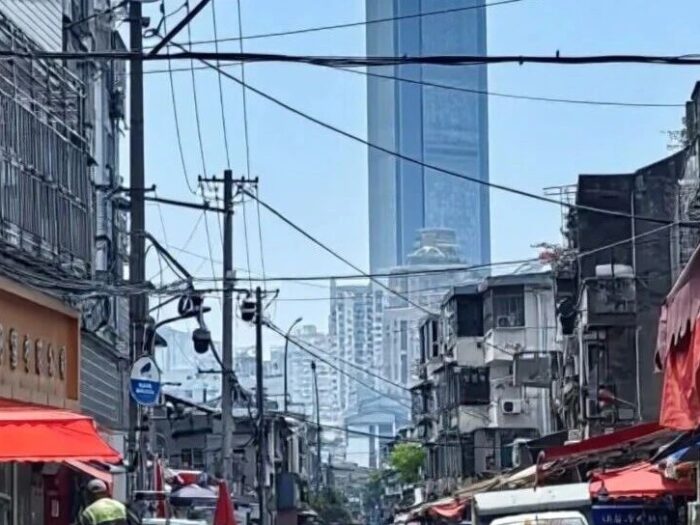
From the decline of Huanglong Wholesale Market to holding her ground at Shuangjingtou Wet Market, fifty-year-old Xu Yunyan supports her family through a ginseng and antler dried goods shop. Refusing e-commerce and livestreaming, she relies on word of mouth and serves only retirees.
A Chiang Mai chef running a Shanghai pop-up dinner, driven to tears in the kitchen by Dianping’s ratings and the pressure to waive bills to keep the peace; Maizi, rated a mere 3.8 yet running his bar eight years without any platform, reveals another face of the system.
Dutchman Metske began with a vegetarian restaurant in the squatting movement. He farms roughly 6.5 acres of heavy clay in Kent, using wildflower strips to support ecological balance and grow seasonal vegetables – selling at north London’s organic farmers’ market every Saturday.
In recent years, Foodthink has tracked e-commerce platforms’ impact on food and labour: “ghost-kitchen delivery” made by platform subsidies, order pickers at 30,000 steps for 3 fen, Guangzhou wet markets squeezed by fresh-food e-commerce, 100 million daily orders in layers of plastic, and worldwide practices exploring another possibility.
On a xu day in Lihu Yao Ethnic Township, I bought hemp seeds, sour meat and stuffed tofu with the White Pants Yao, then watched pao sha winding and golden silk silkworms spinning at the wall-less Ecomuseum — one market linking farming, weaving and the whole valley’s daily life.
A graduate of the University of Gastronomic Sciences, Pollenzo, recalls the days spent with Petrini in Bra, and the voices in the Slow Food movement yet to be heard.
Foodthink screens four films about food and labour back-to-back at Tuanjiehu this June — from food-delivery riders to rice farmers, pastoralists and fermentation artisans. Each screening is followed by an in-person conversation with directors, protagonists and activists, and preceded by a farmers’ market.
Ru Tongxue has run a shop in a small town in Exeter for six years, never joining a single platform subsidy campaign, and sets delivery prices uniformly 20% above dine-in: whoever enjoys delivery pays the bill—in complete opposition to the logic of China’s subsidy wars.
In 1995, my nan set up this sold-by-weight condiment stall at Yijing Market in Wuzhou. Since mum took over, she remembers each regular’s usual soy-sauce brand — and from dawn opening to late-night spice repacking, one busy stretch lasts twelve hours.
Brazil’s Landless Workers’ Movement (MST) built Concentra in Belo Horizonte, pooling market support work — compliance certification, warehousing, logistics — so dispersed smallholder produce can reach market at scale. Not easily transplanted, the experience points to a key path: turning what no individual can shoulder alone into collective capacity.


