Going Against the Flow has its programmer protagonist fall to become a delivery rider, yet ends with his return to a major internet company; it reduces algorithmic oppression of labour to a technical fix and sidesteps the collective struggle actually taking place among riders.
Researching tomato flavours, American writer Chris St. Cavish found that ingredient quality is already determined the moment a seed is chosen; China’s rice varieties have shrunk from 46,000 to 1,000, yet living seeds in farmers’ hands still guard the last of that diversity.
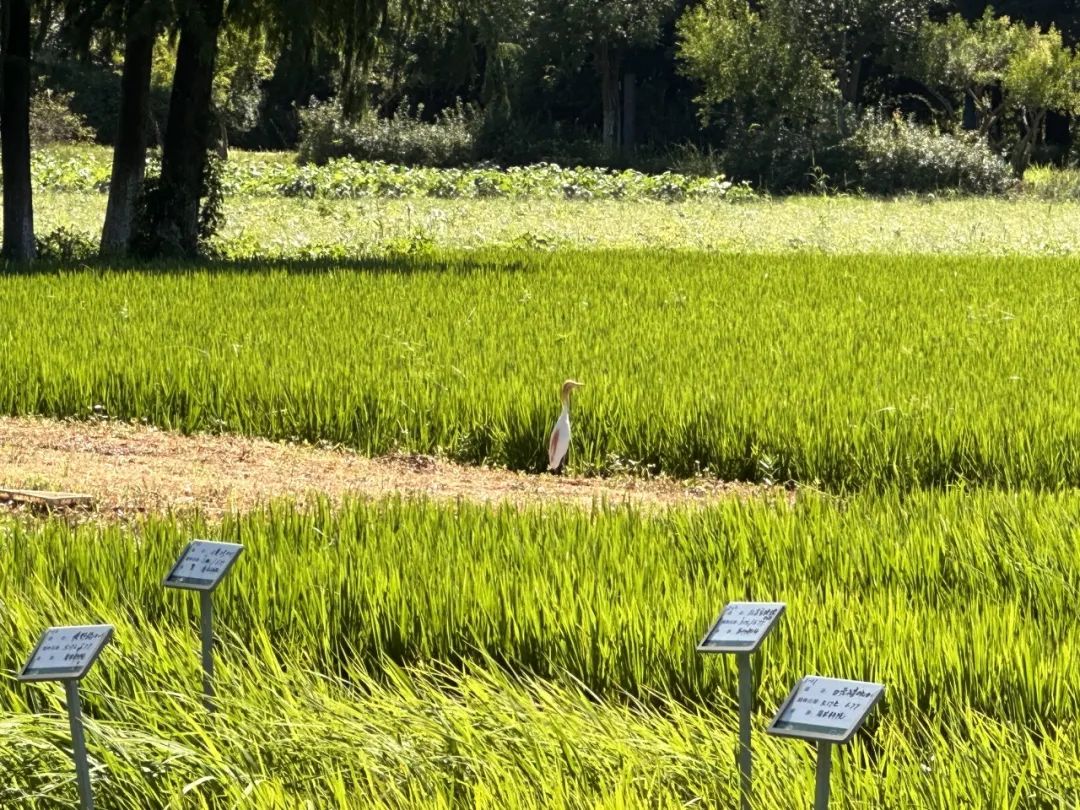
Ecologist Zou Yi at Xi’an Jiaotong-Liverpool University finds that land consolidation reduces natural enemy richness in rice paddies, driven by the loss of linear habitats such as field bunds and irrigation channels. She recommends rebuilding these semi-natural habitats and considering the economic and ecological costs of insecticides.
Wang Xiaoyi, Chinese translator of Seeing Like a State and researcher at the Chinese Academy of Social Sciences, traces the three stages of Scott’s reception in China, the historical “loosen–tighten–loosen–tighten” cycle between state planning and grassroots spontaneity, and the confidence grassroots adaptive change brings after project failure.
During the summer of 2021, Yuyang spent four months as an Ele.me dedicated rider in Zhongguancun, navigating between the delivery station, merchants and customers, contending with order dispatch, complaints and attendance tracking – making a decision almost every minute and second.
Foodthink, together with Sanlian Academic, Yali and the Peasant Seed Network, hosted a series of Seed Empire book-launch talks in five cities, where researchers, returning farmers and university scholars discussed how Monsanto and agricultural capital intervene in public scientific discourse.
On the eve of the Paris Olympics, more than 100,000 people signed a petition calling on the International Olympic Committee to terminate its Coca-Cola sponsorship contract. The reasoning mirrors that which once banished tobacco from sport: sugary drinks are using sport to sportswash their health and environmental harms.
At Meet Farm in Meishan, Chen Ying replaces pesticides and chemical fertilisers with rice-duck pest control and kitchen-waste composting. Across forty mu, she grows and raises everything herself – the only food that needs to be bought in is salt.
Tanker trucks loaded edible soybean oil without cleaning; even public attention can hardly break industry collusion. New mothers, facing pesticide-treated fruit and baby formula ingredient lists, feel even more at a loss. Keeping food sources within a knowable, controllable range has become the most realistic response.
Stir-frying spans only a few centuries; iron woks and refined oil are both recent arrivals. The real excess is high-temperature refined oil, not natural fats in nuts and the like. Skipping stir-frying is much like barefoot running: a way of living that returns to our evolutionary instincts.